
Common crane
Grus grus
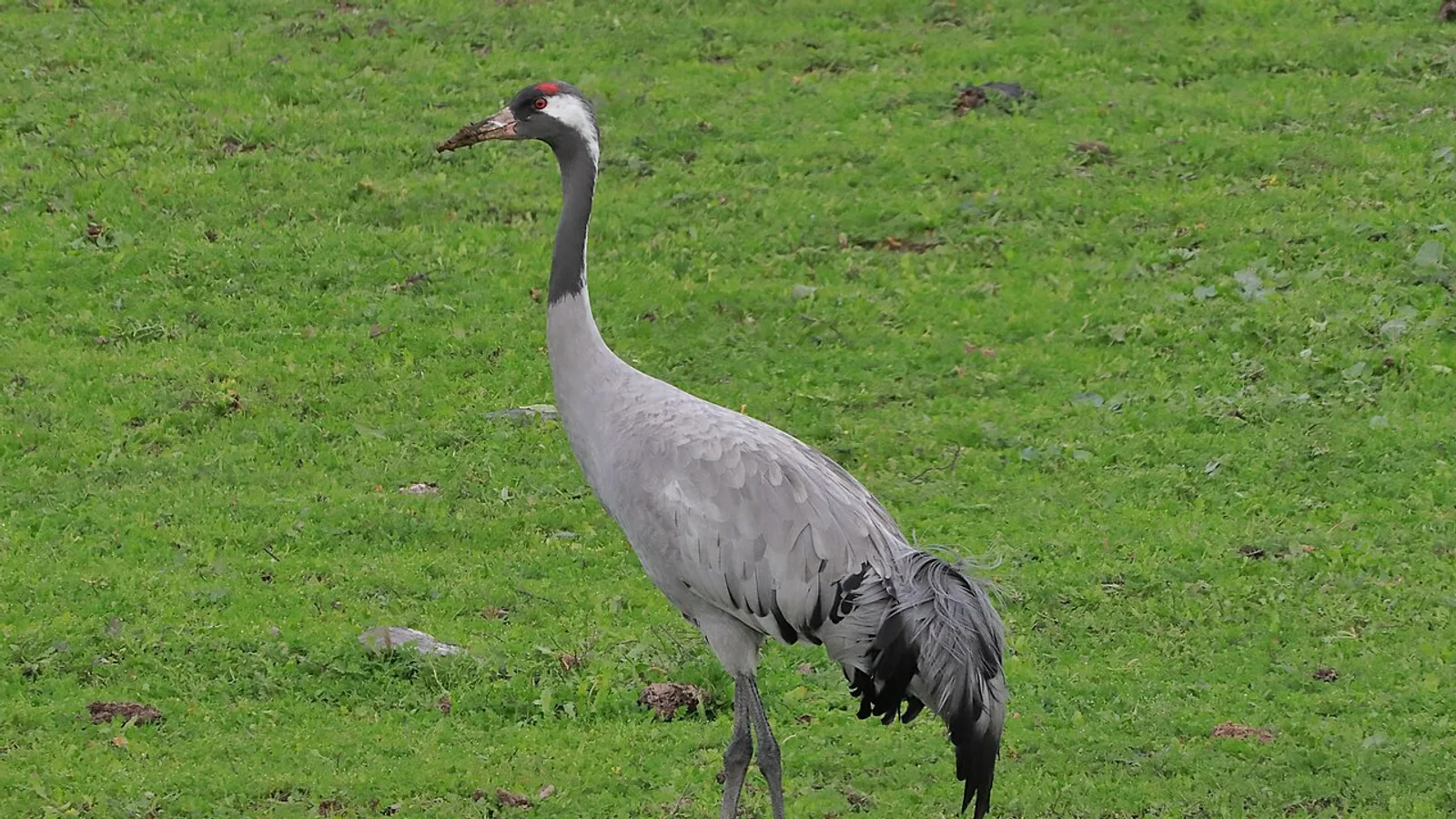
— Where the name comes from
Grus is the Latin name of the bird, onomatopoeic as in many languages: it imitates the trumpeting call that rings out of the sky during the migrations. The building crane takes its name from the bird as well, for the long neck that reaches out as the animal’s does.
— Facts
- Group
- Birds · Aves
- Order
- Cranes and allies
- Habitat
- Marshes, peat bogs, wet grassland; it winters in open fields
- Range
- Northern Europe and Asia, wintering in Africa and southern Asia
- Size
- 100–130 cm, wingspan 180–240 cm
- Diet
- Omnivore — roots, seeds, insects, small animals
- Lifespan
- 20–30 years
— Characteristics
- 01
It dances in courtship: leaps, bows, open wings, in synchronised routines.
- 02
It flies at great height in V formations, calling to one another kilometres apart.
- 03
It forms faithful pairs that last a lifetime.
— What sets it apart
The crane’s dance is one of the most elaborate courtship rituals among birds: pairs leap, bow, throw tufts of grass into the air and spread their wings in a ballet that strengthens the bond from season to season. But they do not dance only for love: the young dance too, as if in play or practice, and sometimes a whole flock starts dancing together, caught by the mood. It is perhaps the oldest trace of the human tie between this bird and the very idea of dance.
