
Indian peafowl
Pavo cristatus
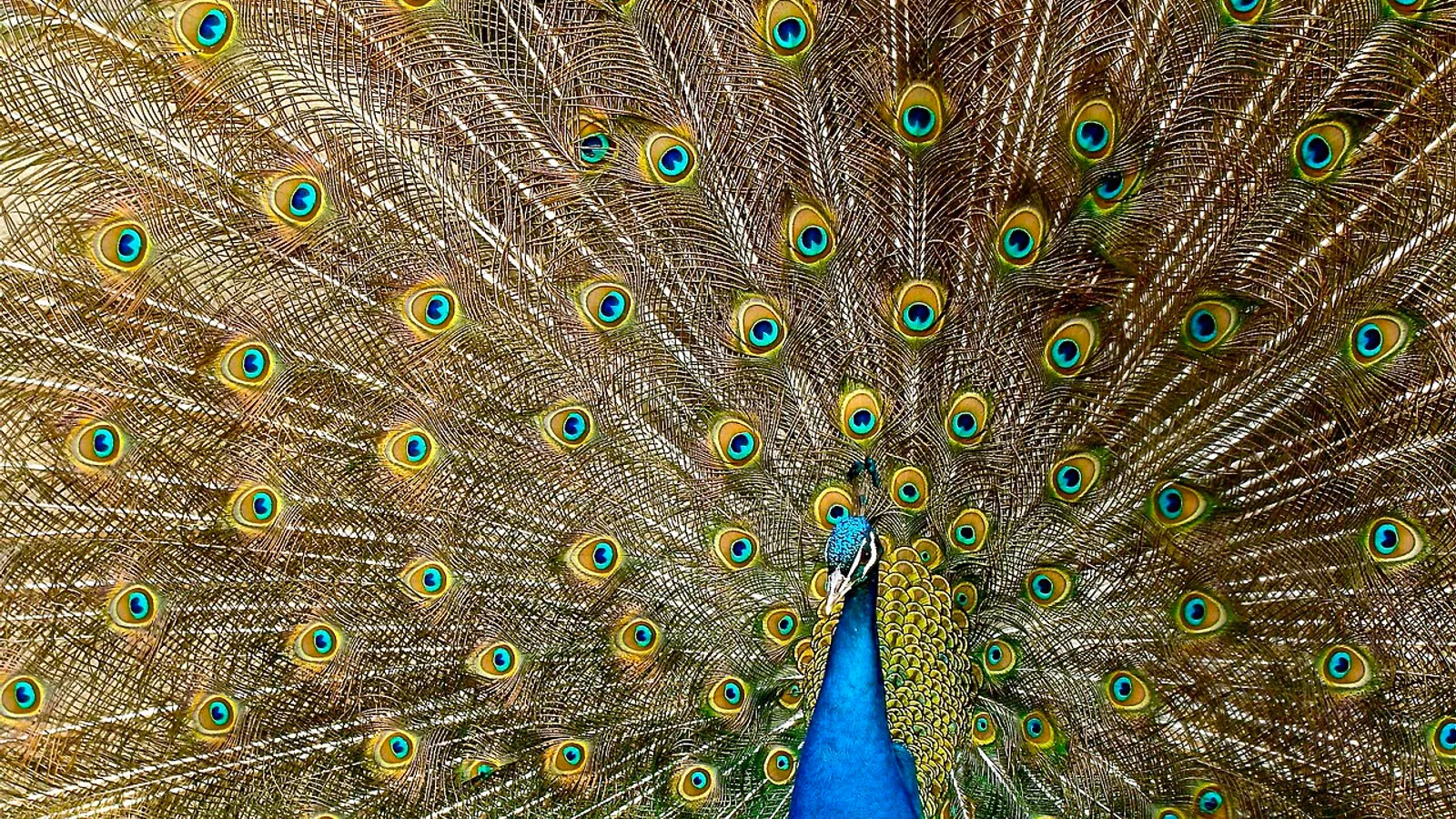
— Where the name comes from
Pavo is the Latin name, which arrived perhaps from the East by way of the Greek taṓs; cristatus is “crested”, from the tuft on the head. The fan it opens is not the true tail but a spread of upper tail coverts: among the most famous ornaments in the animal kingdom, and one of the puzzles that plagued Darwin.
— Facts
- Group
- Birds · Aves
- Order
- Gamebirds
- Habitat
- Open forest, scrub, cultivated land
- Range
- The Indian subcontinent; introduced and semi-domestic everywhere
- Size
- 100–115 cm of body, with the train reaching 200–230 cm
- Diet
- Omnivore — seeds, shoots, insects, small reptiles
- Lifespan
- 15–20 years
— Characteristics
- 01
Only the male has the fan; the female is brown and cryptic.
- 02
The iridescent “eyes” of the feathers come from microstructure, not pigment: it is physical colour.
- 03
The call, a loud shrill wail, contradicts the beauty of the bird entirely.
— What sets it apart
The peacock’s train tormented Darwin so much that he wrote that the mere sight of those feathers made him sick, because they seemed useless for survival and indeed a hindrance. Out of that came sexual selection: some traits evolve not because they help an animal live, but because they help it be chosen. And the colours of those feathers are not pigment: they are produced by the microscopic structure of the barbules, which splits light like a prism. Wet or ground to powder, the same feathers would stay iridescent.
