
Mallard
Anas platyrhynchos
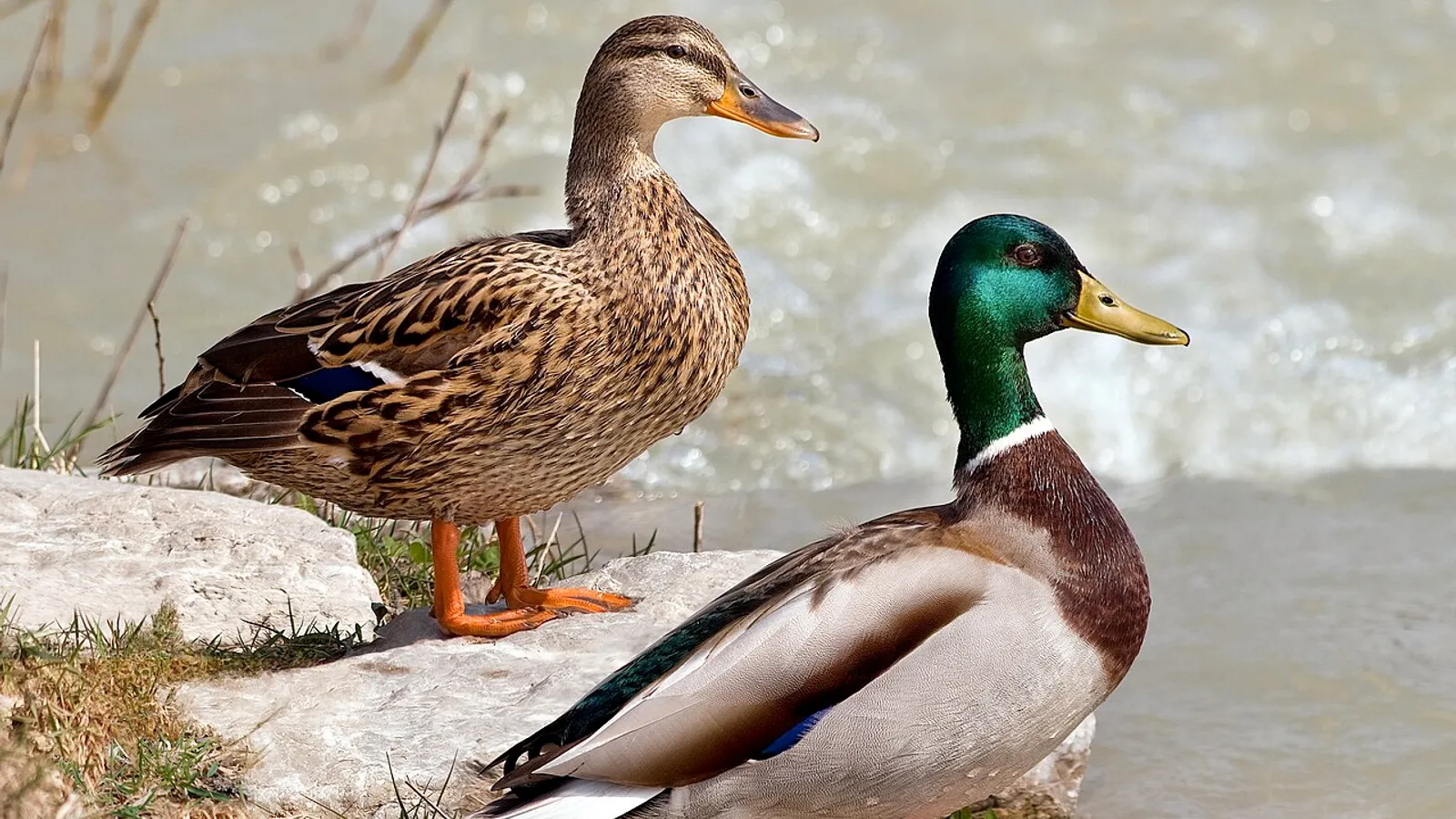
— Where the name comes from
Anas is the Latin name of the duck; platyrhynchos is Greek for “broad flat bill”, from platýs and rhýnchos. The Italian germano comes from the Latin germanus, “genuine, true”: the duck par excellence, the one from which almost every domestic breed in the world descends.
— Facts
- Group
- Birds · Aves
- Order
- Waterfowl
- Habitat
- Every kind of wetland: ponds, rivers, lakes, city parks
- Range
- The northern hemisphere; introduced to many other regions
- Size
- 50–65 cm, wingspan 81–98 cm
- Diet
- Omnivore — seeds, water plants, invertebrates
- Lifespan
- 5–10 years
— Characteristics
- 01
The male in breeding plumage has an iridescent green head; the female is brown and cryptic.
- 02
The blue wing patch edged in white, the speculum, flashes in flight in both sexes.
- 03
It dabbles: it tips head-down to graze the bottom with its tail in the air.
— What sets it apart
Almost every domestic duck on the planet descends from this single species, tamed independently on several continents. The mallard is also capable of an oddity of sleep: it sleeps with half its brain at a time, keeping open the eye that belongs to the waking hemisphere. In a group, the ducks at the edges watch for predators with the outward side, while those in the middle sleep with both hemispheres. The flock, quite literally, sleeps with one eye open.
