
Mandarin duck
Aix galericulata
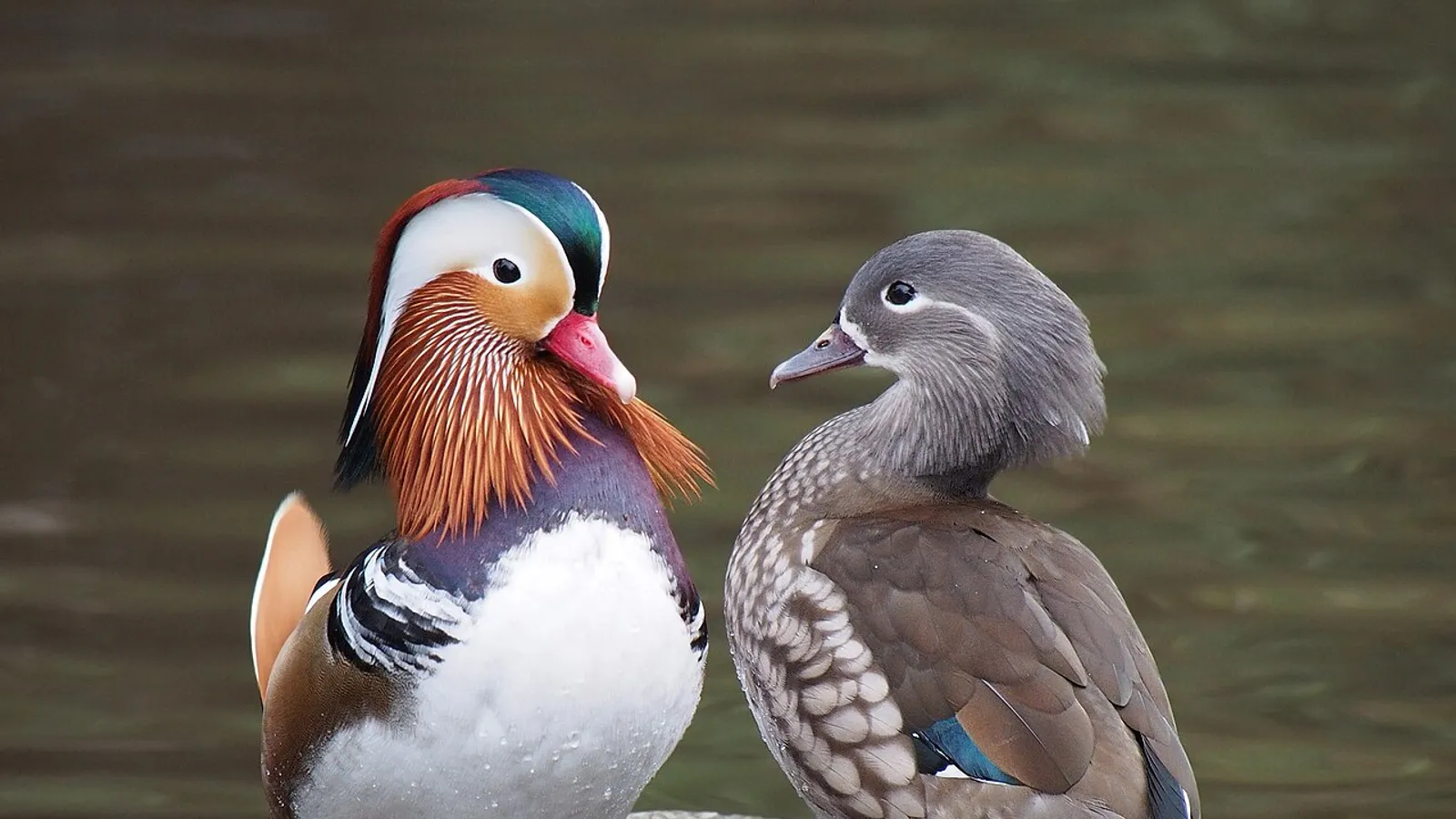
— Where the name comes from
Aix is a waterbird mentioned by Aristotle; galericulata comes from the Latin galericulum, “little cap or wig”, for the crest on the head. “Mandarin” ties it to the East and to its officials, the mandarins, for the splendour of the male’s plumage: in China it is an emblem of conjugal faithfulness.
— Facts
- Group
- Birds · Aves
- Order
- Waterfowl
- Habitat
- Wooded ponds and rivers
- Range
- East Asia; introduced populations in Europe
- Size
- 41–49 cm, wingspan 65–75 cm
- Diet
- Omnivore — seeds, acorns, insects, small molluscs
- Lifespan
- 6–12 years
— Characteristics
- 01
The male is perhaps the most flamboyant duck in the world: orange “sails” raised on the back, coppery cheeks.
- 02
It nests in tree cavities, sometimes ten metres up.
- 03
The ducklings throw themselves from the nest into empty air the day after hatching, unhurt.
— What sets it apart
In China and Japan the mandarin duck has for centuries been the symbol of married love and fidelity, given to newlyweds as a blessing: they are believed to pair for life. The biology is less romantic — they change partners from season to season — but the image is so deeply rooted that giving a pair remains, in East Asia, a gesture of love. The ducklings, newly hatched, make a dizzying leap: they drop from the nest hole many metres up, bounce on the ground unharmed, and follow their mother, already waiting below.
