
Cat flea
Ctenocephalides felis
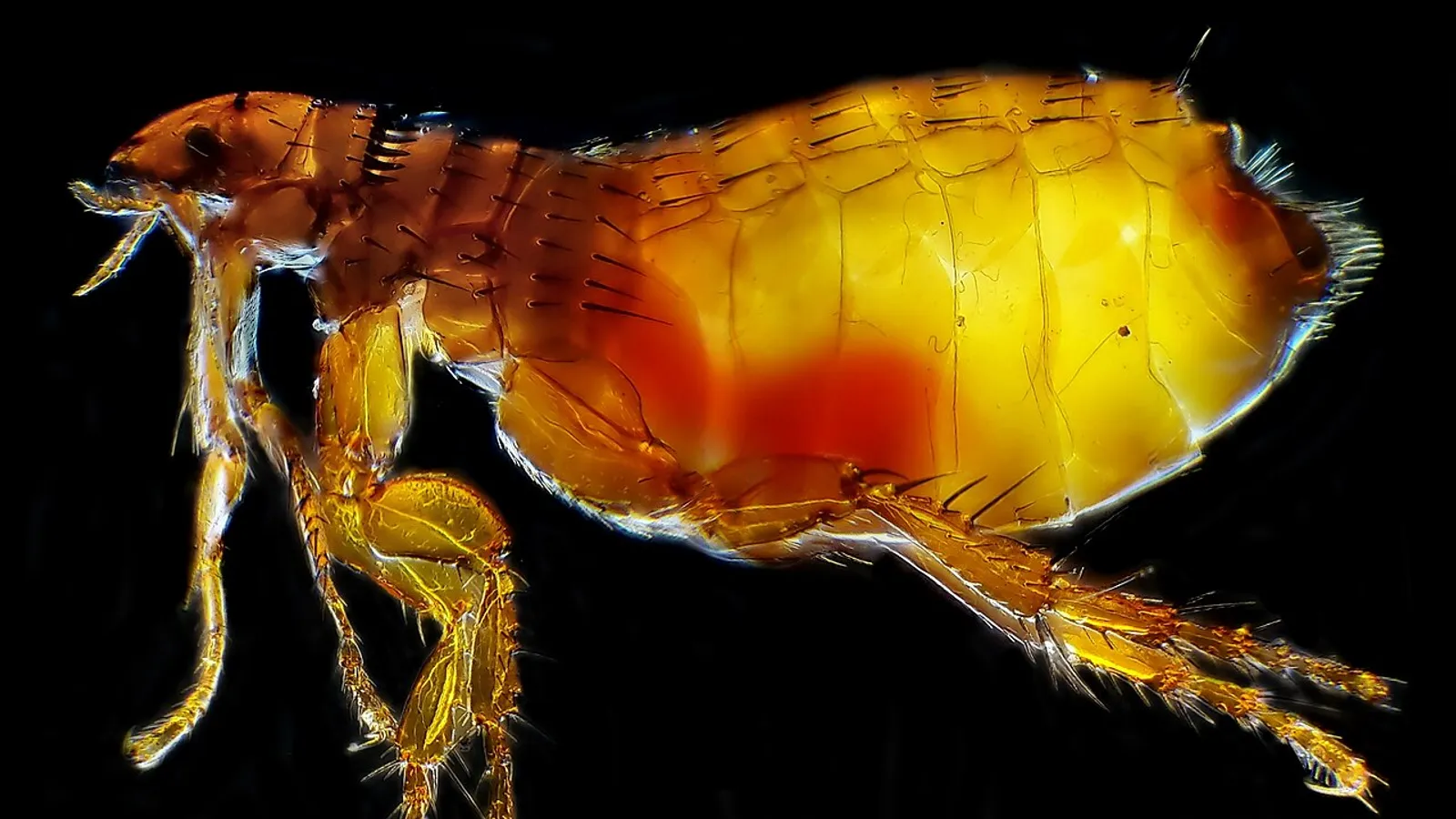
— Where the name comes from
Ctenocephalides means “comb-headed”, from kteís, ktenós, the comb, and kephalḗ, the head: on head and thorax it carries rows of hard black spines, the ctenidia, which stop it from being torn away when the animal scratches. Felis names the host. The name of the order, Siphonaptera, is “wingless siphon”: a tube for sucking, and nothing else.
— Facts
- Group
- Insects · Insecta
- Order
- Fleas
- Habitat
- The fur of domestic carnivores and the cracks of houses
- Range
- Worldwide
- Size
- 1–3 mm
- Diet
- The blood of cats, dogs and, when it must, humans
- Lifespan
- 2–3 months on the host
— Characteristics
- 01
It jumps up to two hundred times its own length.
- 02
The body is flattened side to side to slip between hairs.
- 03
Only five per cent of the population is on the animal: the rest is in the house.
— What sets it apart
The jump is not muscular. The flea slowly loads a spring of resilin — an elastic protein that returns ninety-seven per cent of the energy stored in it, more than any synthetic rubber — locks it with a catch, then releases it: the acceleration exceeds a hundred g, and no animal muscle could generate it, because muscles are too slow. It is the principle of the crossbow. As for infestation: the fleas visible on the cat are a tiny fraction of the problem, because eggs, larvae and pupae lie in carpets and floorboard cracks, and the pupa can wait months for a host to pass before hatching.
