
Human louse
Pediculus humanus
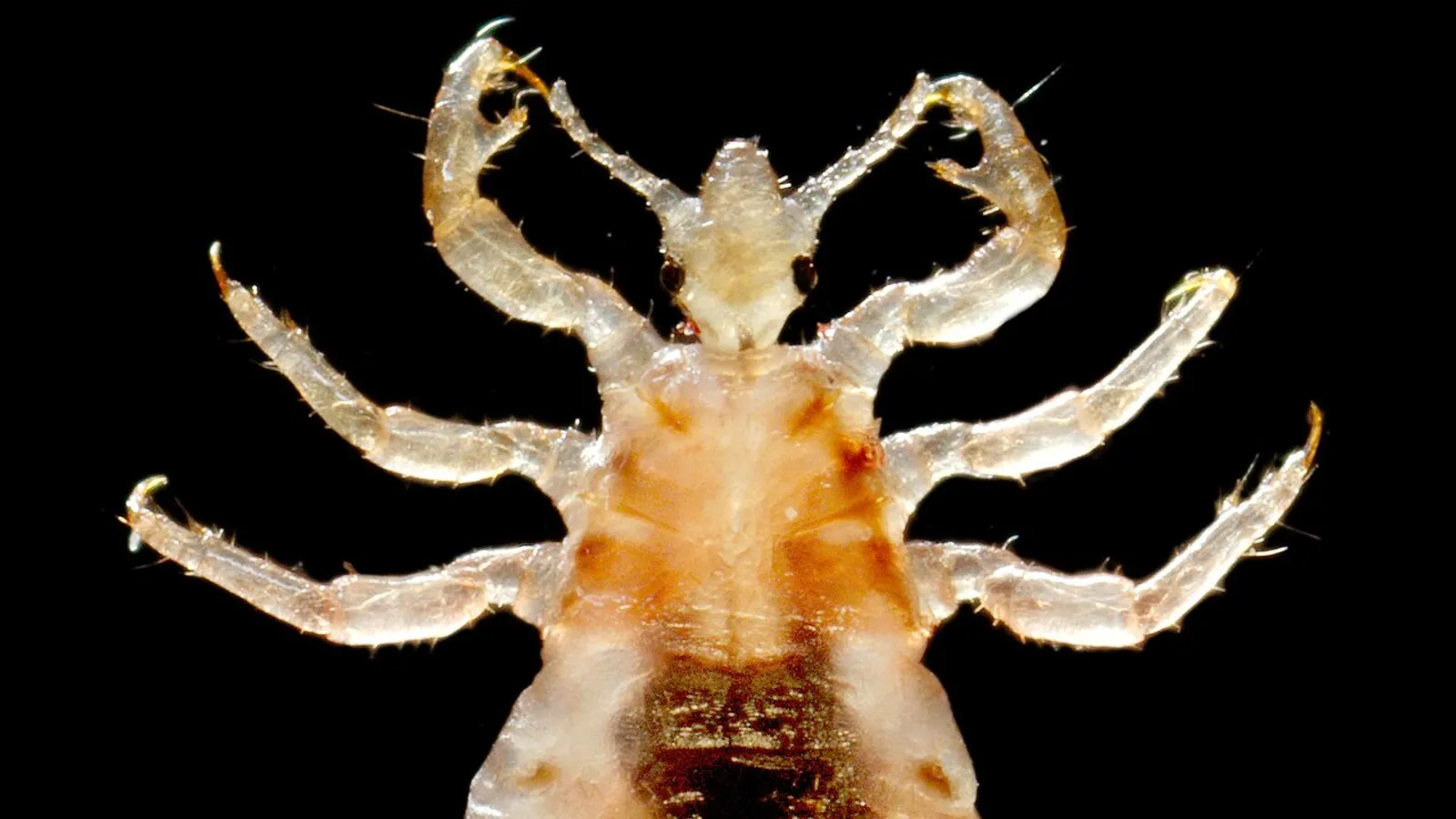
— Where the name comes from
Pediculus is the Latin diminutive of pedis, the louse: from it come the Italian pidocchio and the adjective pidocchioso, which no longer describes an infestation but a meanness. Humanus names the only host this species accepts. The word has left traces throughout the European vocabulary of destitution, because for millennia having lice and having nothing were the same condition.
— Facts
- Group
- Insects · Insecta
- Order
- Lice
- Habitat
- The head and clothing of human beings, and nowhere else
- Range
- Worldwide
- Size
- 2–3.5 mm
- Diet
- Human blood, four or five meals a day
- Lifespan
- 30–40 days; it dies within a couple of days off the host
— Characteristics
- 01
Its legs end in a hook calibrated to the diameter of a human hair.
- 02
The eggs, nits, are glued to the hair with an insoluble cement.
- 03
It neither jumps nor flies: it passes only by direct contact.
— What sets it apart
It has dated clothing. The head louse and the body louse are two forms of the same species, but the second lives and lays only in the folds of garments, so it cannot have existed before human beings began to dress. By comparing the DNA of the two forms and measuring how far they have diverged, geneticists have put the split at between seventy and a hundred and seventy thousand years ago: it is the best date we have for the invention of clothing, and it comes from a parasite. The same method, applied to the pubic louse, has suggested contact between the ancestors of humans and those of gorillas some three million years ago.
