
Water flea
Daphnia magna
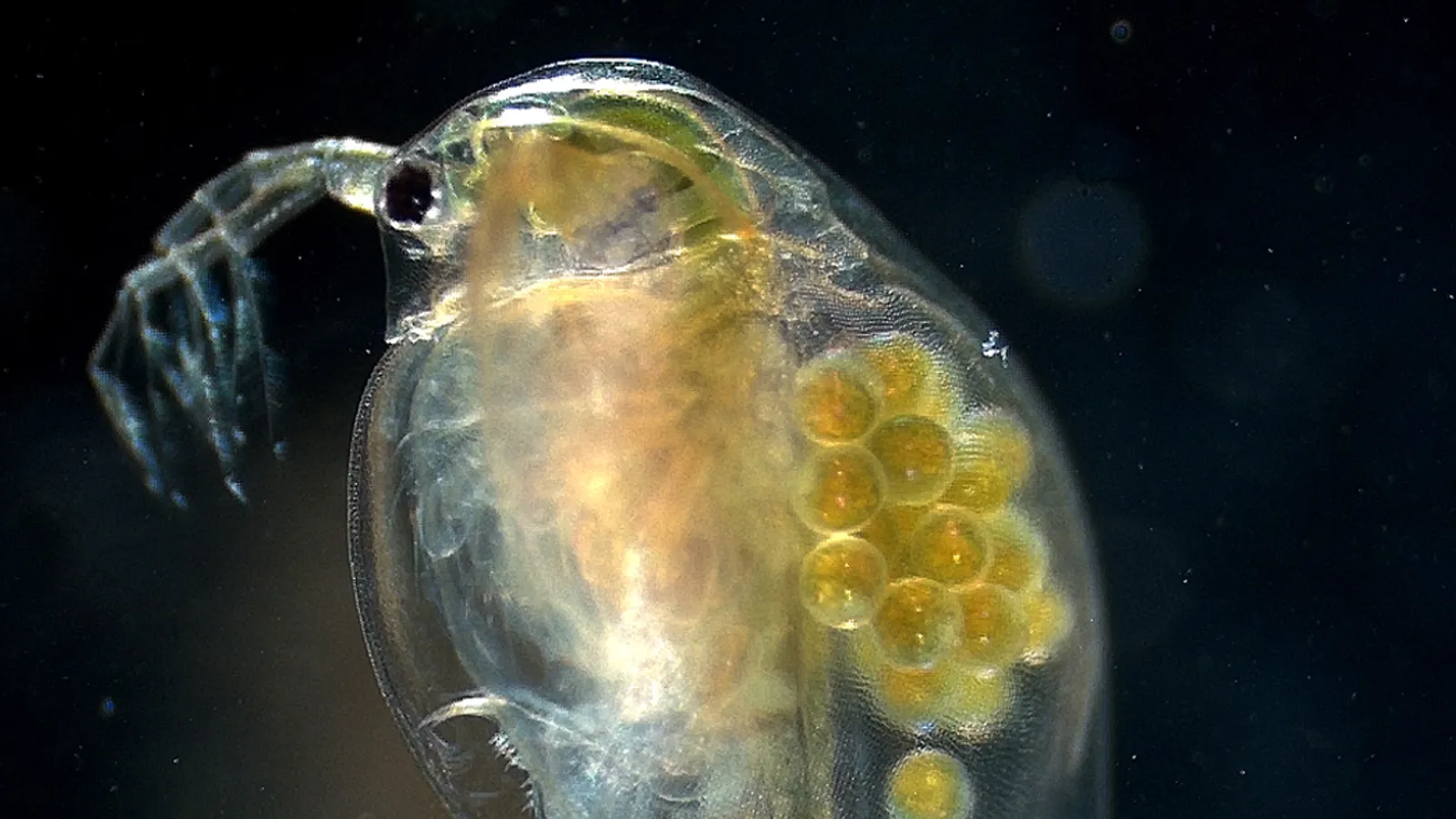
— Where the name comes from
Daphnia comes from Daphne, the nymph turned into a laurel to escape Apollo: an elegant name with no bearing on the animal, like so many the eighteenth century handed out freely. Magna is the size. The common name looks instead at the movement — it proceeds in jerks, hopping through the water like a flea — which is why in every European language it is a flea that is not a flea.
— Facts
- Group
- Crustaceans · Malacostraca · Maxillopoda
- Order
- Water fleas
- Habitat
- Ponds, pools and still water rich in algae
- Range
- Northern hemisphere
- Size
- 2–5 mm
- Diet
- Algae and bacteria filtered from the water
- Lifespan
- 30–60 days
— Characteristics
- 01
The body is transparent: the beating heart and the full gut are visible.
- 02
In summer females give birth to daughters without males.
- 03
If a predator appears, the young are born with a helmet and spines.
— What sets it apart
It changes shape according to fear. If the water carries the chemical traces of a predator — a mosquito larva, a fish — the daughters are born with a pointed helmet and an elongated tail that make them harder to swallow; remove the predator and later generations come out smooth again. It is one of the clearest examples of induced plasticity, a trait the environment switches on and off without touching the genes. Being transparent, everything that happens inside it can be seen, and it is therefore the standard animal of water toxicity testing: the measure is how many of them die.
