
Goose barnacle
Lepas anatifera
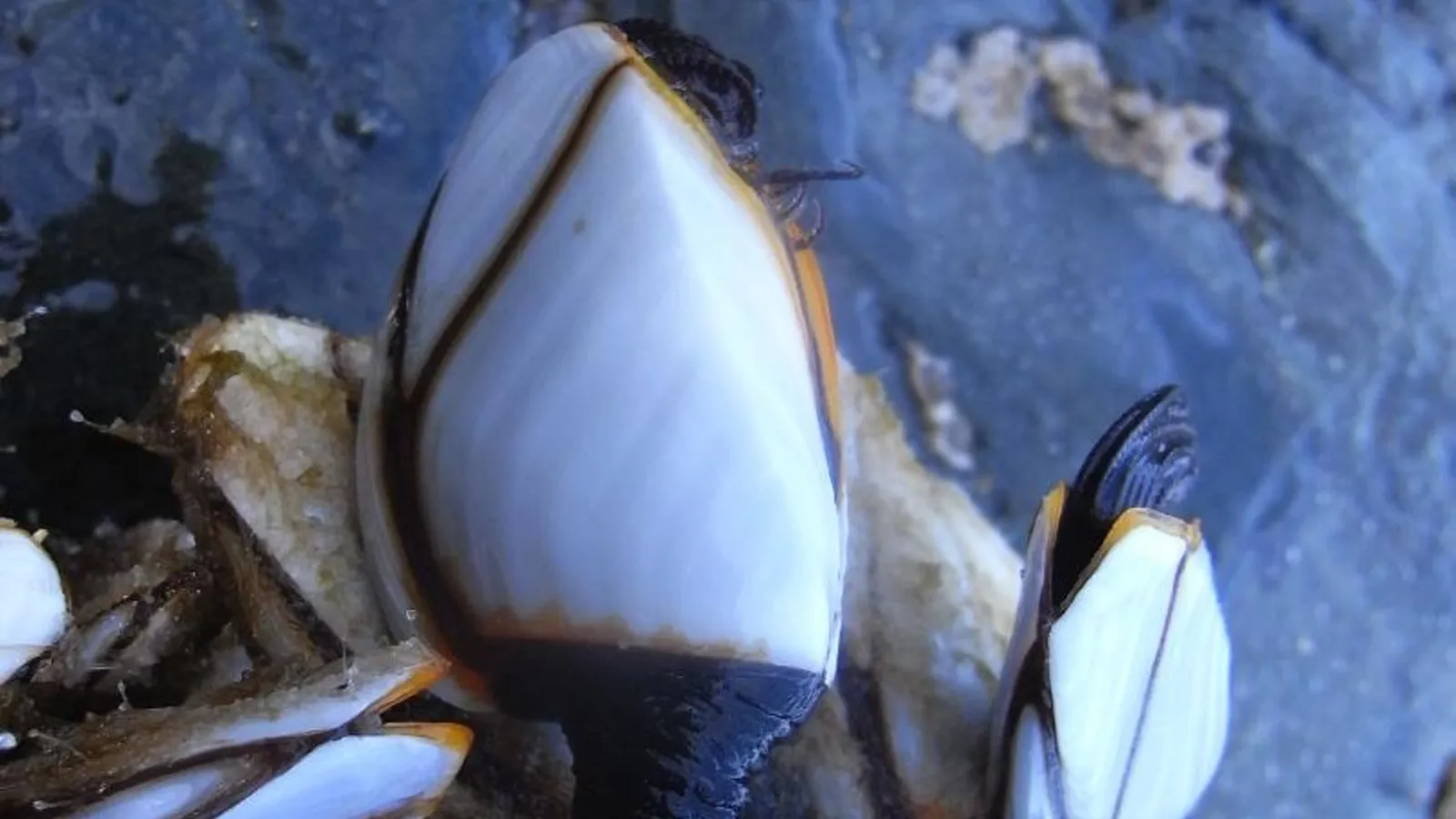
— Where the name comes from
Anatifera means literally “duck-bearing”, from anas and ferre. In the Middle Ages it was believed that barnacle geese hatched from the shells of these animals clinging to the driftwood the sea washed ashore — birds nobody in Europe had ever seen nesting, because they nest in the Arctic. The legend had a practical consequence: those geese were classified as fish, and the Church permitted eating them on fast days. The English word barnacle still means both the crustacean and the goose.
— Facts
- Group
- Crustaceans · Malacostraca · Maxillopoda
- Order
- Goose barnacles
- Habitat
- Floating timber, hulls, buoys, drifting wrecks
- Range
- All temperate and warm oceans
- Size
- Stalk up to 20 cm; capitulum 5 cm
- Diet
- Plankton filtered with the cirri
- Lifespan
- 1–3 years
— Characteristics
- 01
As an adult it is fixed for good: it lives attached by a fleshy stalk.
- 02
It filters the water by rhythmically extending feathery appendages.
- 03
It has the longest penis relative to body size in the animal kingdom.
— What sets it apart
For centuries it was thought a mollusc, because it has a calcareous shell and does not move; it was the discovery of its larva, in 1830, that revealed it to be a crustacean that has chosen to stay still — it fixes itself head down and spends its life kicking plankton into its mouth. Darwin spent eight years on them: his monograph on the barnacles, written before the Origin of Species, is what gave him the standing as a taxonomist to be taken seriously. He also noted the other oddity: being immobile, the animal must reach its neighbour, and it has evolved the longest copulatory organ relative to body size of any known animal.
