
Pine processionary
Thaumetopoea pityocampa
— Where the name comes from
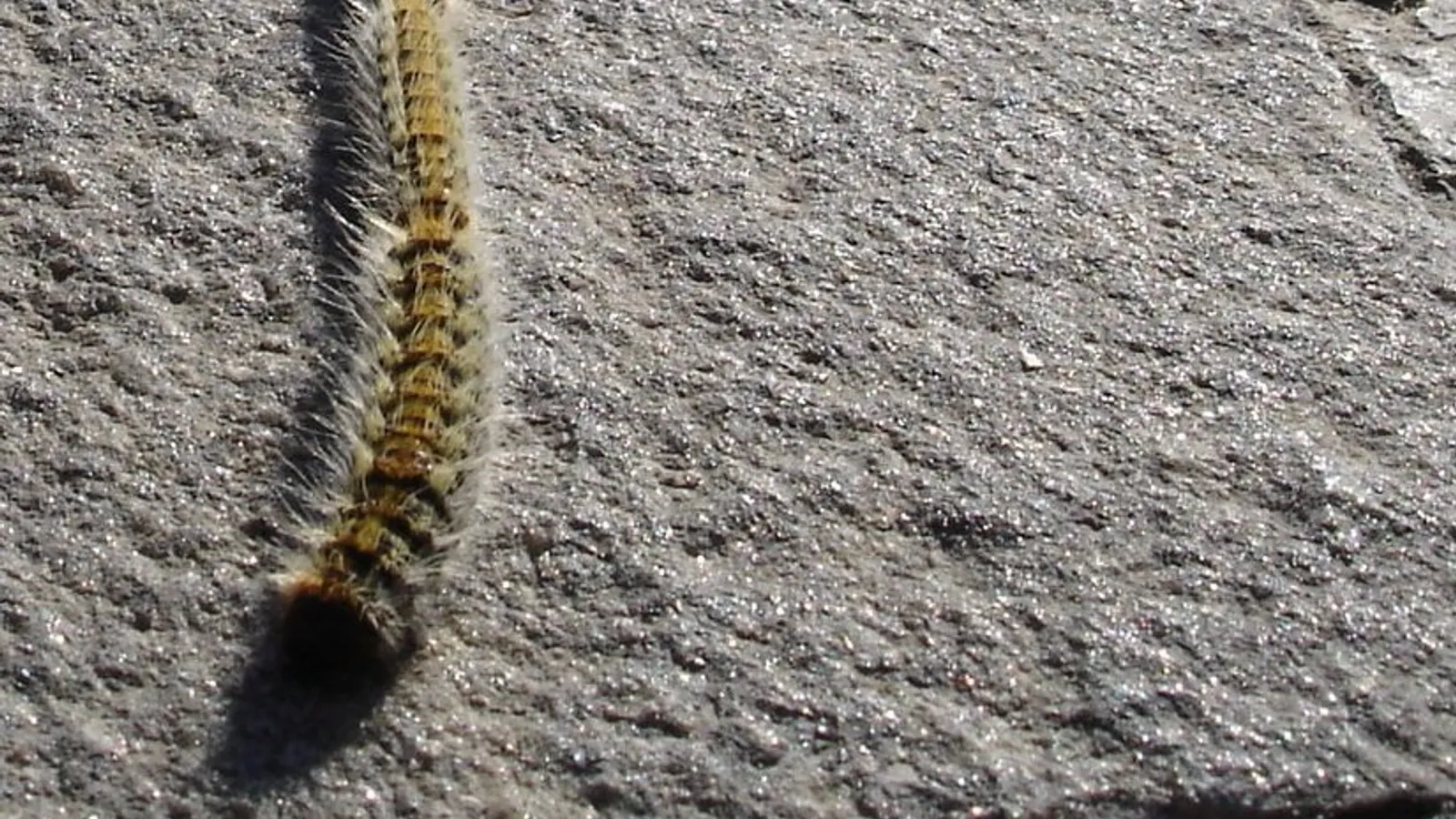
Thaumetopoea means “that performs a wonder”, from thaûma, the marvel, and poiéō, to make: the wonder is the single file in which the caterpillars come down from the tree, each with its head against the tail of the one before. Pityocampa is an ancient Greek word, pityokámpē, “pine caterpillar”, which Dioscorides was already using in the first century for a venomous caterpillar: the scientific name is two thousand years old.
— Facts
- Group
- Insects · Insecta
- Order
- Butterflies and moths
- Habitat
- Pine and cedar woods; white silk nests at the tips of branches
- Range
- The Mediterranean basin, spreading northwards
- Size
- Adult 3–4 cm wingspan; caterpillar 4 cm
- Diet
- Pine and cedar needles
- Lifespan
- One year; the adult moth lives a day or two
— Characteristics
- 01
The caterpillars descend in single file, in columns of dozens.
- 02
They are covered in urticating hairs that come loose and travel on the air.
- 03
The white silk nest stays visible in pinewoods all winter.
— What sets it apart
The procession has a leader, and it is always a female: the rest of the column follows the silk thread and the chemical trail left by the one ahead, without seeing where it is going. The naturalist Jean-Henri Fabre tried closing the circle by arranging the caterpillars around the rim of a pot, where the first found itself behind the last: they went round for a week. The urticating hairs need no contact — they come loose, stay in the air and in the soil for years, and cause severe reactions in dogs, which sniff at the right level. The species is climbing in latitude and altitude with mild winters, and is one of the clearest indicators of warming in Europe.
