
Giant Pacific octopus
Enteroctopus dofleini
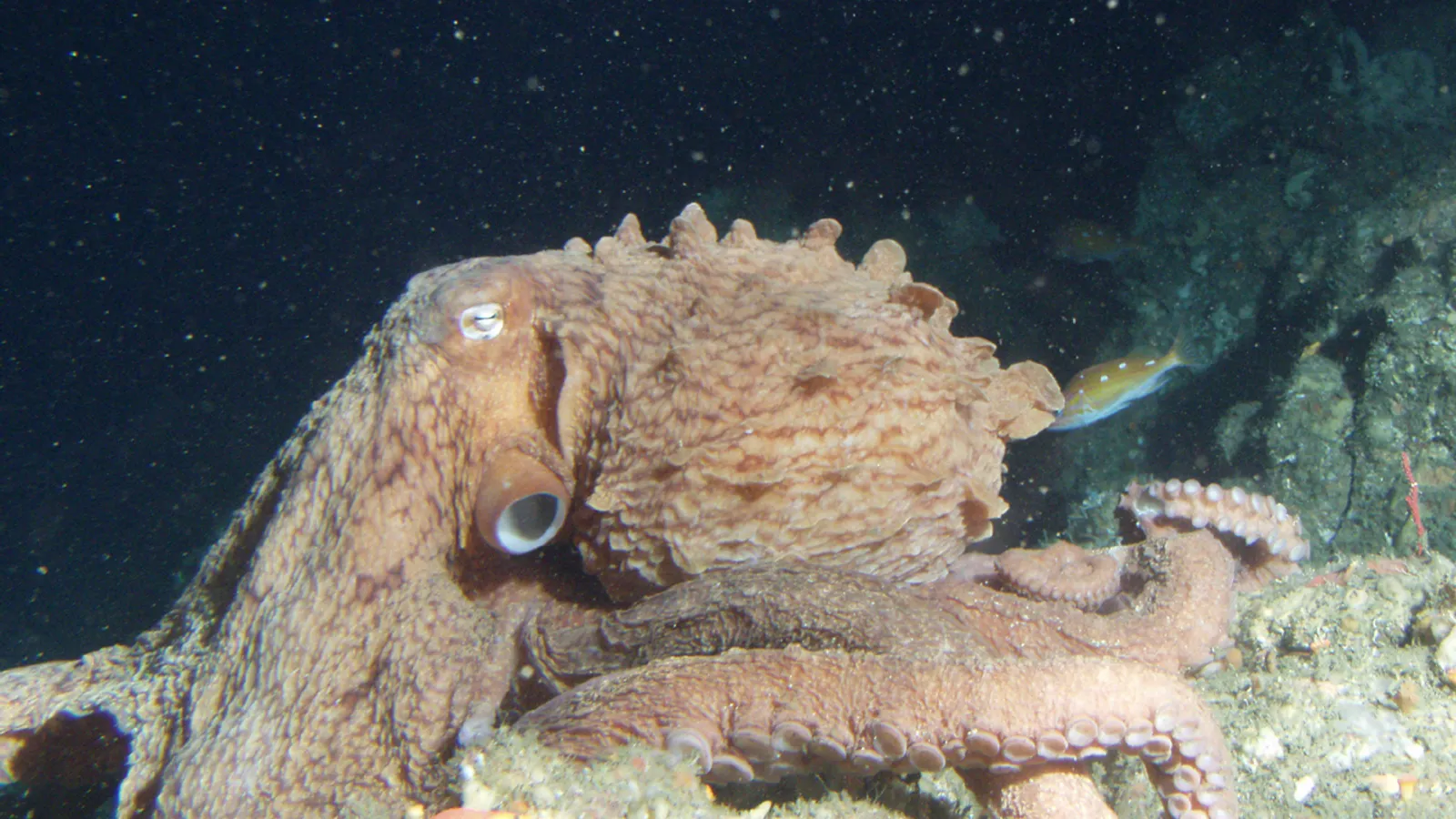
— Where the name comes from
Enteroctopus joins the Greek énteron, gut, to octopus, “eight feet”, from októ and poús; dofleini honours the zoologist Franz Doflein. The Italian polpo comes from the Greek polýpous, “many-footed”. It is the largest octopus in the world, an intelligent giant of the cold North Pacific.
— Facts
- Group
- Molluscs · Mollusca
- Order
- Octopuses
- Habitat
- Rocky bottoms, from coastal shallows to deep water
- Range
- The North Pacific, from California to Japan
- Size
- 3–5 m across the arms, 15–50 kg
- Diet
- Carnivore — crabs, molluscs, fish, other octopuses
- Lifespan
- 3–5 years
— Characteristics
- 01
It is the largest living octopus: outstretched, the arms pass five metres.
- 02
It changes the colour and even the texture of its skin in a fraction of a second.
- 03
It has nine “brains”: one central and one in each arm, which acts on its own.
— What sets it apart
The giant Pacific octopus may be the most intelligent invertebrate there is: it opens jars, solves mazes, recognises individual human faces and uses tools. Most of its neurons are not in the central brain but in the arms, each of which “thinks” and tastes for itself: severed arms have gone on manipulating objects independently. The female devotes the last act of her life to the brood: she watches the eggs for months without ever eating, and dies soon after they hatch, spent but with her young safe.
