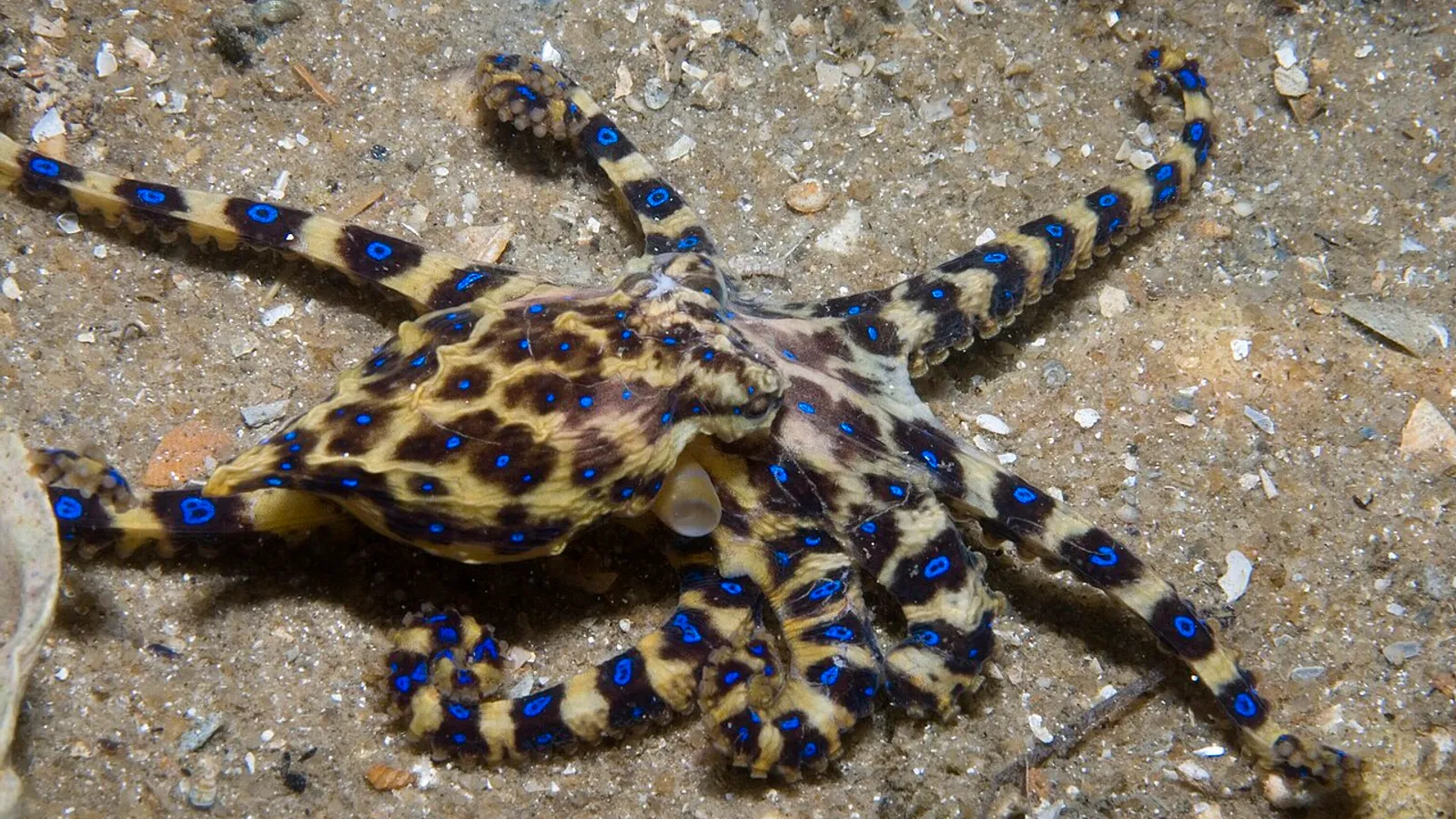
Southern blue-ringed octopus
Hapalochlaena maculosa
— Where the name comes from
Hapalochlaena is Greek for “with a delicate cloak”, from hapalós, soft, and chlaîna, cloak; maculosa is Latin, “spotted”. The common name comes from the iridescent rings that flash when it is alarmed. No bigger than a golf ball, it is one of the most venomous animals in the sea.
— Facts
- Group
- Molluscs · Mollusca
- Order
- Octopuses
- Habitat
- Rock pools, sandy bottoms and shallow reefs
- Range
- The coasts of southern Australia
- Size
- 5–8 cm including the arms
- Diet
- Carnivore — small crabs and shrimp
- Lifespan
- About 2 years
— Characteristics
- 01
The blue rings, normally invisible, flash suddenly as a warning when it is threatened.
- 02
The venom contains tetrodotoxin, able to paralyse and kill a person.
- 03
There is no antidote: all one can do is support breathing until the toxin wears off.
— What sets it apart
The blue-ringed octopus is tiny and looks harmless until it lights up: then, in under a second, it flashes dozens of electric-blue rings, the signal that it is about to bite. Its venom, the same tetrodotoxin as the pufferfish, paralyses the breathing muscles, leaving the victim conscious but unable to move or breathe. There is no antidote; the only hope is to ventilate the person artificially for hours, until the body clears the toxin. The blue flash is the one brief warning it grants.