
European squid
Loligo vulgaris
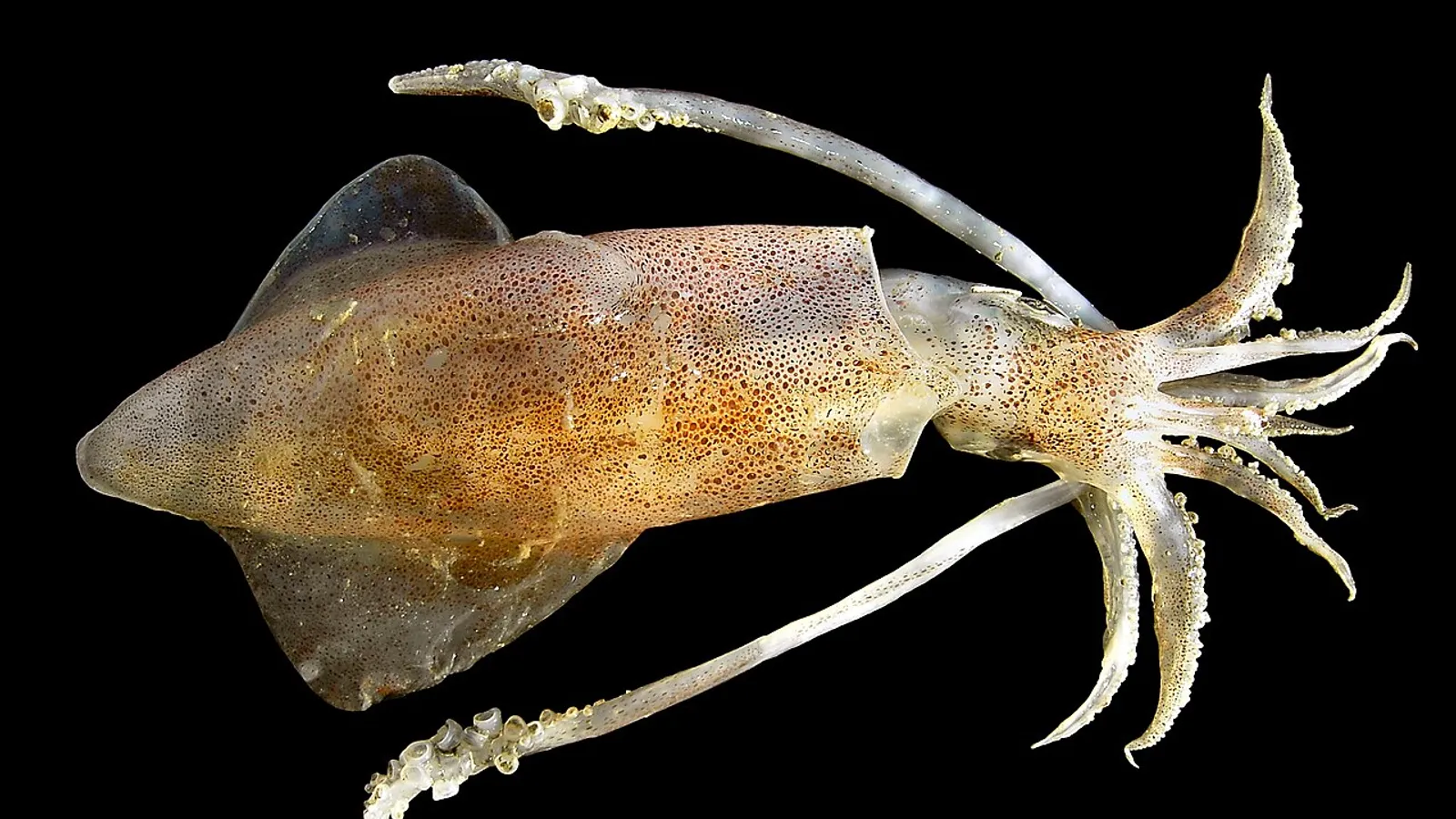
— Where the name comes from
Loligo is the Latin name of the squid; vulgaris, “common”. The Italian calamaro comes from the Latin calamarium, the inkwell, from the sac of black ink the animal carries inside it — the same link of words that in many languages joins the mollusc to the writing tool.
— Facts
- Group
- Molluscs · Mollusca
- Order
- Inshore squids
- Habitat
- Open coastal waters, over sandy bottoms
- Range
- The eastern Atlantic and the Mediterranean
- Size
- 15–40 cm of mantle
- Diet
- Carnivore — fish, crustaceans, other squid
- Lifespan
- 1–2 years
— Characteristics
- 01
It moves by jet propulsion, expelling water through a siphon it can aim at will.
- 02
It signals and hides by changing colour with pigment cells, the chromatophores.
- 03
It has ten appendages: eight arms and two longer, retractable tentacles for seizing prey.
— What sets it apart
The squid quite literally carries an inkwell inside it: a sac of black ink it releases in a cloud as it flees, creating a dark “stand-in” that confuses the predator while the animal, blanching suddenly, shoots off the other way. That ink, sepia, was used for centuries for writing and drawing — the colour “sepia” takes its name from it. And its skin is a living canvas: banks of chromatophores make it flash in waves of colour, a language scientists are still learning to read.
