
Western swamphen
Porphyrio porphyrio
— Where the name comes from
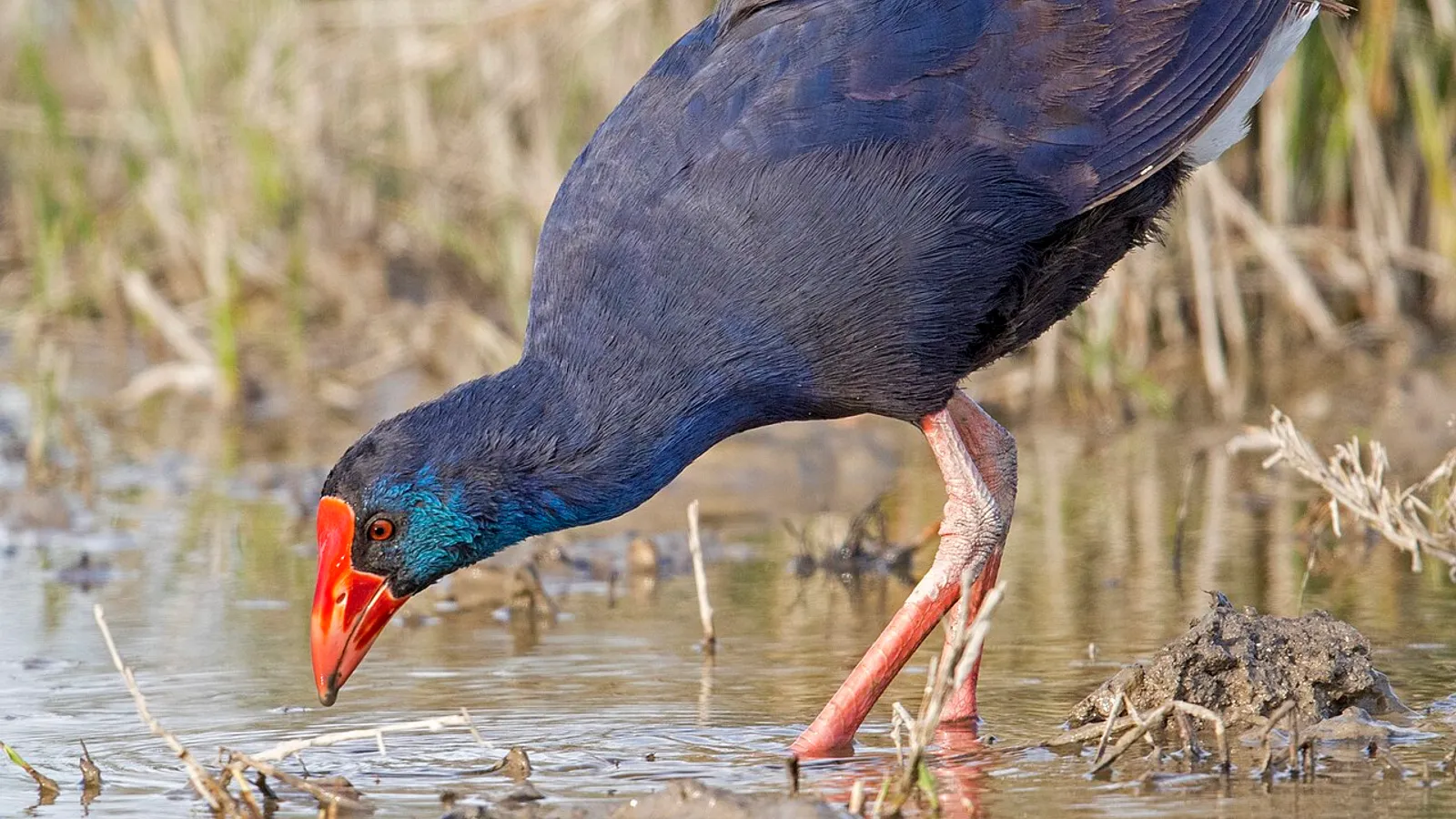
Porphyrio comes from porphýra, purple: the most expensive dye of the ancient world, made from a mollusc and reserved for emperors. Greeks and Romans kept this bird in temples and villa gardens precisely for the colour, and Pliny describes it as sacred and a good omen. The Italian name keeps the same idea of oriental luxury.
— Facts
- Group
- Birds · Aves
- Order
- Cranes and allies
- Habitat
- Reedbeds, marshes, rice fields, ponds with dense vegetation
- Range
- The western Mediterranean and north-western Africa
- Size
- 45–50 cm, wingspan 90–100 cm, 0.7–1 kg
- Diet
- Reed shoots and rhizomes, seeds, eggs, small animals
- Lifespan
- 20 years in the wild
— Characteristics
- 01
It holds food in one foot and lifts it to the bill as one would with a hand.
- 02
It walks over flooded reeds on immensely long toes.
- 03
It lives in groups in which several adults breed and raise young together.
— What sets it apart
A close relative came back from the dead. The takahē of New Zealand, large, flightless and declared extinct at the end of the nineteenth century, was found again in 1948 by a doctor who had spent twenty years insisting it still existed, in a remote valley of the South Island: today a few hundred survive, all descended from that group. In Italy the swamphen had gone from Sicily and Sardinia and was brought back by reintroductions from the 1980s onwards.
