
Shoebill
Balaeniceps rex
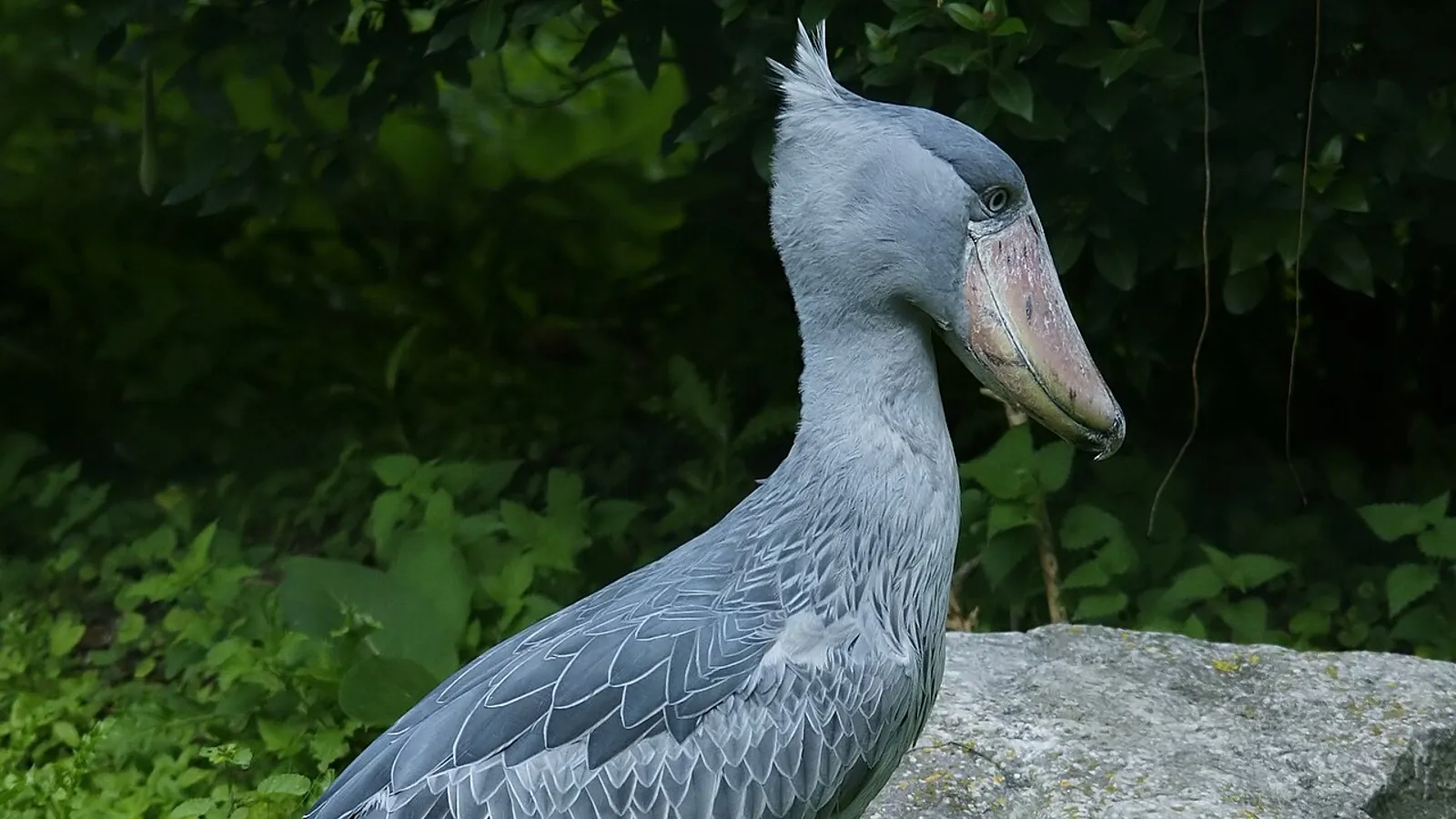
— Where the name comes from
Balaeniceps is “whale head”, from balaena and caput: whoever described it in 1850 could find nothing better to convey that enormous bill, broad and hooked at the tip. Rex, “king”, completes the verdict. In English it is the shoebill, and the Italian name is a straight translation of that.
— Facts
- Group
- Birds · Aves
- Order
- Pelicans and allies
- Habitat
- Papyrus swamps with oxygen-poor water
- Range
- Central and eastern Africa, from South Sudan to Zambia
- Size
- 110–140 cm tall, wingspan 230–260 cm, 4–7 kg
- Diet
- Lungfish, catfish, frogs, turtles, small crocodiles
- Lifespan
- 35 years in captivity
— Characteristics
- 01
It can stand motionless for hours without moving even its head.
- 02
It claps its mandibles like a machine gun to communicate.
- 03
It flies very little and with very slow beats: about a hundred and fifty a minute.
— What sets it apart
It hunts by falling over. After a wait that can last hours it topples forward with its whole body onto the water, bill wide open, and swallows along with the fish half a kilo of mud and vegetation, which it then spits out while keeping the prey; the hook at the tip of the bill is there to stop it escaping. It favours swamps where the water is poor in oxygen, because there the lungfish must come to the surface to breathe and become predictable: a motionless hunter that picks its spot from the chemistry of the water.
