
Great egret
Ardea alba
— Where the name comes from
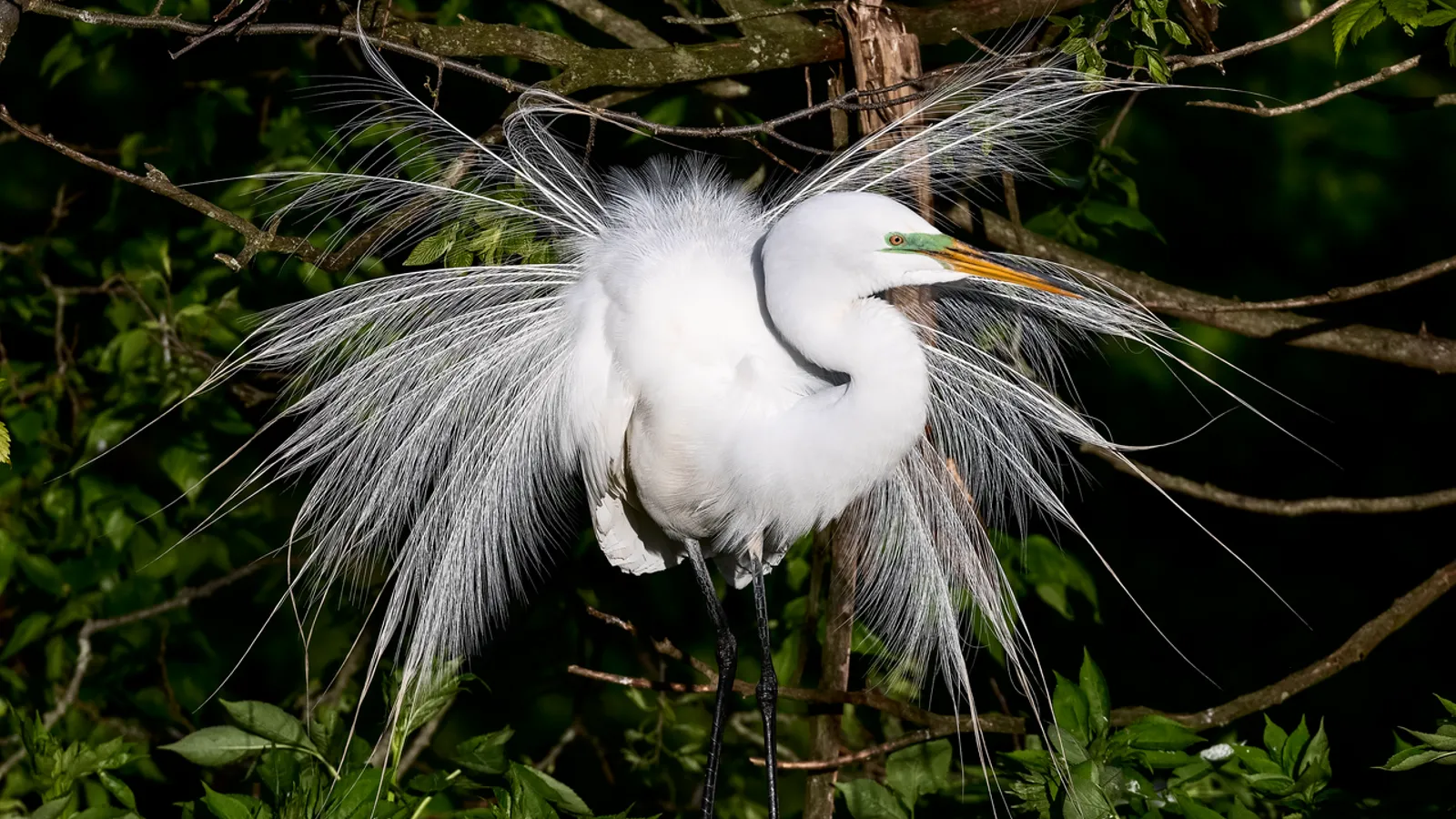
Ardea is the heron in Latin, and Ovid tells that it was born from the ashes of the city of Ardea burnt by Aeneas: a white bird that rose out of the smoke shaking the ash from itself. Alba gives the colour. The long fine feathers that grow on its back in spring are called aigrettes, and they are the reason this species nearly vanished from the world.
— Facts
- Group
- Birds · Aves
- Order
- Pelicans and allies
- Habitat
- Marshes, rice fields, lagoons, lake and river margins
- Range
- Every continent except Antarctica
- Size
- 85–104 cm, wingspan 140–170 cm, 0.7–1.5 kg
- Diet
- Fish, amphibians, insects, voles
- Lifespan
- 22 years in the wild
— Characteristics
- 01
It hunts motionless in shallow water and strikes with the neck like a spring.
- 02
In the breeding season the bare skin between eye and bill turns emerald green.
- 03
It flies with the neck folded into an S, not outstretched like a stork.
— What sets it apart
Around 1900 its nuptial plumes were worth more than gold by weight, and to get them the colonies were destroyed during incubation, the chicks left to die: the trade in feathered hats was killing millions a year. The reaction produced the first American bird protection laws and the first game wardens, and in 1905 one of them, Guy Bradley, was shot dead in Florida by the poachers he was arresting. His death caused a scandal and hastened the legislation. The principal ornithological society in the United States still carries this heron as its emblem.
