
Eurasian spoonbill
Platalea leucorodia
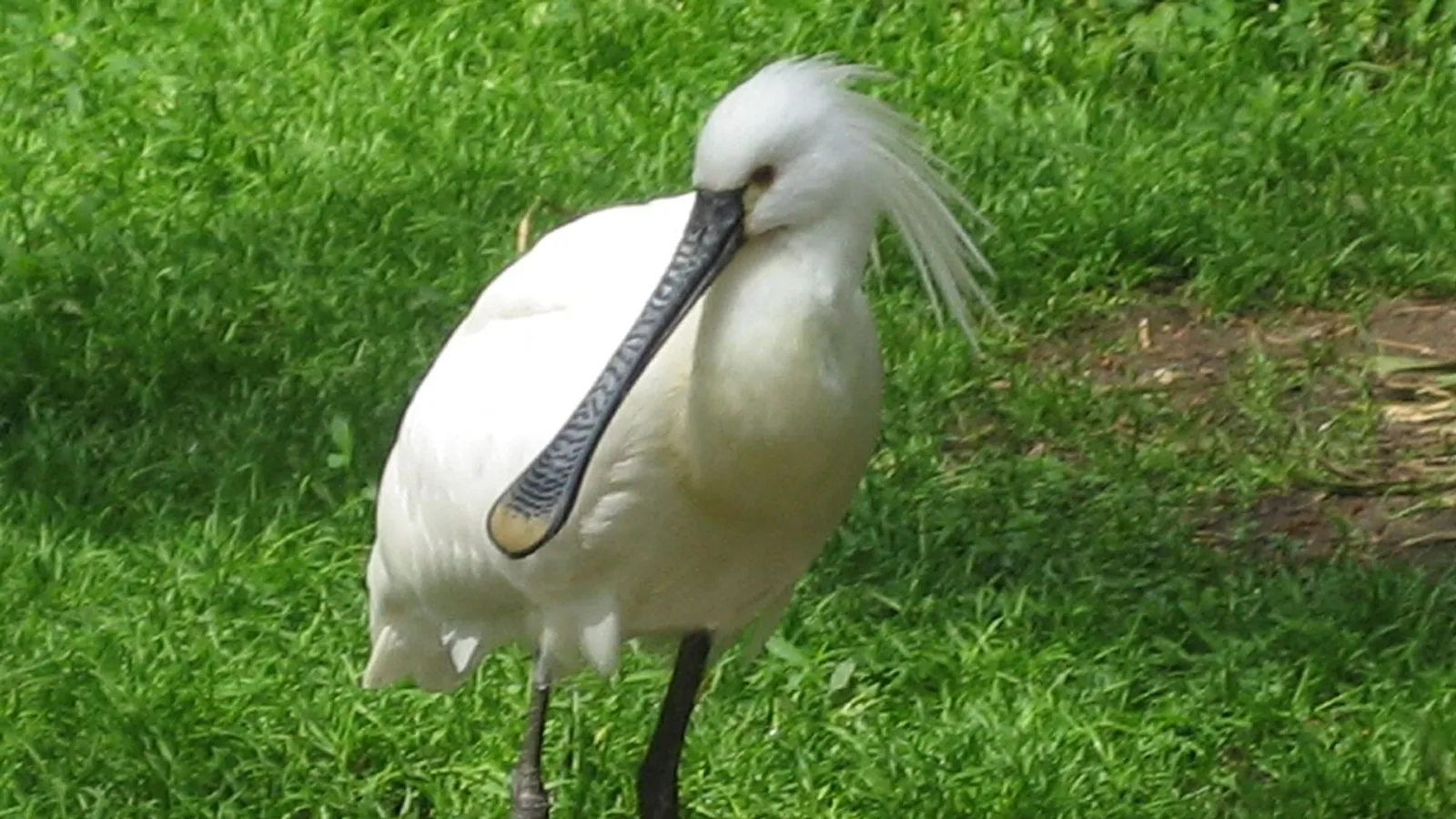
— Where the name comes from
Platalea comes from the Greek platýs, “broad, flat”, and describes the bill, which ends in a round paddle; leucorodia is a contraction of leukós and erōdiós, “white heron”. The Italian name translates the shape of the tool, and it is one of the rare cases in which the common name, the scientific name and the animal’s appearance all say the same thing.
— Facts
- Group
- Birds · Aves
- Order
- Pelicans and allies
- Habitat
- Brackish lagoons, fish ponds, marshes, estuaries
- Range
- Europe, Asia and North Africa; winters in Africa and India
- Size
- 80–93 cm, wingspan 120–135 cm, 1.1–2 kg
- Diet
- Small fish, shrimp, larvae, tadpoles
- Lifespan
- 28 years in the wild
— Characteristics
- 01
It walks through shallow water sweeping the half-open bill from side to side.
- 02
Chicks hatch with a short straight bill: the spoon comes later.
- 03
It nests in mixed colonies with herons and egrets, often on flooded reedbeds.
— What sets it apart
It fishes in the dark, by touch. The tip of the bill is covered in sensory corpuscles that register contact with something alive, and the mandibles close in about twenty-five thousandths of a second: faster than a shrimp can flick away. The advantage is that no light is needed, and many colonies indeed feed at night or in water so laden with mud that no heron would see a thing. It is a bird that gave up its eyes in order to eat, and won anyway.
