Bar-tailed godwit
Limosa lapponica
— Where the name comes from
Limosa comes from the Latin limosus, “muddy”, from limus, “mud”: the bird of the mudflats left by the tide. Lapponica means “of Lapland”, where Linnaeus knew it as a breeding bird. In English it is the bar-tailed godwit, for its barred tail.
— Facts
- Group
- Birds · Aves
- Order
- Shorebirds
- Habitat
- Arctic tundra for breeding; tidal mudflats and estuaries outside the season
- Range
- Breeds from northern Scandinavia to Alaska; winters in western Europe, Africa, Australia and New Zealand
- Size
- 37–41 cm, 190–630 g; the female larger, with a longer bill
- Diet
- Marine worms, molluscs, crustaceans, insects
- Lifespan
- Over 20 years the record
— Characteristics
- 01
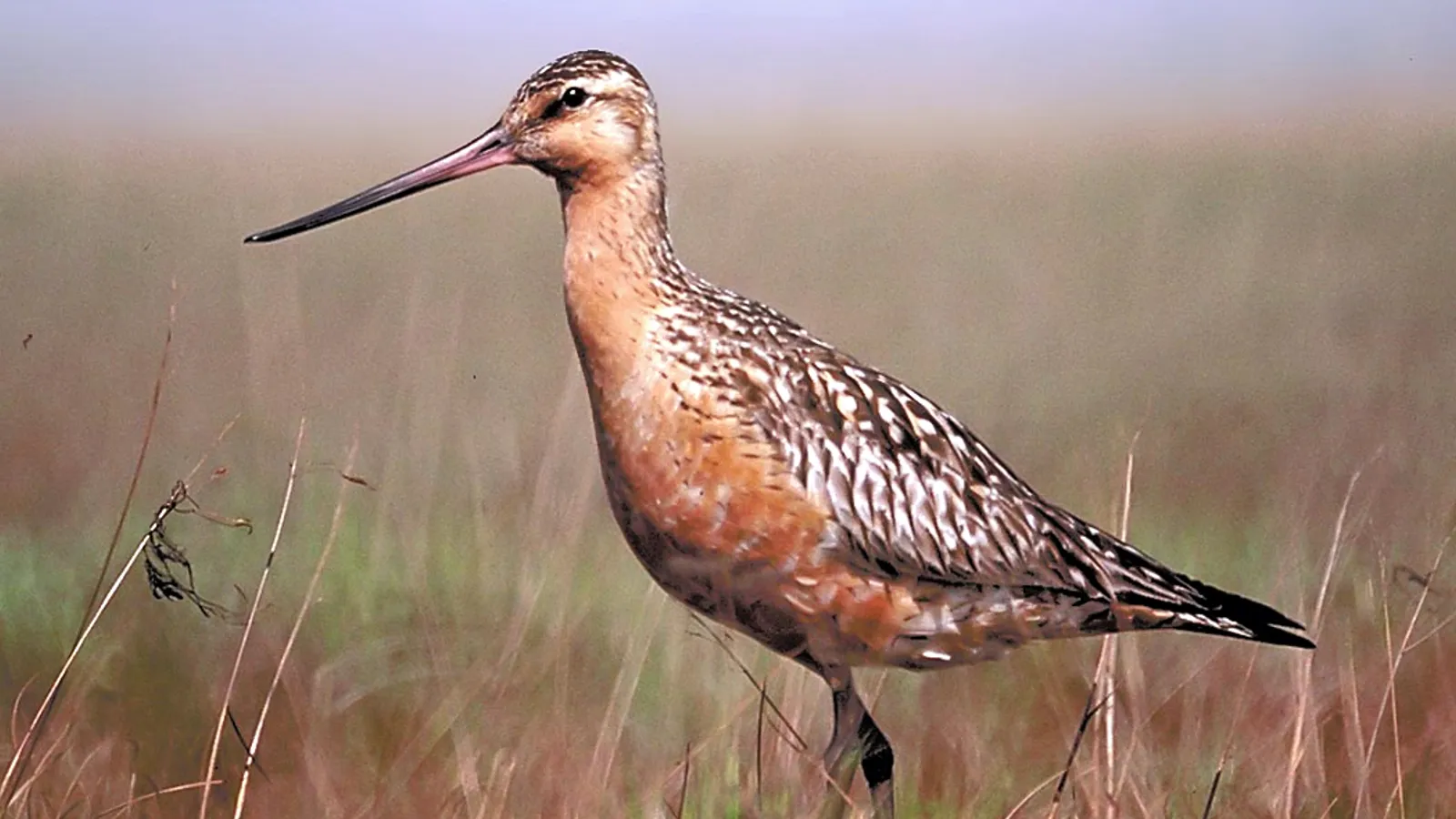
It has a long, slightly upturned bill.
- 02
In spring the male turns brick red.
- 03
It can double its weight before setting off on migration.
— What sets it apart
It holds the record for the longest non-stop flight of any bird. In 2022 a five-month-old youngster fitted with a satellite transmitter left Alaska and landed in Tasmania eleven days later, after more than thirteen thousand kilometres over the Pacific, without ever landing, eating or drinking. To manage it, in the preceding weeks the godwit builds up fat until half its weight is fuel, and at the same time shrinks its stomach, gut and liver, organs it does not need during the journey and that would only be ballast.