
Soprano pipistrelle
Pipistrellus pygmaeus
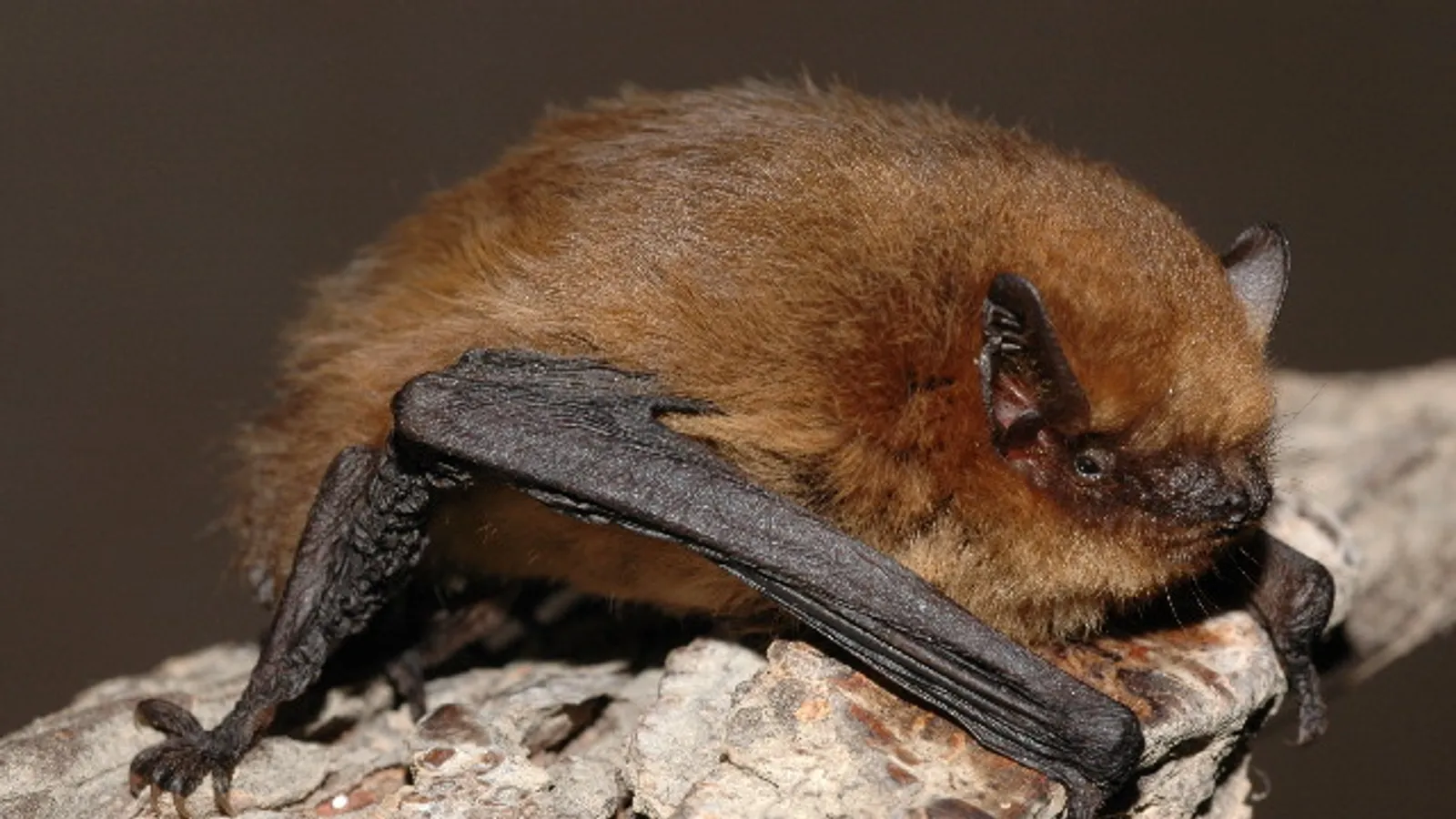
— Where the name comes from
Pygmaeus is the Latin “pygmy”, from the Greek pygmaîos, “a fist high” — the measure from elbow to knuckles. The name is recent in ordinary use because the species is very recent as a recognised entity: until 1999 it was considered a mere variant of the common pipistrelle, and nobody had reason to give it a name of its own.
— Facts
- Group
- Mammals · Mammalia
- Order
- Bats
- Habitat
- Riverside woodland, parks, buildings; hunting over water and vegetation
- Range
- Europe and western Asia
- Size
- 3.6–4.8 cm of body, 20 cm wingspan, 4–8 g
- Diet
- Insectivore — flies, largely water-linked
- Lifespan
- Up to 16 years
— Characteristics
- 01
It is among the smallest European mammals: it weighs as much as a one-cent coin.
- 02
It echolocates around 55 kHz, against the common pipistrelle’s 45.
- 03
It forms larger breeding colonies than its twin does.
— What sets it apart
It was discovered by listening. For two centuries what we called the common pipistrelle was one animal; then in the 1990s bioacousticians noticed that the recordings held two sharp peaks, one at 45 and one at 55 kHz, and that individuals did not answer the other group’s calls. Genetics confirmed two species separated by millions of years, indistinguishable to the naked eye. Europe’s commonest mammal was in fact two, and we noticed only when we had the instruments to hear them.
