
Savi's pipistrelle
Hypsugo savii
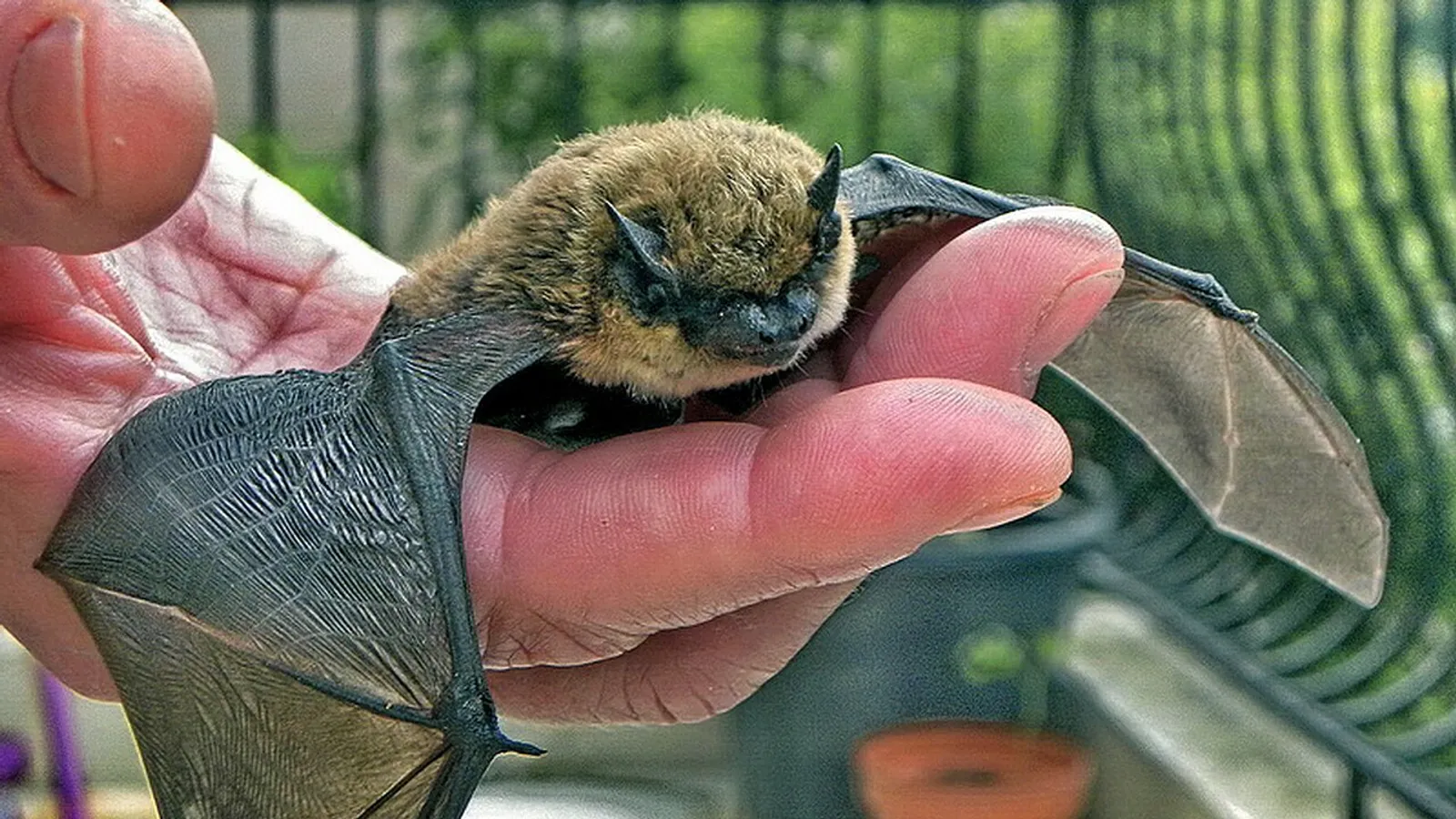
— Where the name comes from
Savii recalls Paolo Savi, a 19th-century naturalist from Pisa, director of the university museum and author of a Tuscan ornithology still cited today. Hypsugo is a modern name, coined to separate this group from the pipistrelles proper, and its etymology is disputed — the proposals invoke the Greek hypsi-, “high up”, for the habit of flying high.
— Facts
- Group
- Mammals · Mammalia
- Order
- Bats
- Habitat
- Crevices in cliffs and buildings; hunting in open sky and above cities
- Range
- The Mediterranean basin, Central Asia, the Himalaya, Japan
- Size
- 4–5.4 cm of body, 24 cm wingspan, 5–10 g
- Diet
- Insectivore — small insects taken in high flight
- Lifespan
- Little known
— Characteristics
- 01
It flies higher than most small European bats.
- 02
Originally a cliff dweller, it has moved into city buildings.
- 03
The fur is dark with golden tips, and the membranes almost black.
— What sets it apart
It has swapped cliffs for buildings, and the substitution has been nearly perfect. It is a species born to rock, used to slipping into the vertical crevices of Mediterranean cliff faces, and the façades of tall buildings — expansion joints, spaces under tiles, shutter boxes — offer exactly the same kind of crevice at the same height above the ground. In Italian cities it is now among the commonest bats, and it hunts above the roofs at a height where, quite simply, nobody looks up.
