
Western barbastelle
Barbastella barbastellus
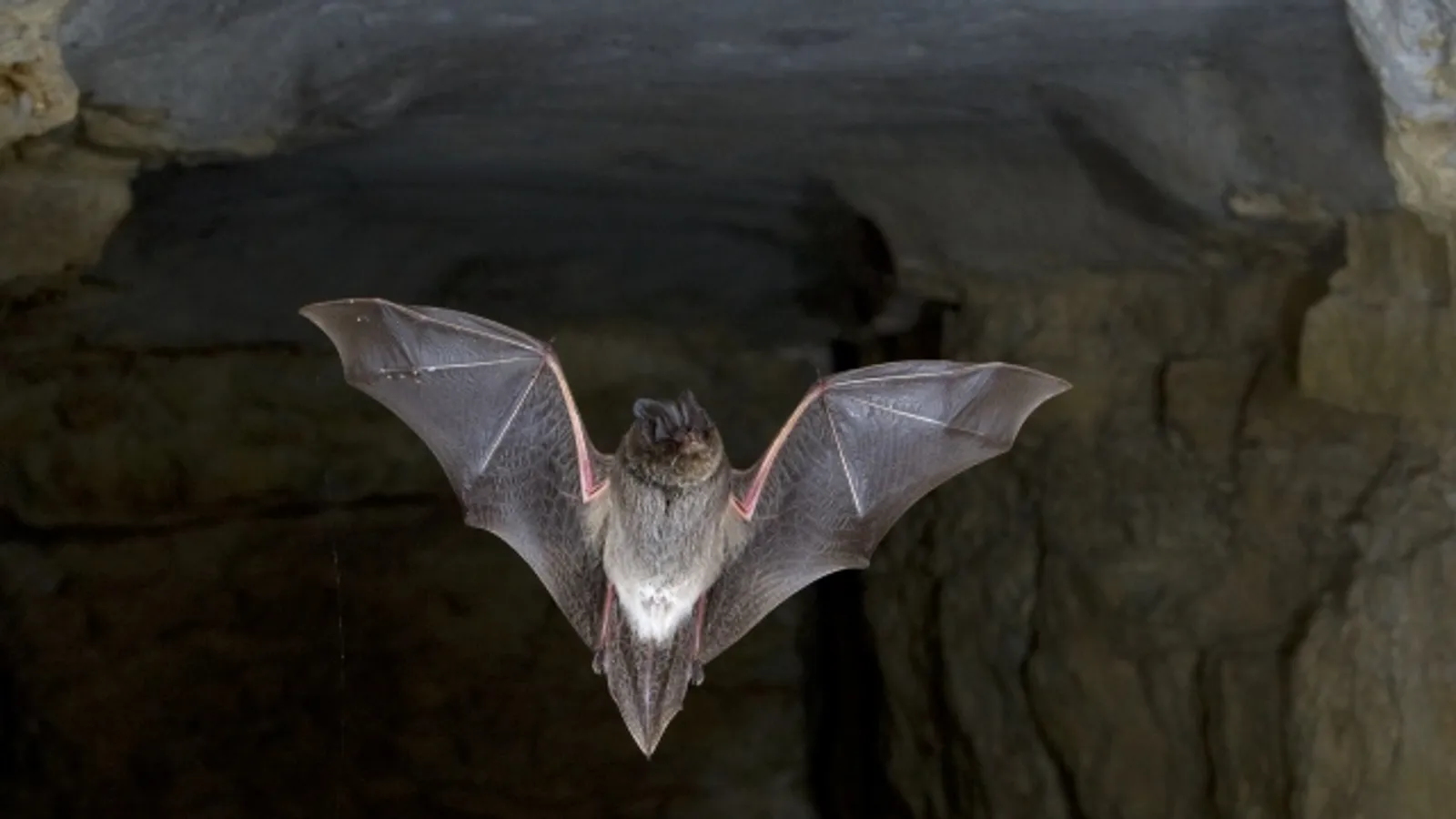
— Where the name comes from
Barbastella latinises a European folk name built on the Latin barba: in Old French and in various Italian dialects the animal was the barbastello or barbastrello, for the thick fur around the muzzle. It is one of the rare cases in which the scientific name adopted outright the name people already used, instead of replacing it with a Greek compound.
— Facts
- Group
- Mammals · Mammalia
- Order
- Bats
- Habitat
- Mature woodland with standing dead trees; wintering in cold caves and bunkers
- Range
- Europe, from Portugal to the Caucasus; local everywhere
- Size
- 4.5–6 cm of body, 28 cm wingspan, 6–14 g
- Diet
- Insectivore — almost exclusively moths with ears
- Lifespan
- Up to 23 years
— Characteristics
- 01
It has a flattened black face and ears joined above the forehead.
- 02
It gives calls a hundred times fainter than other bats’.
- 03
It roosts behind the loose bark of dead trees.
— What sets it apart
It hunts by whispering. Many moths have ears that hear bat sonar and make them drop to the ground before they are reached: against that defence, this species has cut the volume of its own calls by a factor of a hundred, staying below the prey’s alarm threshold until it is half a metre away. It pays for the advantage with a sonar that sees very little at a distance, which is why it must know its own wood by heart. It is an arms race won by giving up shouting.
