
Brown long-eared bat
Plecotus auritus
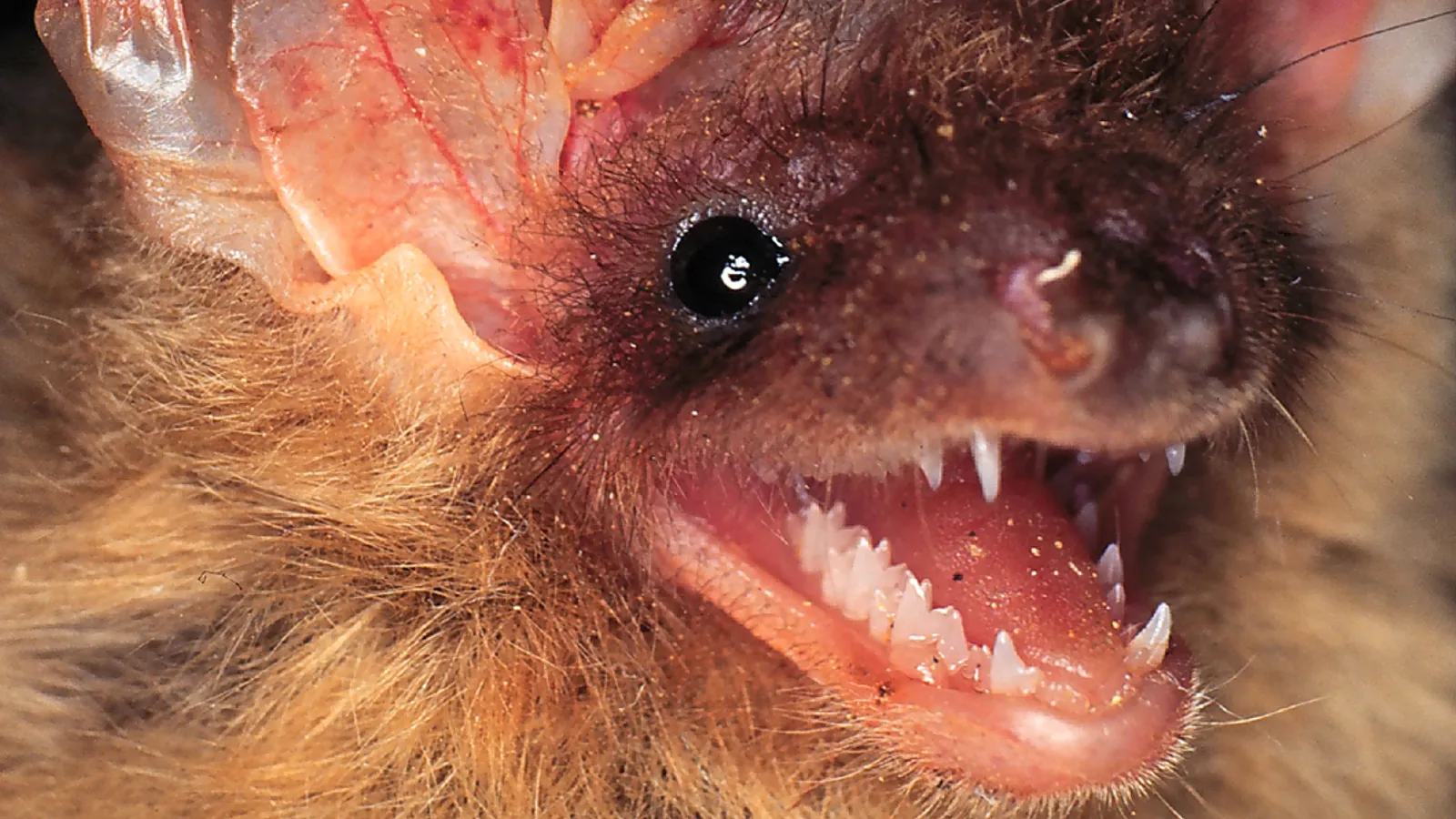
— Where the name comes from
Plecotus is “plaited ear”, from the Greek plékō, “to plait”, and oûs: the two ears are joined at the base by a membrane, as though knotted across the forehead. Auritus is the Latin “long-eared”, from auris. Two languages to say the same thing, which is also the only thing worth knowing: the ears are nearly as long as the body.
— Facts
- Group
- Mammals · Mammalia
- Order
- Bats
- Habitat
- Woodland, parks, attics and churches; hunting among dense foliage
- Range
- Europe and temperate Asia, from Ireland to Japan
- Size
- 4.2–5.3 cm of body, 26 cm wingspan, 5–12 g
- Diet
- Insectivore — moths gathered off leaves and branches
- Lifespan
- Up to 30 years
— Characteristics
- 01
The ears are up to four centimetres long, nearly the length of the body.
- 02
Asleep it folds them back under its wings, leaving only the tragi showing.
- 03
It hovers in front of leaves to pluck off resting insects.
— What sets it apart
Those ears are not for hearing its own sonar better: they are for hearing the prey without using it. Like the greater mouse-eared bat and the Indian false vampire, this species hunts largely by passive listening, picking up the rustle of a moth walking on a leaf. The sonar, when it uses it, is very faint — another whisperer, like the barbastelle. And when it sleeps the ears vanish: it folds them back under its wings like two ram’s horns, and whoever finds it hibernating struggles to recognise it.
