
Grey long-eared bat
Plecotus austriacus
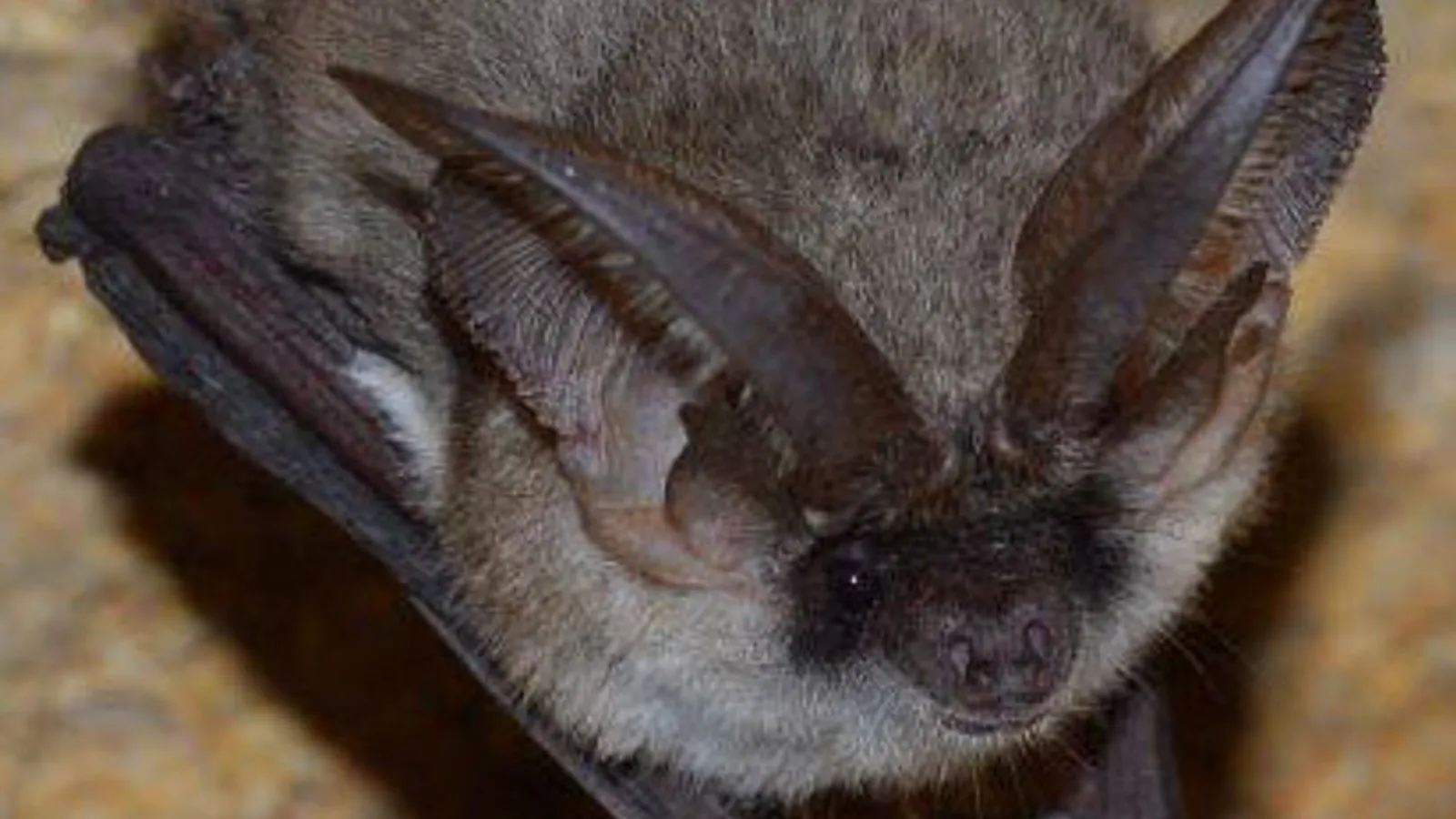
— Where the name comes from
Austriacus names Austria, where the specimen was taken on which the species was separated from the brown long-eared bat. The distinction is very late — 1960 — and concerns two animals that have always shared the same European villages: the difference lies in a few millimetres of thumb and in the shape of the tragus, and for decades nobody had noticed that two different species were sleeping in the belfries of Europe.
— Facts
- Group
- Mammals · Mammalia
- Order
- Bats
- Habitat
- Warm attics and belfries; hunting in open country and over cropland
- Range
- Southern and central Europe, North Africa, western Asia
- Size
- 4.1–5.8 cm of body, 28 cm wingspan, 6–14 g
- Diet
- Insectivore — moths taken in flight, rather than picked off foliage
- Lifespan
- Up to 25 years
— Characteristics
- 01
It prefers warm attics, while its brown congener prefers woodland.
- 02
The fur is ash-grey and the face darker than its commoner relative’s.
- 03
It hunts in open country, not among dense foliage.
— What sets it apart
It has always lived alongside its brown twin without interbreeding, and the two have divided the landscape rather than quarrelled over it: the brown one stays in the wood and gathers insects off leaves, the grey one goes out into the fields and takes them in flight, and in the same regions they occupy roosts of different temperature. It is the textbook case of two cryptic species nobody could tell apart by eye but which ecology had kept separate for millions of years — it took us until 1960 to notice.
