
Townsend's big-eared bat
Corynorhinus townsendii
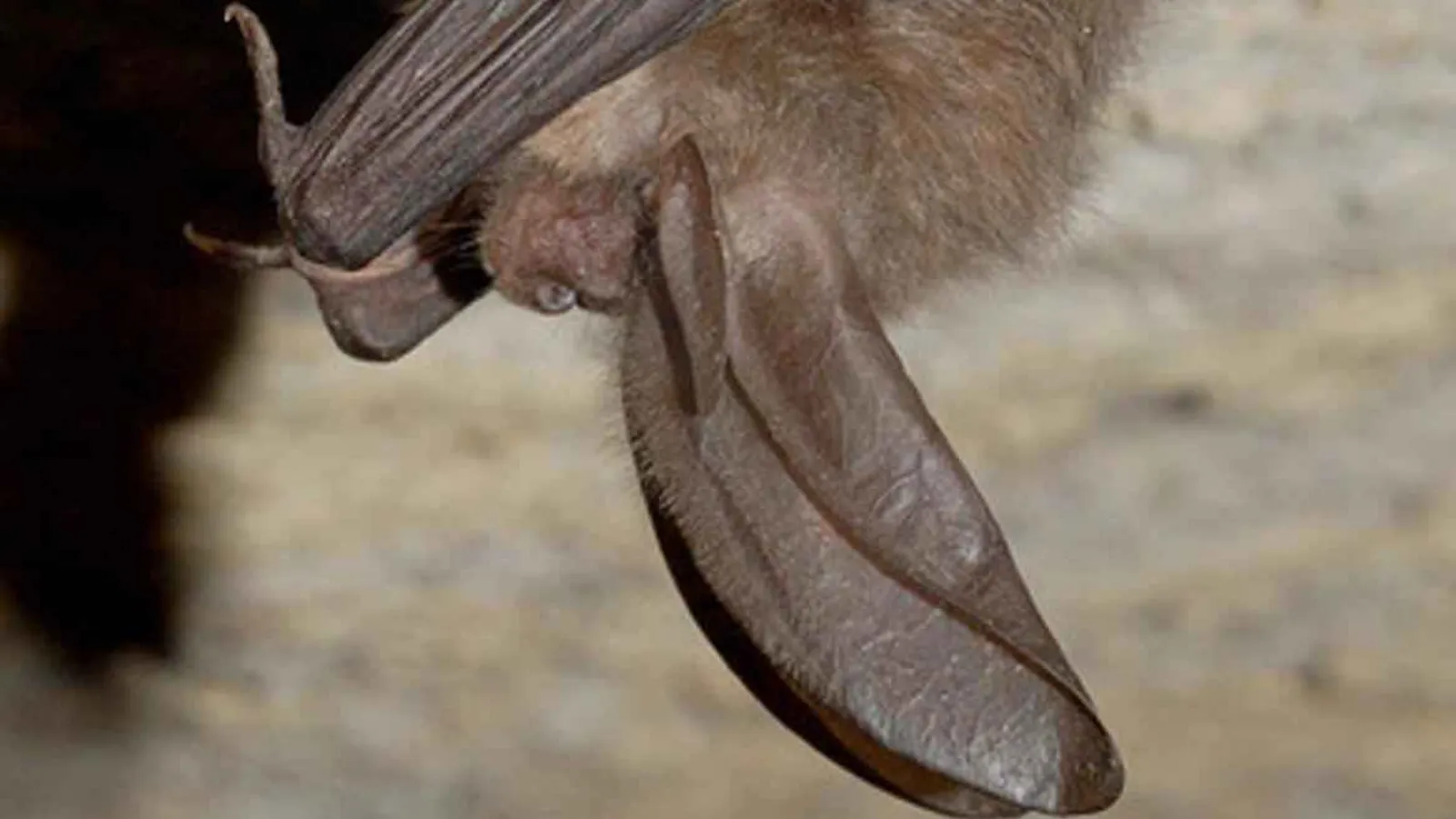
— Where the name comes from
Corynorhinus is “club nose”, from the Greek korýnē, the club of Heracles, and rhís: on either side of the muzzle it carries two rounded glandular lumps like small clubs. Townsendii recalls John Kirk Townsend, the American naturalist who crossed the Rocky Mountains in 1834 with one of the first expeditions to Oregon.
— Facts
- Group
- Mammals · Mammalia
- Order
- Bats
- Habitat
- Caves, abandoned mines, buildings; hunting along edges and vegetation
- Range
- Western North America, from southern Canada to Mexico
- Size
- 5.8–6.3 cm of body, 30 cm wingspan, 7–12 g
- Diet
- Insectivore — chiefly moths
- Lifespan
- Up to 21 years
— Characteristics
- 01
The ears reach four centimetres and coil into spirals during hibernation.
- 02
It is among the bats most sensitive to human disturbance in caves.
- 03
It hovers in front of vegetation, like a hummingbird.
— What sets it apart
One visit to the wrong cave is enough to wreck a year’s breeding. This species abandons a roost after very little disturbance during hibernation or nursing, and forced awakenings burn fat reserves calculated to the gram to last until spring: two or three intrusions in a winter can kill a colony without anyone having touched it. That is why in the western United States many caves and mines have gates of horizontal bars — bats pass, people do not.
