
Greater bulldog bat
Noctilio leporinus
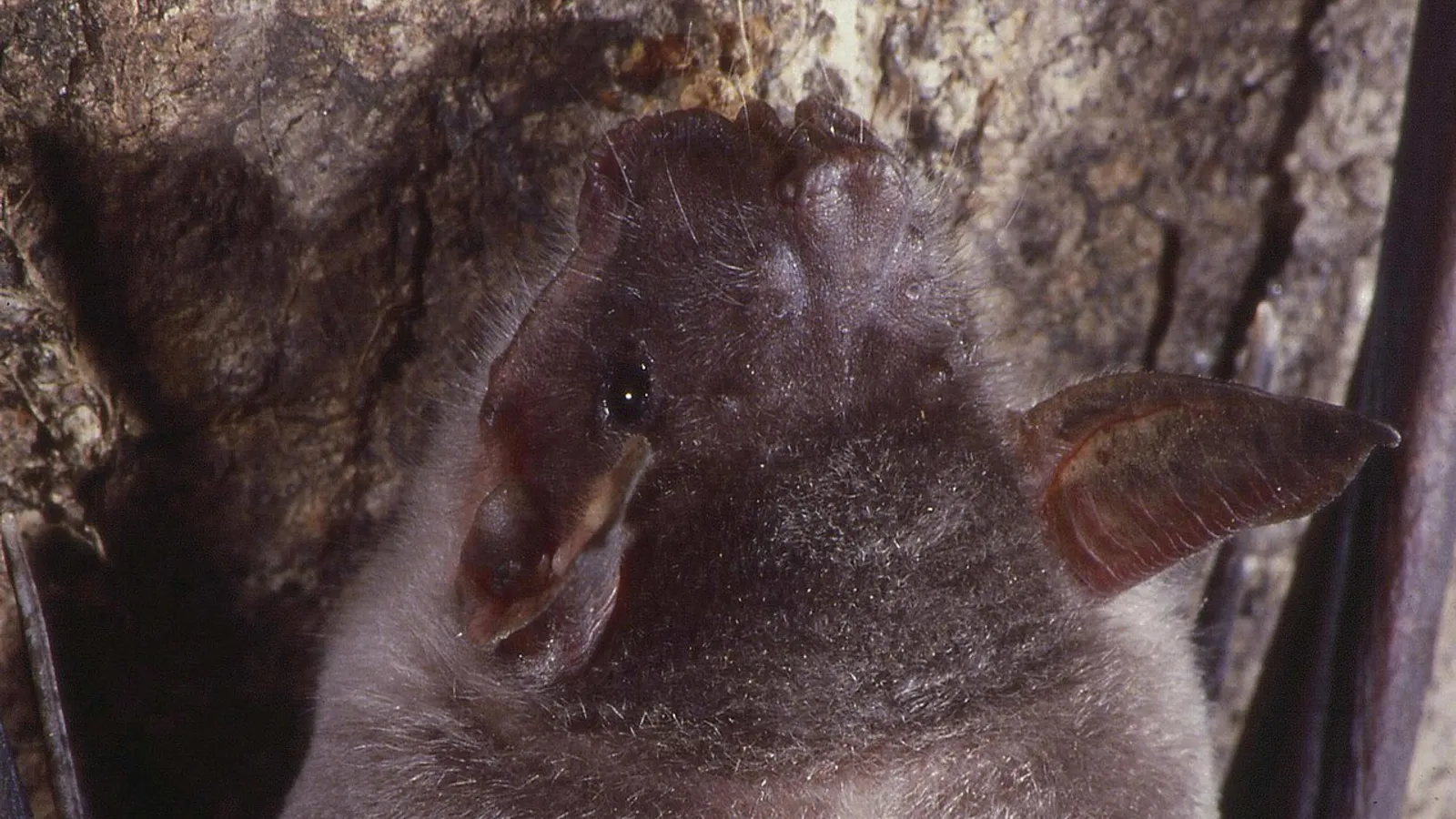
— Where the name comes from
Noctilio is built on the Latin nox, “night”; leporinus is “of the hare”, referring to the upper lip split by a vertical groove, as in leporids. In English it is the bulldog bat for its face, and the fisherman bat for what it does: it is one of the very few flying mammals that fish, and the only one that does so as its main trade.
— Facts
- Group
- Mammals · Mammalia
- Order
- Bats
- Habitat
- Caves and hollows near lagoons, estuaries, slow rivers and inshore sea
- Range
- From Mexico to northern Argentina, and the Antilles
- Size
- 9.8–13.2 cm of body, 60 cm wingspan, 60–78 g
- Diet
- Fish eater — small surface fish, plus insects and crustaceans
- Lifespan
- Up to 12 years
— Characteristics
- 01
It has enormous feet with long curved claws, which it uses as grappling hooks.
- 02
It finds fish by the ripples they make breaking the surface.
- 03
It has expandable cheeks in which it stores fish while it goes on hunting.
— What sets it apart
It does not see fish: it sees their ripples. Water reflects ultrasound like a mirror and gives back nothing of what lies beneath, so sonar is useless for looking into the depths — but a fin breaking the surface, or the ripple left by a fish that has just passed, produces a very sharp echo against that flat background. The bat reads it, drops its legs, ploughs the water with its claws for a few metres and hooks on. Then it brings the prey to its mouth in flight and tucks it into its cheeks.
