
Common pipistrelle
Pipistrellus pipistrellus
Conservation status IUCN: Least concern· LC
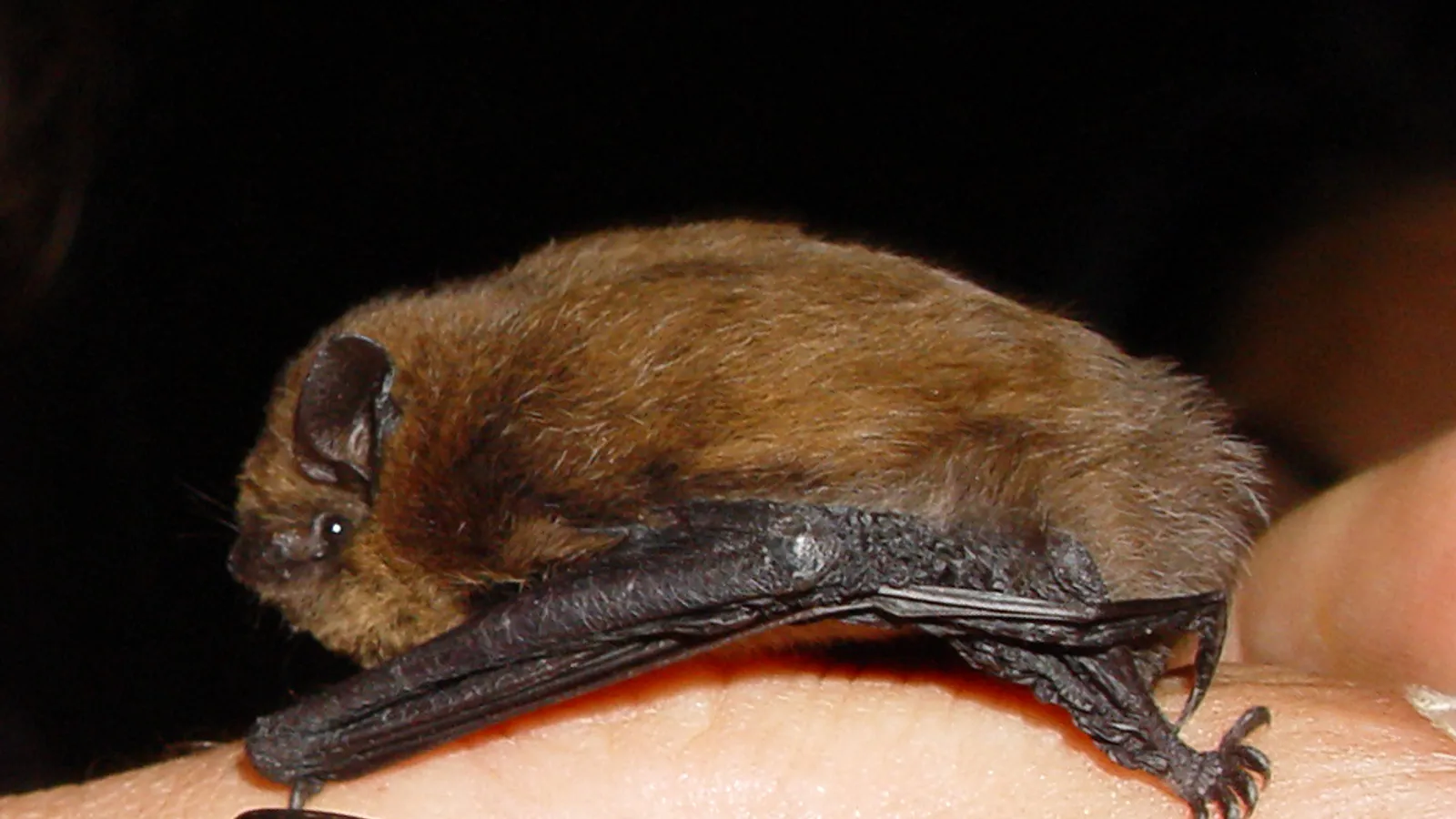
— Where the name comes from
The Italian pipistrello comes, by metathesis, from the older vipistrello, from the Latin vespertilio: “creature of the evening”, of the vesper hour. The name of the order, Chiroptera, is Greek: “hand-wing”.
— Facts
- Group
- Mammals · Mammalia
- Order
- Bats
- Habitat
- Anywhere there are insects at dusk: woodland, cities, parks
- Range
- Europe, North Africa, western Asia
- Size
- 3.5–5 cm of body, 3–8 g
- Diet
- Insectivore — up to 3,000 mosquitoes a night
- Lifespan
- 4–5 years, with records past 16
— Characteristics
- 01
The only mammal capable of true powered flight.
- 02
The wing is a hand: elongated fingers stretch a membrane.
- 03
Echolocates around 45 kHz, far above our threshold.
— What sets it apart
An echolocation call, close up, reaches 140 dB: enough to damage the bat’s own ear. So a tiny muscle in the middle ear contracts a few milliseconds before every call, switching hearing off, and releases in time to listen for the echo. Up to 200 times a second, all night long.
