
Western gorilla
Gorilla gorilla
— Where the name comes from
The name comes from Górillai, the word an interpreter used, in the account of the Carthaginian navigator Hanno (5th century BC), for some wild and hairy creatures met on the African coast. Twenty-three centuries later the missionary Thomas Savage took it up to name the great ape. Nobody now knows what animal — or what people — Hanno had really seen.
— Facts
- Group
- Mammals · Mammalia
- Order
- Primates
- Habitat
- Lowland rainforest and swamp forest
- Range
- West-central Africa: Cameroon, Gabon, Congo
- Size
- 140–180 cm standing, up to 200 kg for the male
- Diet
- Herbivore — shoots, fruit, plant pith
- Lifespan
- 35–40 years in the wild
— Characteristics
- 01
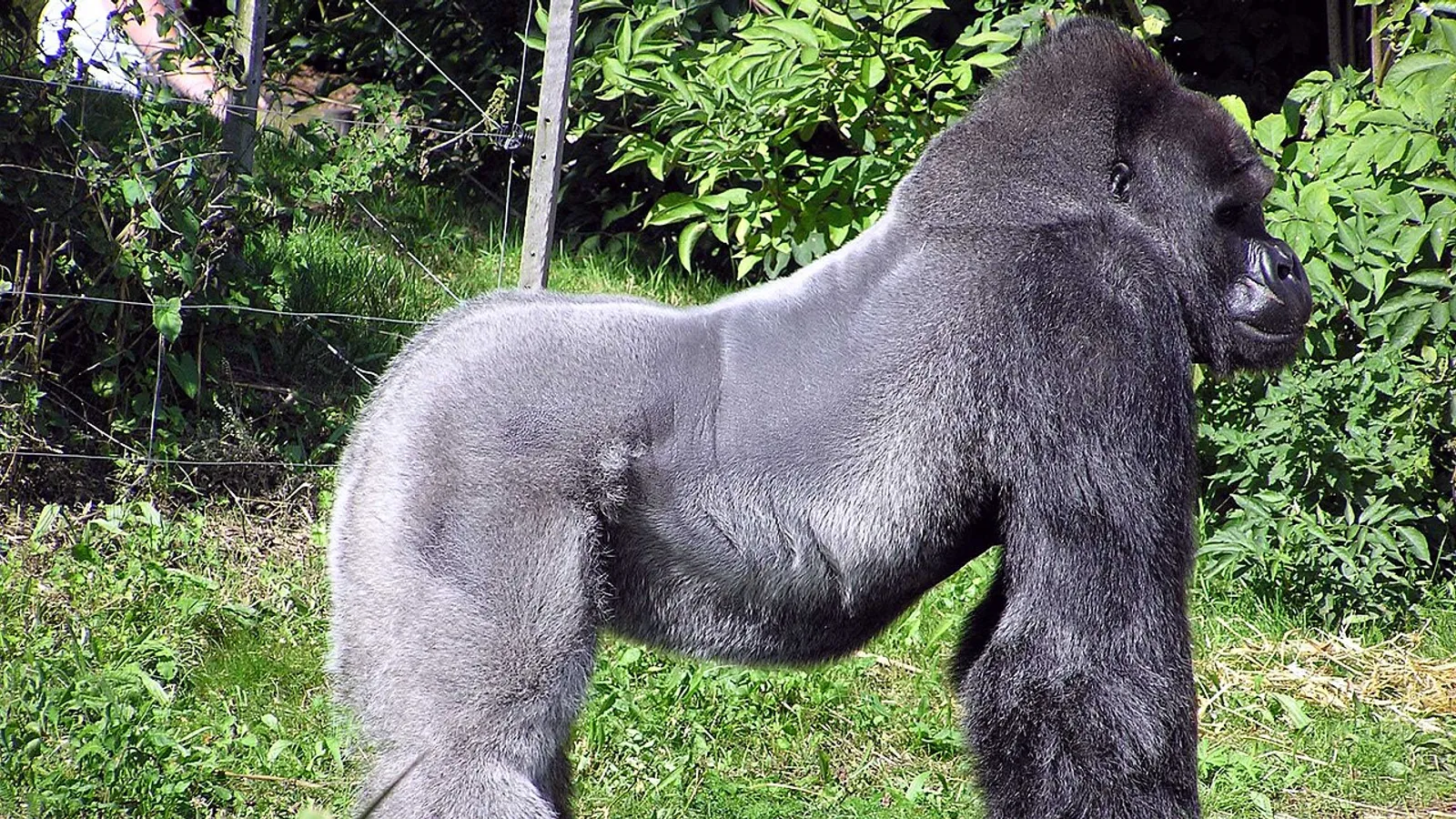
The adult male has a silver back: the “silverback” that leads and guards the group.
- 02
Builds a fresh nest of branches and leaves to sleep in every evening.
- 03
Shares roughly 98% of its DNA with us.
— What sets it apart
For all its bulk and strength, the gorilla is almost entirely vegetarian and deeply peaceable: most of the silverback’s displays — chest-beating, snapping branches, charging — exist precisely to avoid a physical fight, not to seek one. Beating the chest with open hands makes a sound that carries far through the forest and announces one’s size without having to touch anyone.
