
Lesser Asiatic yellow bat
Scotophilus kuhlii
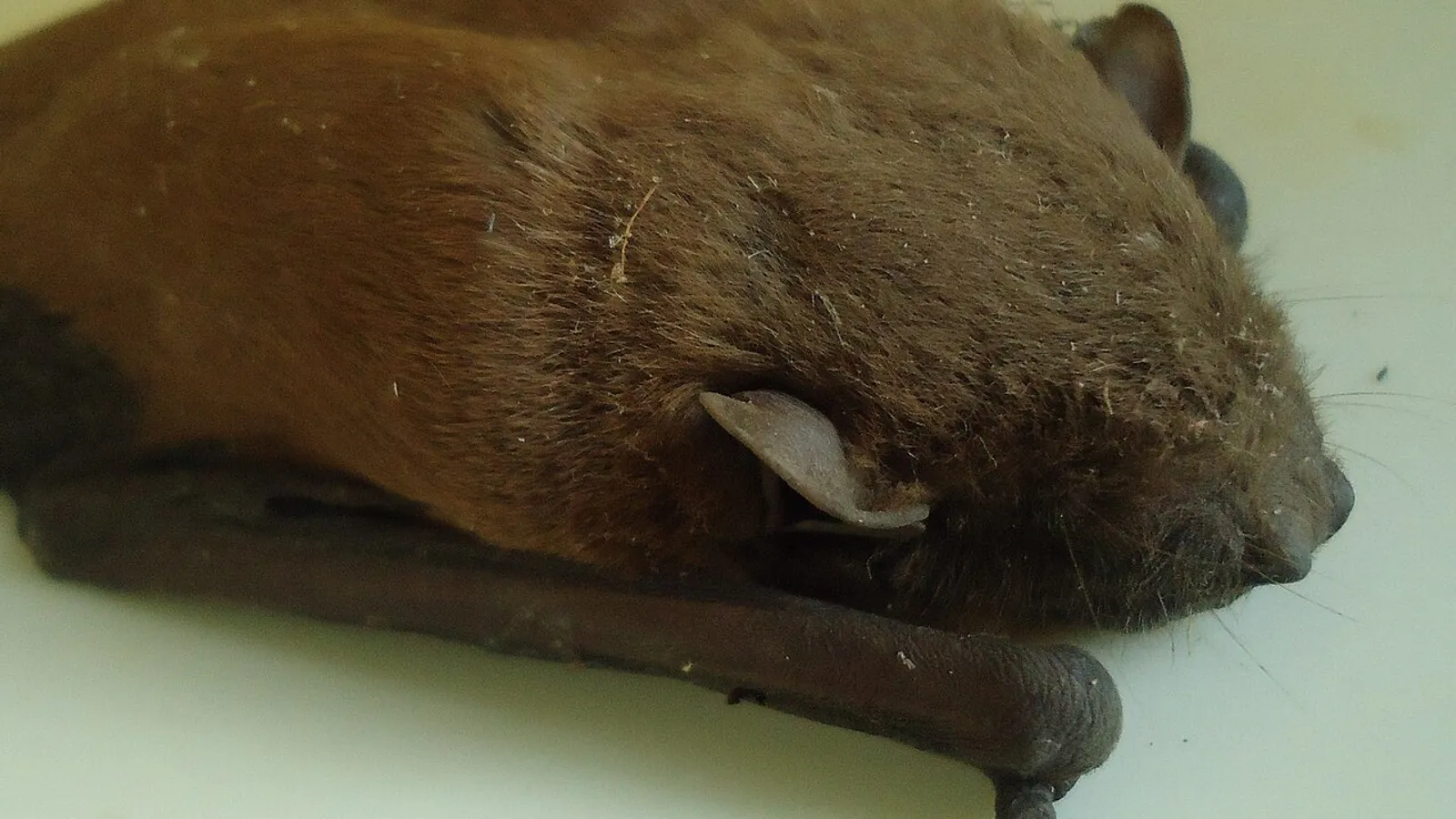
— Where the name comes from
Scotophilus is “lover of the dark”, from the Greek skótos and phílos — a name one could give to half the order and which distinguishes nothing. Kuhlii recalls Heinrich Kuhl again, the naturalist who died at twenty-three in Java. The common name looks to the belly, a bright ochre yellow against the brown back.
— Facts
- Group
- Mammals · Mammalia
- Order
- Bats
- Habitat
- Palm-leaf roofs, attics, cavities; hunting over rice fields and villages
- Range
- South and South-East Asia, from Pakistan to the Philippines
- Size
- 7–9 cm of body, 35 cm wingspan, 20–35 g
- Diet
- Insectivore — winged termites, beetles, rice-field insects
- Lifespan
- Little known
— Characteristics
- 01
It lives almost exclusively in house roofs and coconut palms.
- 02
It emerges early and hunts over paddy fields, where insects abound.
- 03
Roof colonies can number a few dozen animals.
— What sets it apart
It is the bat that shares a house with half of rural Asia. It occupies the space between the palm leaves of traditional roofs and the lofts of masonry houses, and from there it goes out every evening to eat the insects of the rice fields — including the leafhoppers that transmit rice viruses. Studies in the Philippines and Thailand have tried to quantify its agricultural value, and the result is the same as in the United States: the animal people would like to drive off the roof is the one protecting the field.
