
African yellow bat
Scotophilus dinganii
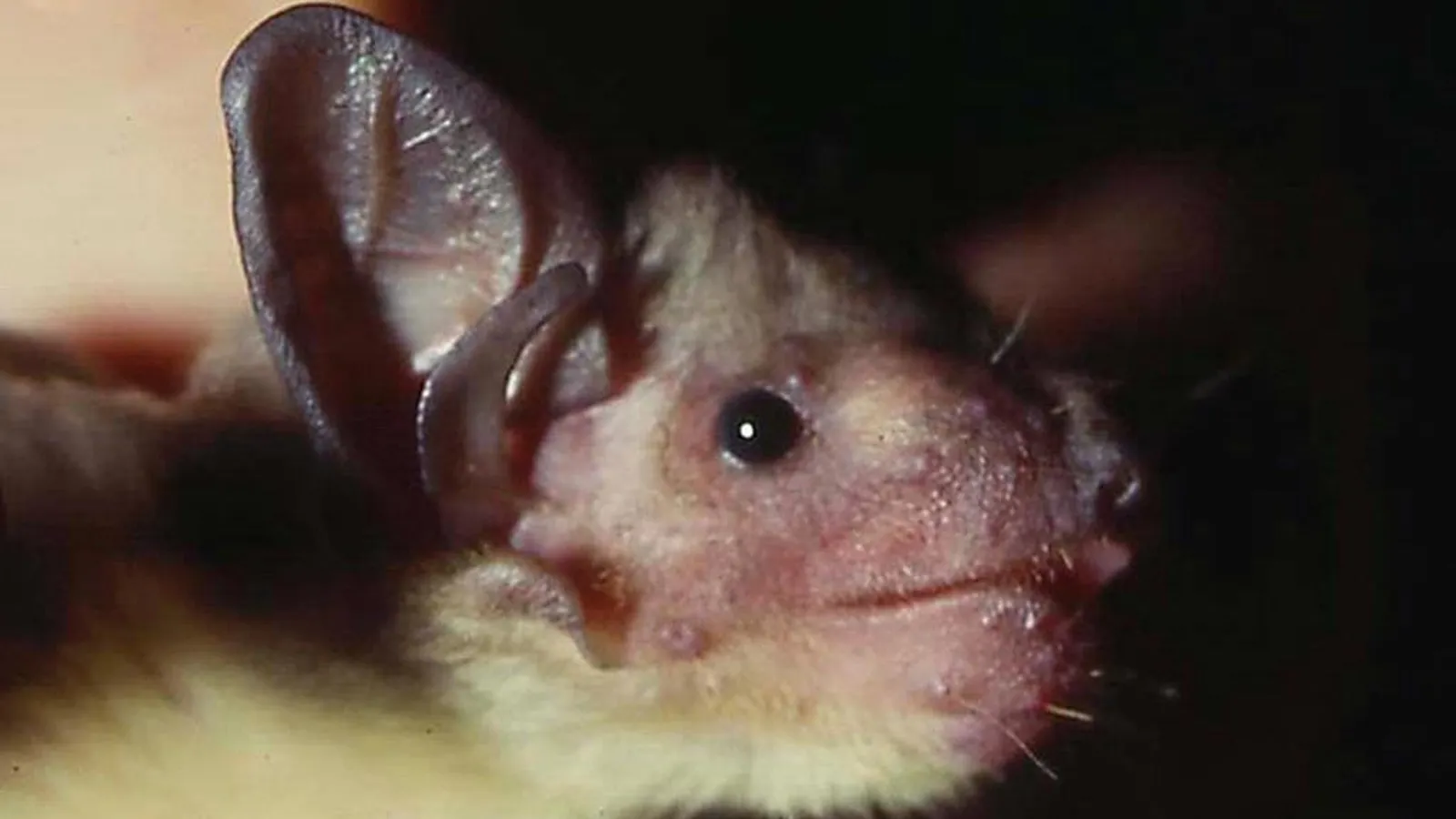
— Where the name comes from
Dinganii recalls Dingane, the Zulu king who reigned from 1828 to 1840 after Shaka’s death — one of the very few mammal scientific names dedicated to an African sovereign rather than a European naturalist. The species was described by Andrew Smith, the Scottish army surgeon who travelled South Africa in the 1830s and wrote a great deal about that world.
— Facts
- Group
- Mammals · Mammalia
- Order
- Bats
- Habitat
- Attics and tree hollows in savannah and settled country
- Range
- Sub-Saharan Africa, from Senegal to Ethiopia and down to South Africa
- Size
- 7–8.5 cm of body, 35 cm wingspan, 20–35 g
- Diet
- Insectivore — beetles, winged termites, moths
- Lifespan
- Little known
— Characteristics
- 01
It has a bright yellow belly and an olive-brown back.
- 02
It is among the commonest bats in the houses of sub-Saharan Africa.
- 03
It hunts in open air with fast direct flight, often around lights.
— What sets it apart
It lives in the roofs of African houses as its Asian cousin lives in those of Asia, and the two resemble one another so closely that for a century the genus was a taxonomic mess: identical-looking forms spread over two continents, which genetics has since separated into a number of species still under discussion. It is the typical case with bats — animals better told apart by call and DNA than by appearance, and whose bookkeeping changes with every revision.
