
Variegated butterfly bat
Glauconycteris variegata
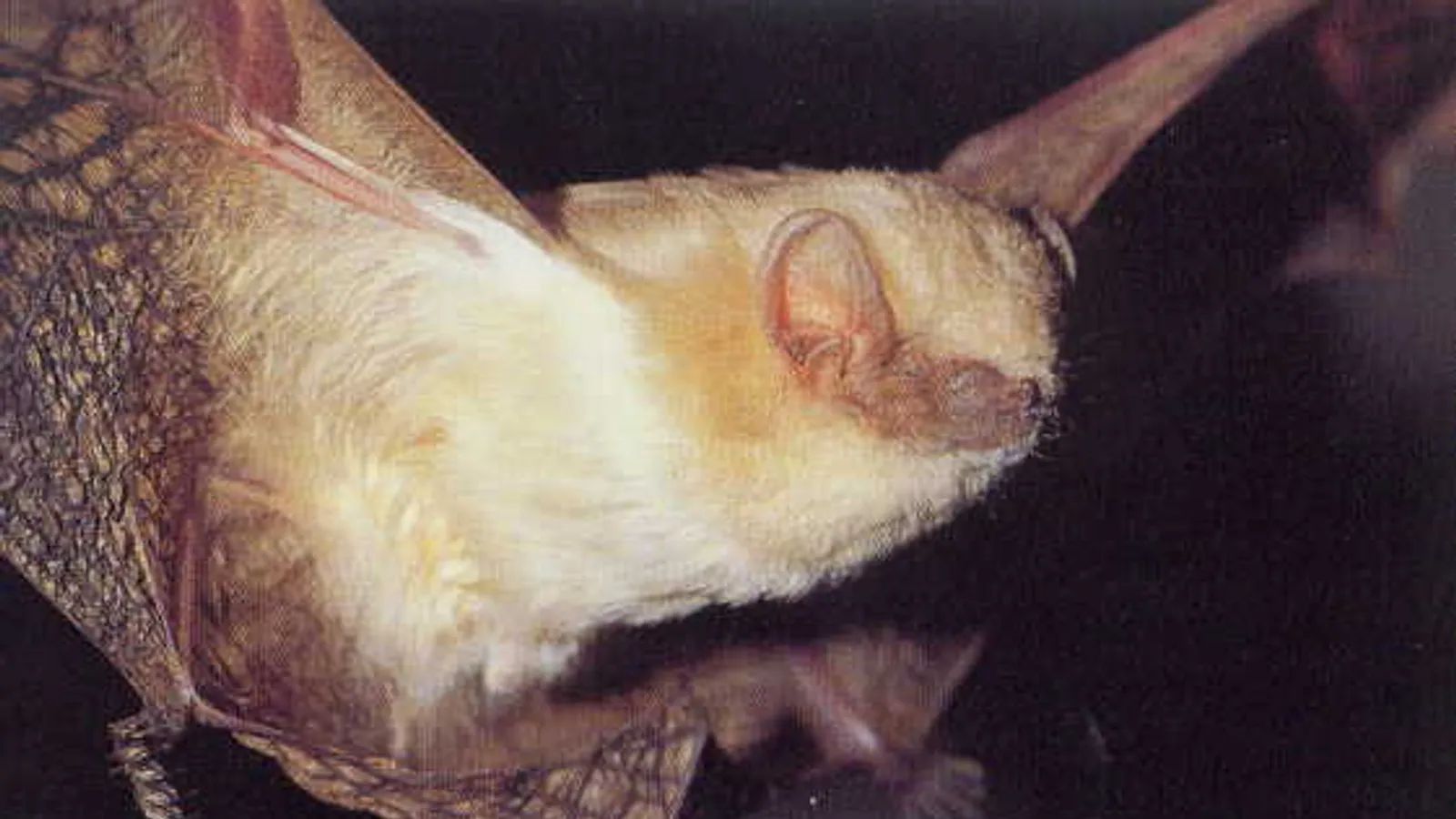
— Where the name comes from
Glauconycteris is “glaucous bat”, from the Greek glaukós — the adjective Homer uses of the sea and of Athena’s eyes, between grey and shining blue — and nykterís; variegata is the Latin “mottled”. The common name comes from the wings, run through by a net of dark lines that draws a lepidopteran pattern on the pale membranes.
— Facts
- Group
- Mammals · Mammalia
- Order
- Bats
- Habitat
- Wooded savannah and gallery forest; roosting among foliage
- Range
- Sub-Saharan Africa, in scattered populations
- Size
- 5–6.5 cm of body, 30 cm wingspan, 8–14 g
- Diet
- Insectivore — small insects in slow flight among the trees
- Lifespan
- Little known
— Characteristics
- 01
The pale wings are crossed by dark reticulation along the fingers.
- 02
It roosts hanging among leaves, not in caves or buildings.
- 03
Its slow undulating flight heightens the resemblance to a butterfly.
— What sets it apart
The reticulation of its wings is foliage camouflage. Hanging among branches by day, with the membranes half open, the dark lines along the fingers reproduce the veins of a leaf and the pale ground the blade: what to a photographer looks like a decorative pattern gives back, from below and against the light, exactly a leaf. It is the same solution as the Asian painted bat’s and the tube-nosed bat’s of New Guinea — three continents, three different families, the same idea.
