
New Zealand long-tailed bat
Chalinolobus tuberculatus
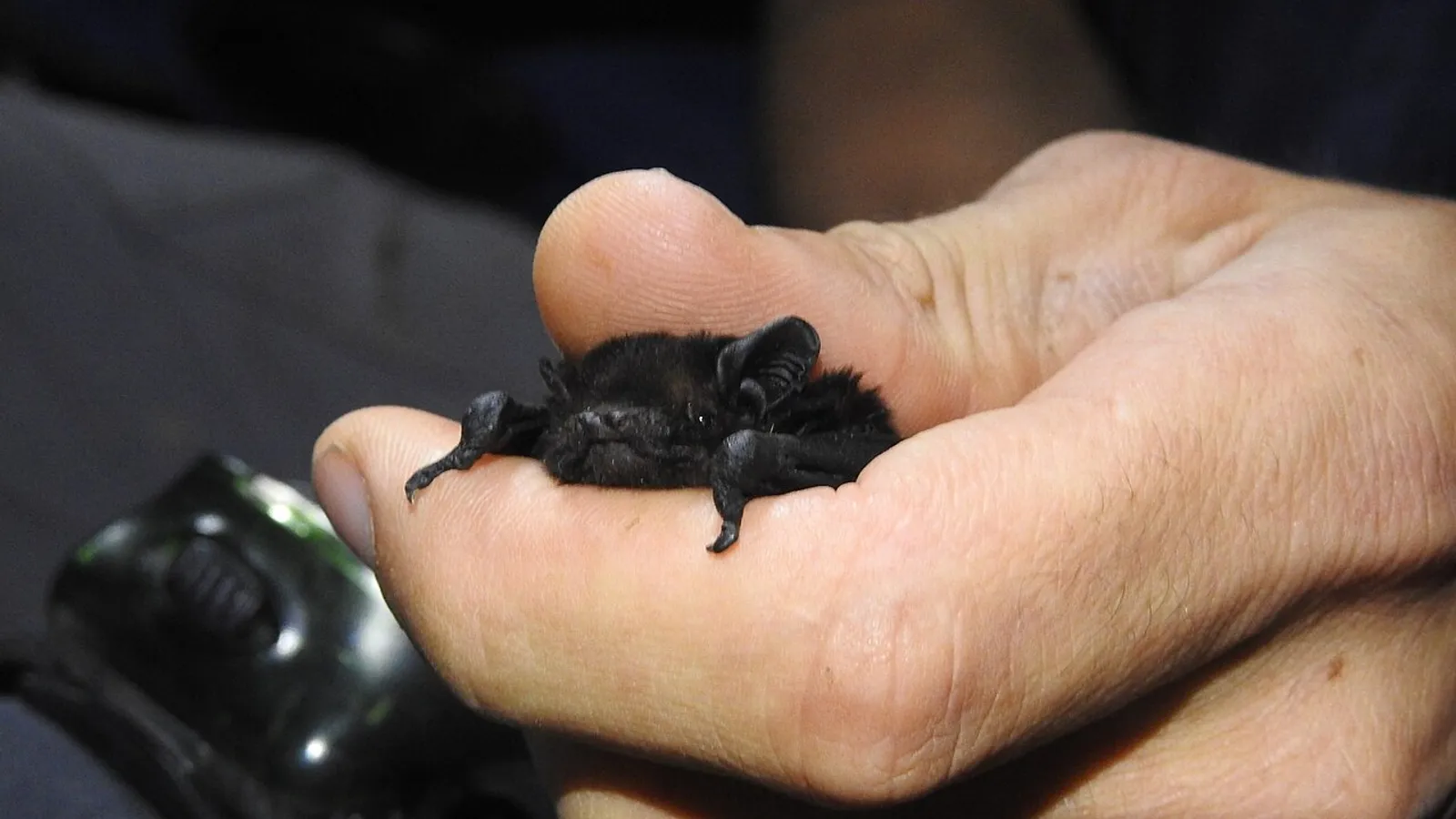
— Where the name comes from
Chalinolobus is “bridle lobe”, from the Greek chalinós, the horse’s bit, and lobós: at the corners of the mouth it carries two fleshy flaps recalling the fittings of a bridle. Tuberculatus is Latin, for the small bumps on the claws. In Māori it is pekapeka-tou-roa, and together with the short-tailed bat it is all that remains of New Zealand’s native land mammal fauna.
— Facts
- Group
- Mammals · Mammalia
- Order
- Bats
- Habitat
- Native forest and riverside woodland, in hollow trees
- Range
- Endemic to New Zealand
- Size
- 4.5–5.5 cm of body, 28 cm wingspan, 8–11 g
- Diet
- Insectivore — small insects caught in fast flight
- Lifespan
- Up to 30 years
— Characteristics
- 01
It is one of only two native land mammals in New Zealand.
- 02
It changes roost tree almost every day, while staying in the same group.
- 03
The colonies are decimated by introduced rats, stoats and possums.
— What sets it apart
In 2021 it won New Zealand’s Bird of the Year contest. Bird of the Year is a national institution that every autumn sets off arguments and election campaigns, and that year the organisers let the bat stand in order to draw attention to the country’s only native mammal group — which faces the same problems as the birds, killed by the same introduced predators. It won. The provocation worked better than ten awareness campaigns.
