
Great evening bat
Ia io
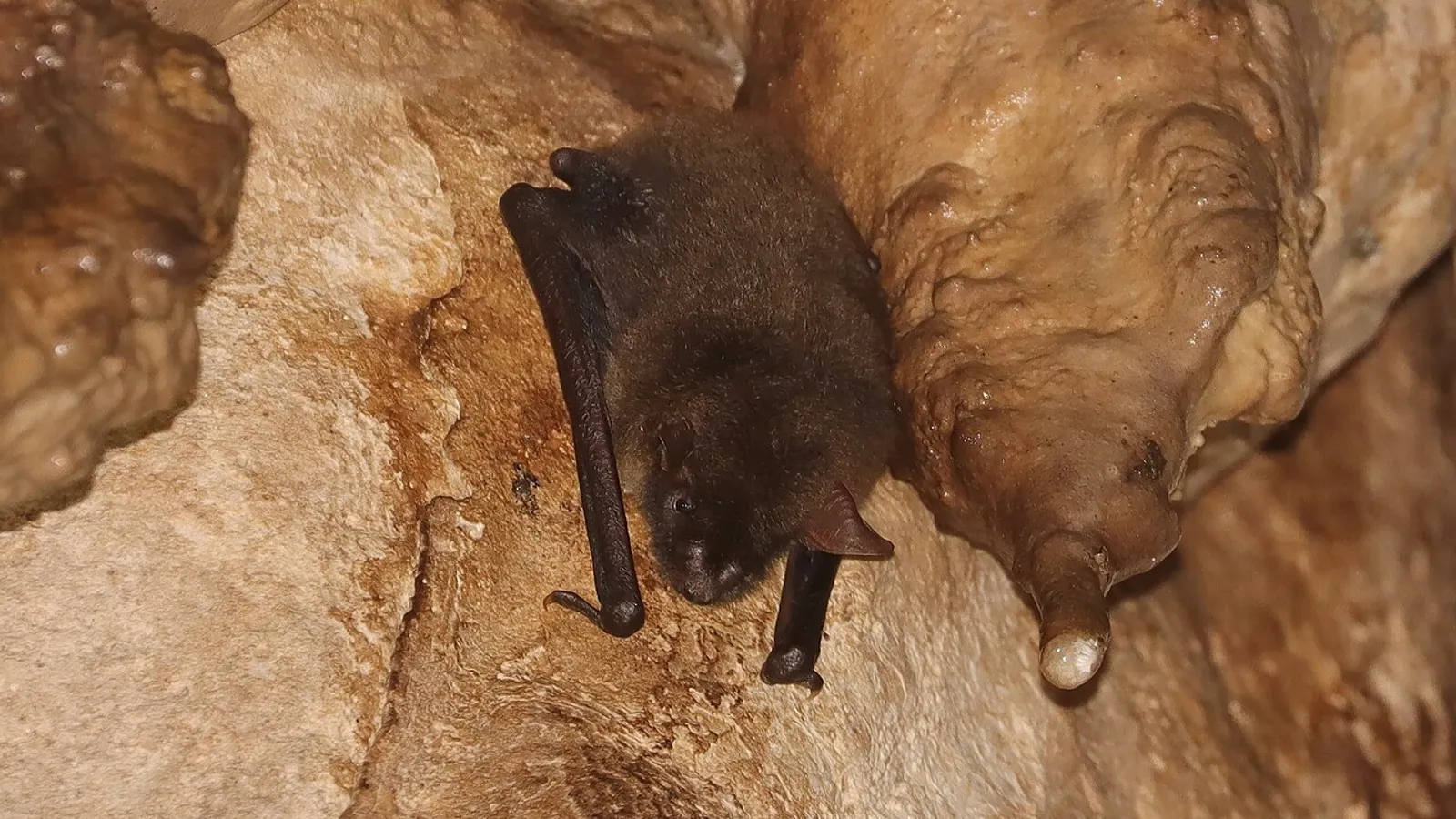
— Where the name comes from
It is the shortest scientific name there is among mammals: four letters in all. Thomas coined it in 1902 without explanation, and readings waver between an allusion to Io — the girl Zeus turned into a heifer — and a plain search for brevity. Whatever the intention, the result is a binomial written in one breath, belonging to an animal that weighs fifty grams.
— Facts
- Group
- Mammals · Mammalia
- Order
- Bats
- Habitat
- Limestone caves in mountain country; hunting in open sky
- Range
- Southern China, the eastern Himalaya, northern Indochina
- Size
- 9–10.5 cm of body, 50 cm wingspan, 50–60 g
- Diet
- Insectivore and, seasonally, migrating birds taken in flight
- Lifespan
- Little known
— Characteristics
- 01
It is the largest vespertilionid bat in the world.
- 02
It has the shortest scientific name of any mammal.
- 03
In the passage seasons it hunts small migrating birds in night flight.
— What sets it apart
It is the second bat in the world shown to hunt birds in flight, after the European greater noctule, and the discovery came the same way: songbird feathers in the droppings, the obvious scavenging hypothesis, and then isotope analysis establishing that the prey had been eaten alive. Two species at opposite ends of Eurasia, not closely related, found the same niche independently — the river of birds that crosses the continent at night, twice a year.
