
Thumbless bat
Furipterus horrens
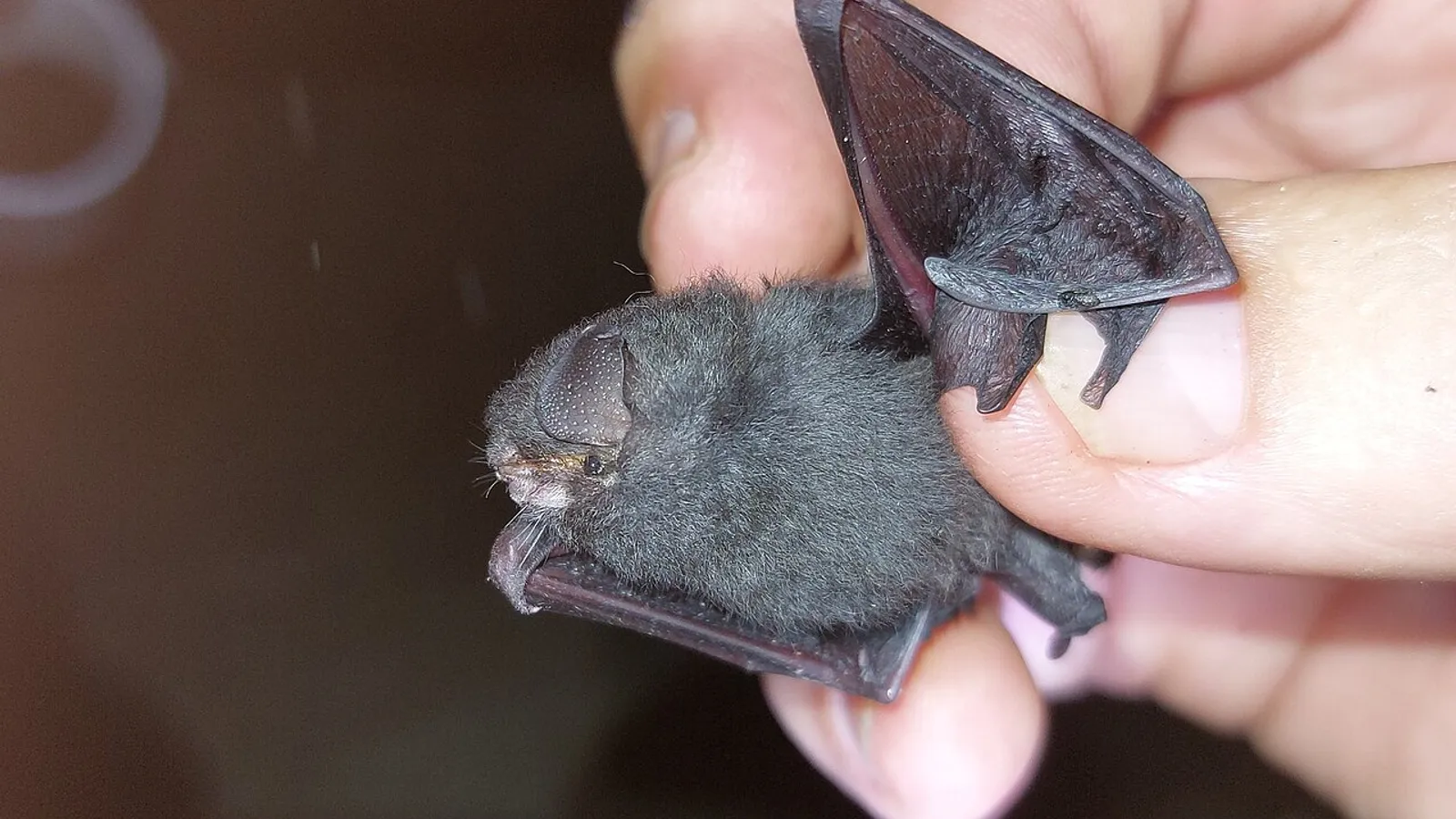
— Where the name comes from
The second half of the genus name is the Greek pterón, “wing”; on the first the lexicographers disagree, and the proposals run from the Latin fur, “thief”, to a root tied to the Furies — none of them documented by the describer. Horrens is the Latin participle of horrere, “to bristle, to make shudder”. The English name, thumbless bat, states what matters: the thumb is there but is enclosed in the membrane and serves no purpose.
— Facts
- Group
- Mammals · Mammalia
- Order
- Bats
- Habitat
- Caves, fallen hollow trunks, damp shelters in rainforest
- Range
- From Costa Rica to Brazil and Bolivia
- Size
- 3.3–4 cm of body, 25 cm wingspan, 3–5 g
- Diet
- Insectivore — small moths
- Lifespan
- Little known
— Characteristics
- 01
The thumb is reduced and entirely wrapped in the wing membrane.
- 02
The ash-grey fur makes it look as though covered in soot.
- 03
The muzzle is flattened and the forehead domed: the face barely protrudes at all.
— What sets it apart
It has given up its thumb, which for a bat is like giving up a hand. Every other bat uses it to climb, to grip rock, to handle food, and in the vampires it is even a foot for walking; here it is a stump enclosed in the membrane. What it gained in exchange is unclear — perhaps an aerodynamically cleaner wing for the very slow, highly manoeuvred flight it practises — and it is one of the few anatomical losses in this order that nobody has yet explained convincingly.
