
New Zealand lesser short-tailed bat
Mystacina tuberculata
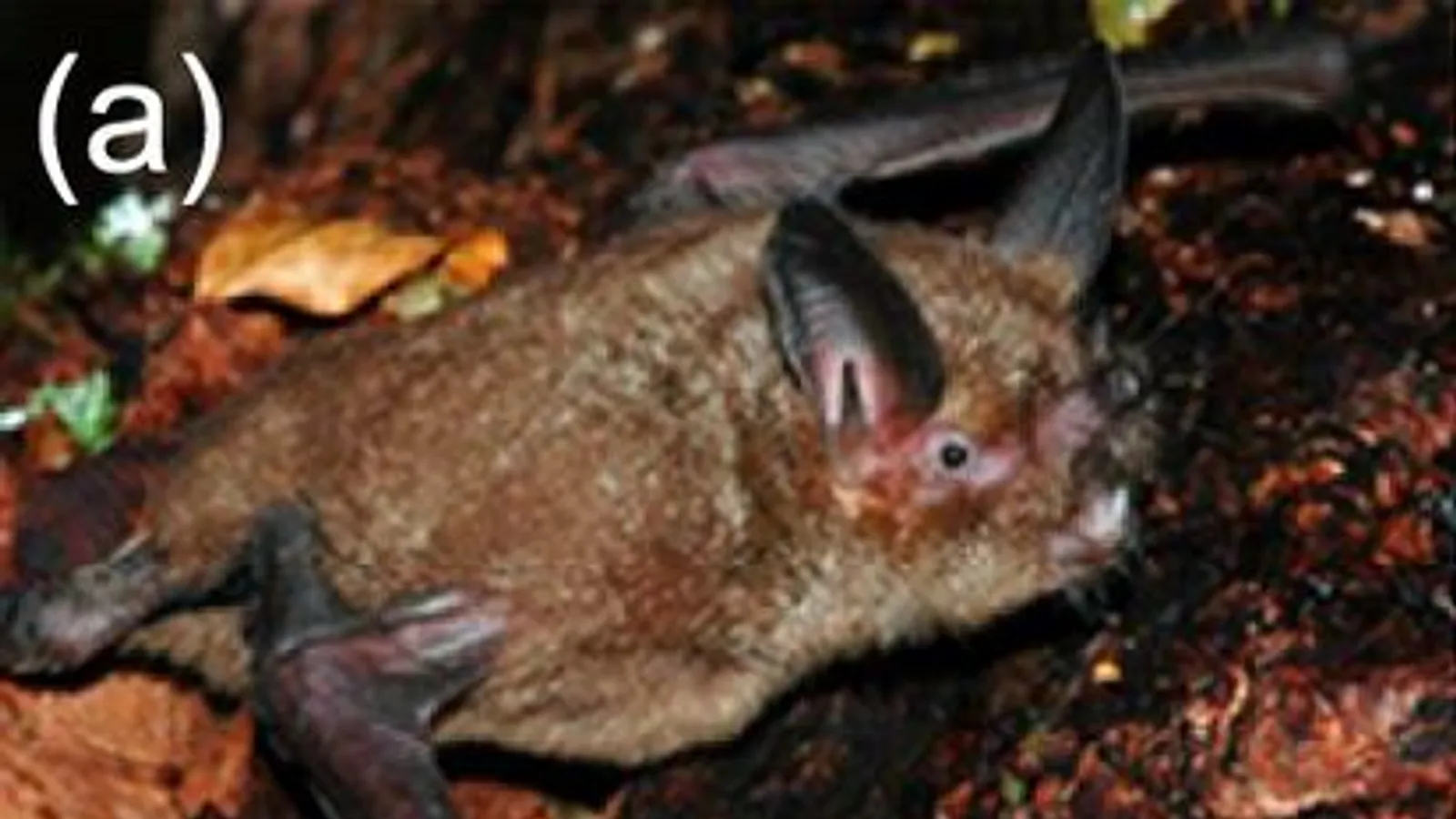
— Where the name comes from
Mystacina comes from the Greek mýstax, “moustache”, for the stiff whiskers around the muzzle; tuberculata from the Latin tuberculum, for the small bumps on the claws. In Māori it is pekapeka-tou-poto, and the fact that it has an old Māori name is no detail: before people arrived, the two bats were the only land mammals in the whole of New Zealand.
— Facts
- Group
- Mammals · Mammalia
- Order
- Bats
- Habitat
- Mature native forest, roosting in hollow trees
- Range
- Endemic to New Zealand, in fragmented populations
- Size
- 6–7 cm of body, 30 cm wingspan, 12–15 g
- Diet
- Omnivore — ground insects, nectar, pollen, fruit
- Lifespan
- Over 30 years
— Characteristics
- 01
It is the most terrestrial bat in the world: it spends 30% of its hunting time walking.
- 02
It folds its wings into leathery sheaths along its flanks to move on all fours.
- 03
It is the sole pollinator of Dactylanthus taylorii, New Zealand’s only parasitic plant.
— What sets it apart
It walks the forest floor digging through leaf litter, and to do so it has invented a piece of anatomy: the wing membranes fold into sheaths of thick skin along the flanks, as an umbrella closes into its case, freeing the limbs for four-footed locomotion. It is the niche that elsewhere belongs to mice and shrews, left empty on an island with no land mammals and taken up by the only animal available. When people brought rats and mustelids, that choice became its undoing.
