
Madagascar sucker-footed bat
Myzopoda aurita
— Where the name comes from
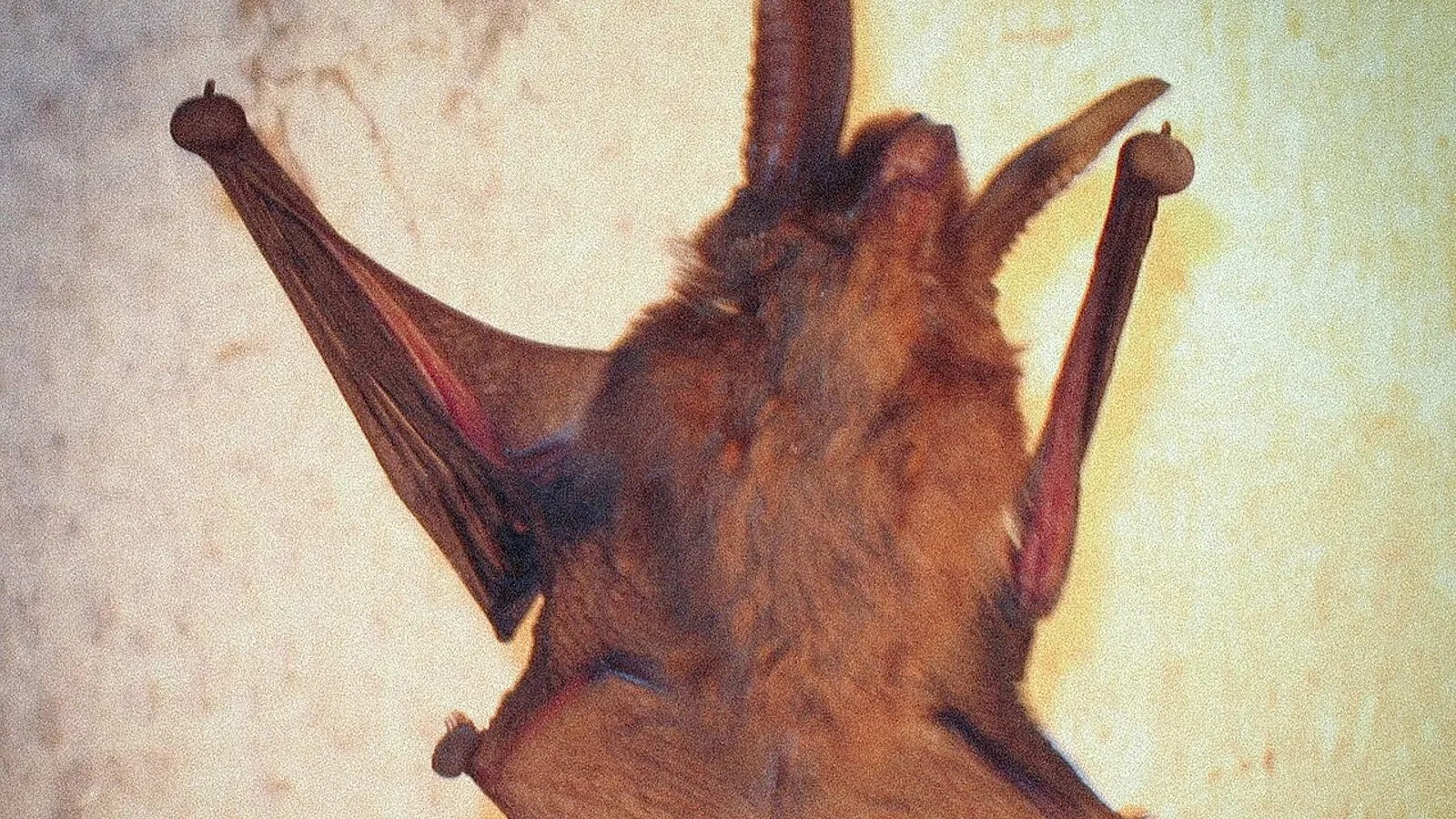
Myzopoda is “sucking foot”, from the Greek mýzō and poús; aurita is the Latin “long-eared”. The name describes what the first anatomists thought they saw — suckers like those of the American disc-winged bat — and later proved imprecise: the Malagasy discs create no vacuum, they adhere by wetting. Two animals on either side of the Indian Ocean, the same apparent solution and two different physical mechanisms.
— Facts
- Group
- Mammals · Mammalia
- Order
- Bats
- Habitat
- Forest and bushland, inside the furled leaves of traveller’s palms
- Range
- Endemic to eastern Madagascar
- Size
- 5.7–6 cm of body, 25 cm wingspan, 8–10 g
- Diet
- Insectivore — small moths
- Lifespan
- Little known
— Characteristics
- 01
It has adhesive discs at wrists and ankles, but they work by wetting, not suction.
- 02
It roosts head up, clinging to the smooth inner surface of leaves.
- 03
It is the only living member of a family that once lived in Africa as well.
— What sets it apart
Its discs are not suckers: they adhere the way a wet glass adheres to a glass table. It is capillary adhesion, produced by a thin film of glandular secretion between disc and leaf, and it carries the animal’s weight on smooth surfaces where no claw would find purchase. The American disc-winged bats, which live in the same kind of roost on the other side of the world, solved the same problem with true muscular suckers — same leaf, same posture, two different physics.
