
Painted bat
Kerivoula picta
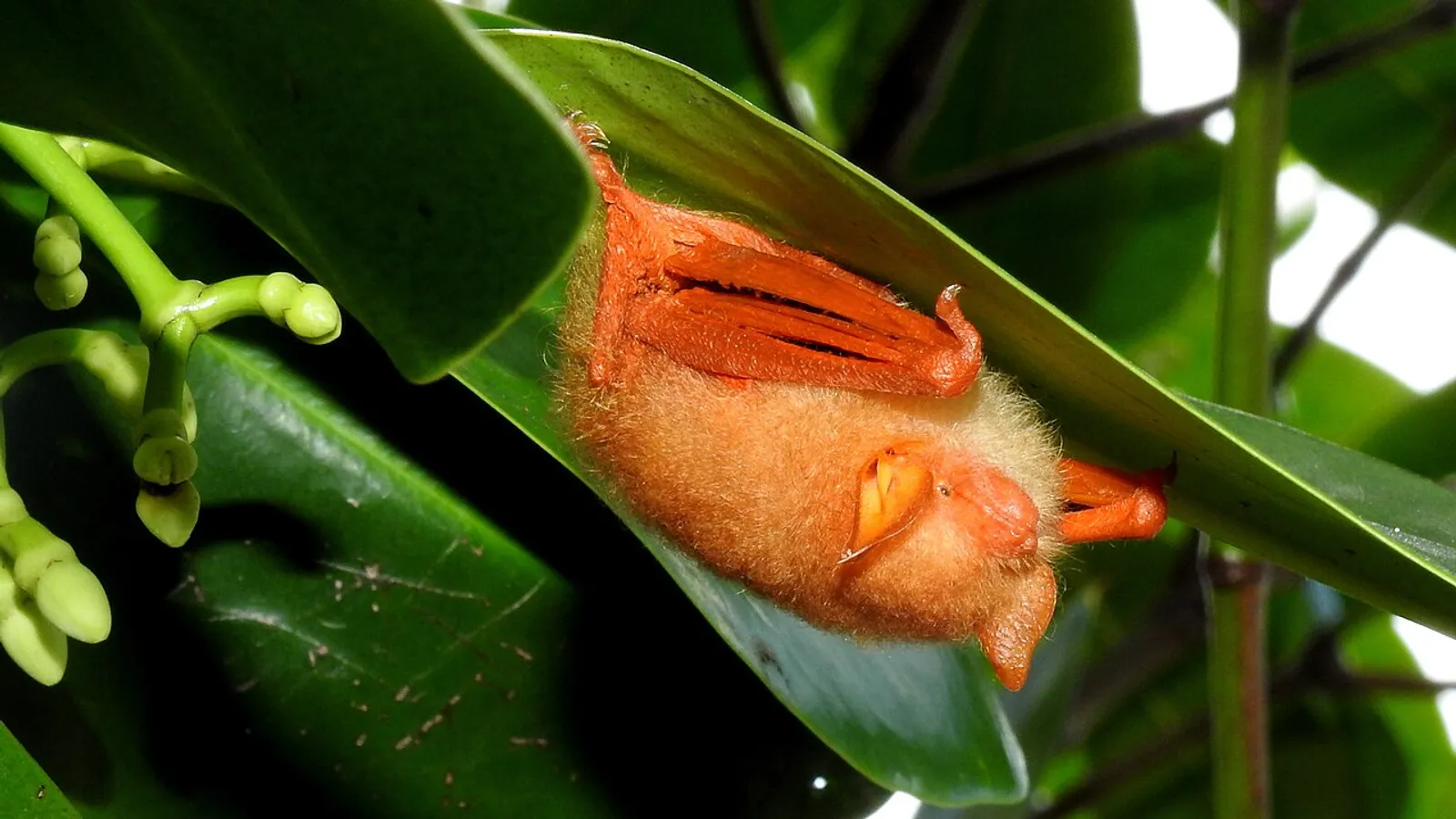
— Where the name comes from
Kerivoula comes from the Sinhala kehel-vulha, which means “banana bat”, because in Ceylon it was found inside the dry furled leaves of banana plants. Picta is the Latin “painted”, the participle of pingere. It is one of the very few mammal genus names taken from a South Asian language, and it is also more exact than the scientific name, which describes only the colour.
— Facts
- Group
- Mammals · Mammalia
- Order
- Bats
- Habitat
- Dead leaves, abandoned birds’ nests, clumps of dry vegetation
- Range
- South and South-East Asia, from India to Java and Vietnam
- Size
- 3.1–5.5 cm of body, 30 cm wingspan, 4–6 g
- Diet
- Insectivore — small insects taken in slow flight among vegetation
- Lifespan
- Little known
— Characteristics
- 01
The body is bright orange and the wings black with the fingers edged in orange.
- 02
It roosts inside dead leaves and abandoned nests, not in caves.
- 03
Its flight is extremely slow and fluttering, more butterfly than bat.
— What sets it apart
It is probably the most flamboyant bat in the world, and the colour serves to hide it. Bright orange, with black wings crossed by orange veining along the fingers, hanging inside a curled dead leaf it becomes part of the leaf: the black veins and the orange ground reproduce exactly the pattern of a dead banana leaf. It is camouflage, not display — and photographed outside its roost the effect is lost entirely, which explains why it has become an internet star.
