
Nathusius's pipistrelle
Pipistrellus nathusii
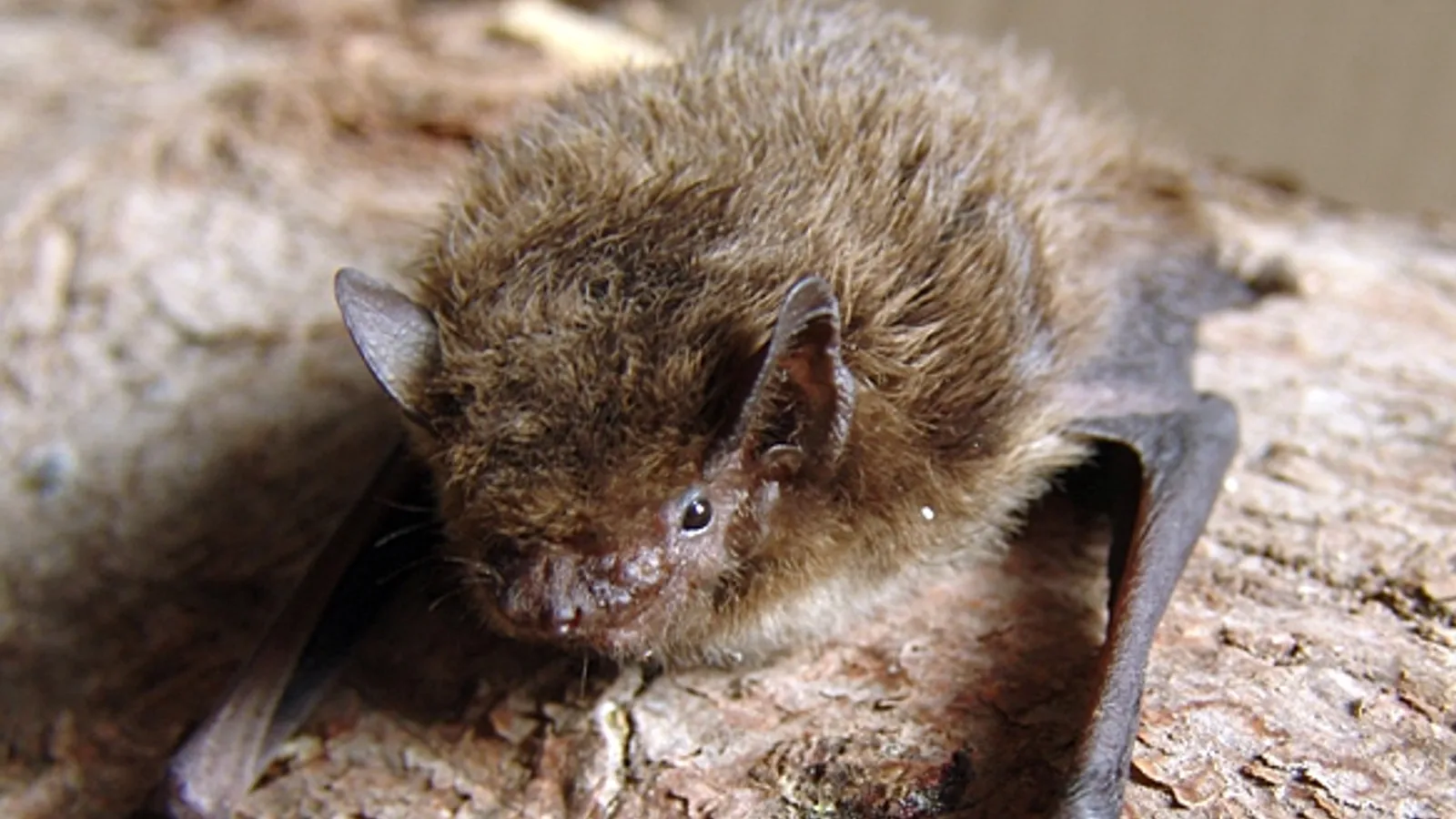
— Where the name comes from
Nathusii recalls Hermann von Nathusius, a 19th-century German animal breeder and naturalist known above all for his studies of pig and sheep breeds. Pipistrellus is the latinisation of the Italian pipistrello, which itself comes from the Latin vespertilio — a full circle, from Latin to Italian and back into scientific Latin, with the word unrecognisably deformed along the way.
— Facts
- Group
- Mammals · Mammalia
- Order
- Bats
- Habitat
- Woodland near water; roosting in hollow trees, log piles, buildings
- Range
- Europe, migrating from the north-east to the south-west
- Size
- 4.6–5.5 cm of body, 25 cm wingspan, 6–15 g
- Diet
- Insectivore — flies and small insects over water and at woodland edges
- Lifespan
- Up to 14 years
— Characteristics
- 01
It is the European bat with the longest documented migrations.
- 02
One ringed individual covered over 2,200 kilometres.
- 03
The males defend song territories along the migration routes.
— What sets it apart
An individual ringed in Latvia was recovered in the Spanish Pyrenees, after more than two thousand two hundred kilometres: the longest migration ever documented for a European bat, made by an animal weighing as much as two sugar cubes. The routes follow the coasts of the Baltic and the North Sea and then cut across the continent, and it is along those same lines that wind farms are built — this species is among the hardest hit by turbines across Europe.
