
Lesser long-nosed bat
Leptonycteris yerbabuenae
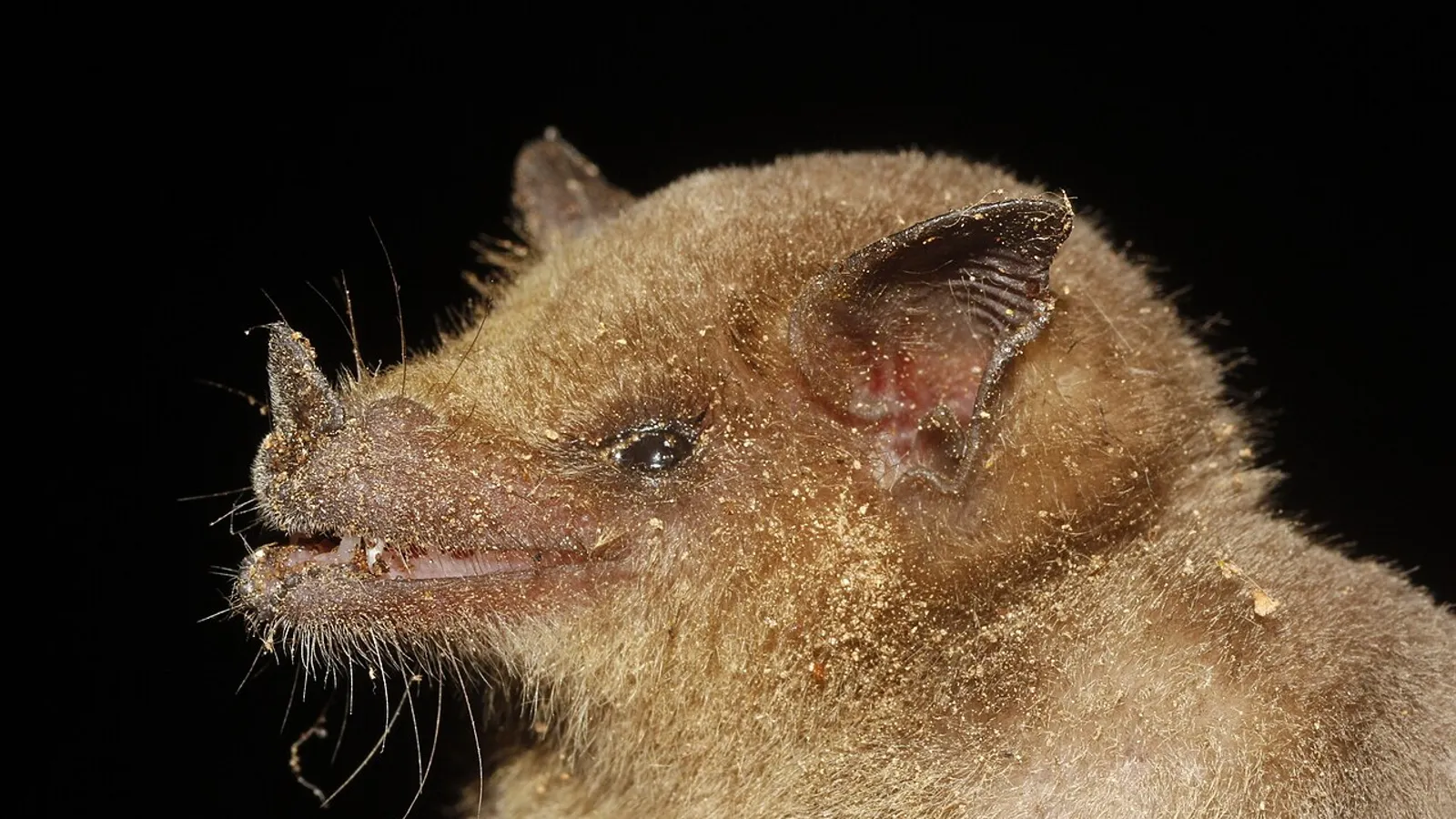
— Where the name comes from
Leptonycteris is “slender bat”, from the Greek leptós and nykterís, for the lean build and long muzzle. Yerbabuenae comes from La Yerbabuena, the Mexican locality in the state of Colima where the type specimen was taken. It is one of the rare epithets built on the name of a village rather than a region or a country.
— Facts
- Group
- Mammals · Mammalia
- Order
- Bats
- Habitat
- Caves and mines; foraging in saguaro desert and among agaves
- Range
- Mexico and the south-western United States, with seasonal migration
- Size
- 7–9 cm of body, 35 cm wingspan, 20–25 g
- Diet
- Nectar feeder — nectar and pollen of agave, saguaro, cardón
- Lifespan
- 8–10 years
— Characteristics
- 01
It migrates over 1,600 kilometres a year following the blooming.
- 02
Pollen sticks to the fur of its chest and head, which is shaggy for the purpose.
- 03
It was the first bat species to be taken off the endangered list in the United States.
— What sets it apart
Without it there would be no tequila, at least not the agave that makes it. Blue agave flowers open at night and are pollinated by this species, which follows the bloom along a “nectar corridor” running from central Mexico to Arizona. The trouble is that tequila agave is harvested before it flowers and propagated by clones: the plantations feed no bats and the plants no longer cross-pollinate. Some producers have begun letting a share of their plants flower, and call it “bat-friendly tequila”.
