
Cave nectar bat
Eonycteris spelaea
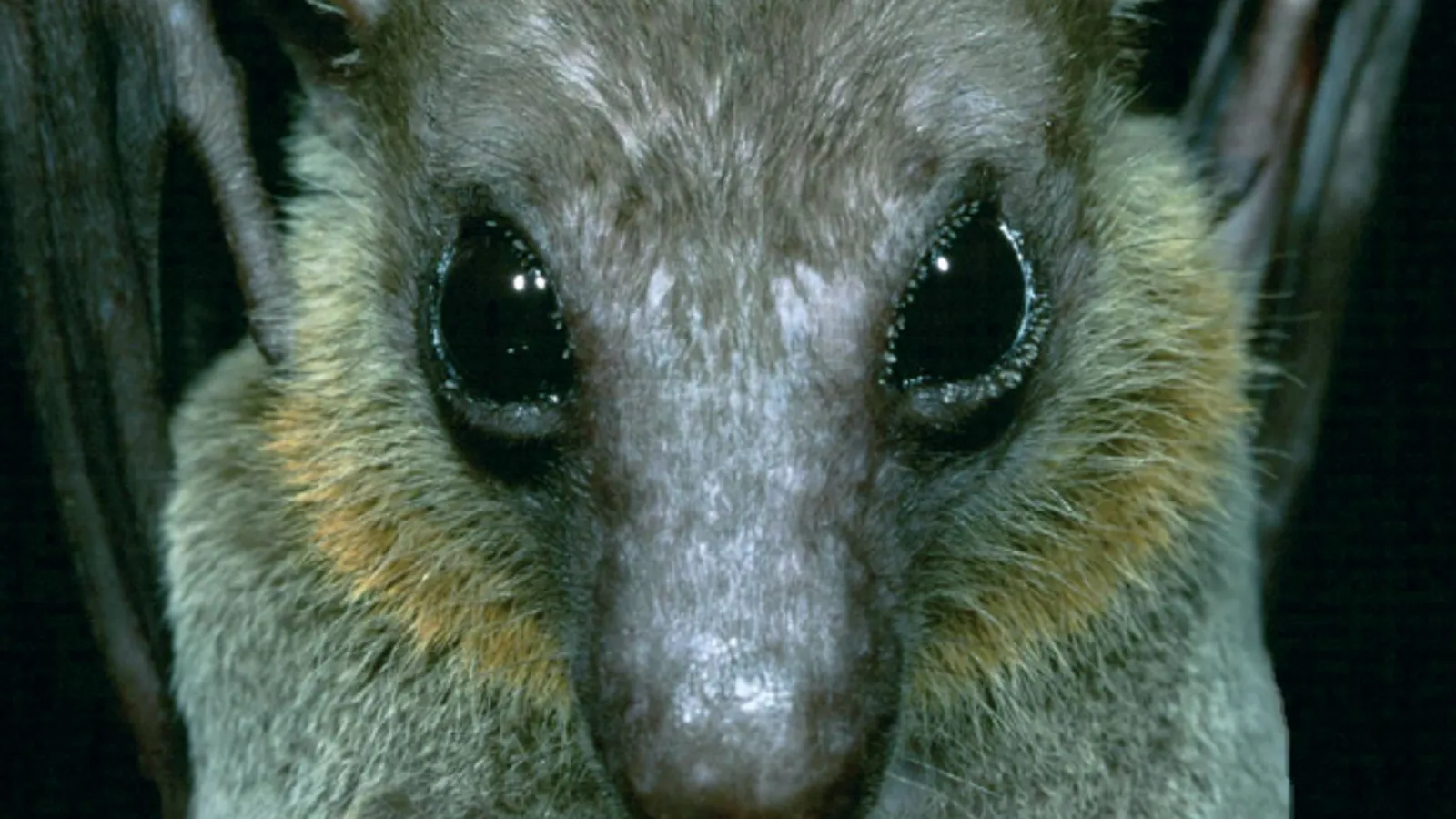
— Where the name comes from
Eonycteris joins the Greek ēṓs, “dawn”, and nykterís, “bat”: the “dawn bat”, because it returns to its caves as the sky begins to lighten. Spelaea is “of the caves”, from spḗlaion. It is the only nectar bat that sleeps underground rather than among leaves, and that forces it into far longer night journeys than its relatives make.
— Facts
- Group
- Mammals · Mammalia
- Order
- Bats
- Habitat
- Limestone caves, foraging in forest and plantations up to 40 km away
- Range
- South and South-East Asia, from India to the Philippines and Java
- Size
- 8.5–12.5 cm of body, 45 cm wingspan, 35–80 g
- Diet
- Nectar feeder — nectar and pollen of over thirty plant species
- Lifespan
- About 10 years
— Characteristics
- 01
It covers up to forty kilometres a night between cave and flowers.
- 02
Colonies can number tens of thousands of animals.
- 03
It does not echolocate: it relies on sight and smell even inside the cave.
— What sets it apart
Without it there is no durian. The tree’s flowers open only at night, last a few hours and are pollinated almost exclusively by this species: in Malaysian plantations, excluding the bats makes fruit production collapse by over ninety per cent. It is an enormous practical problem, because durian is worth billions and the caves where its pollinators sleep are routinely gutted by limestone quarries — often to make the cement for the roads that serve the plantations themselves.
