
White-lined broad-nosed bat
Platyrrhinus lineatus
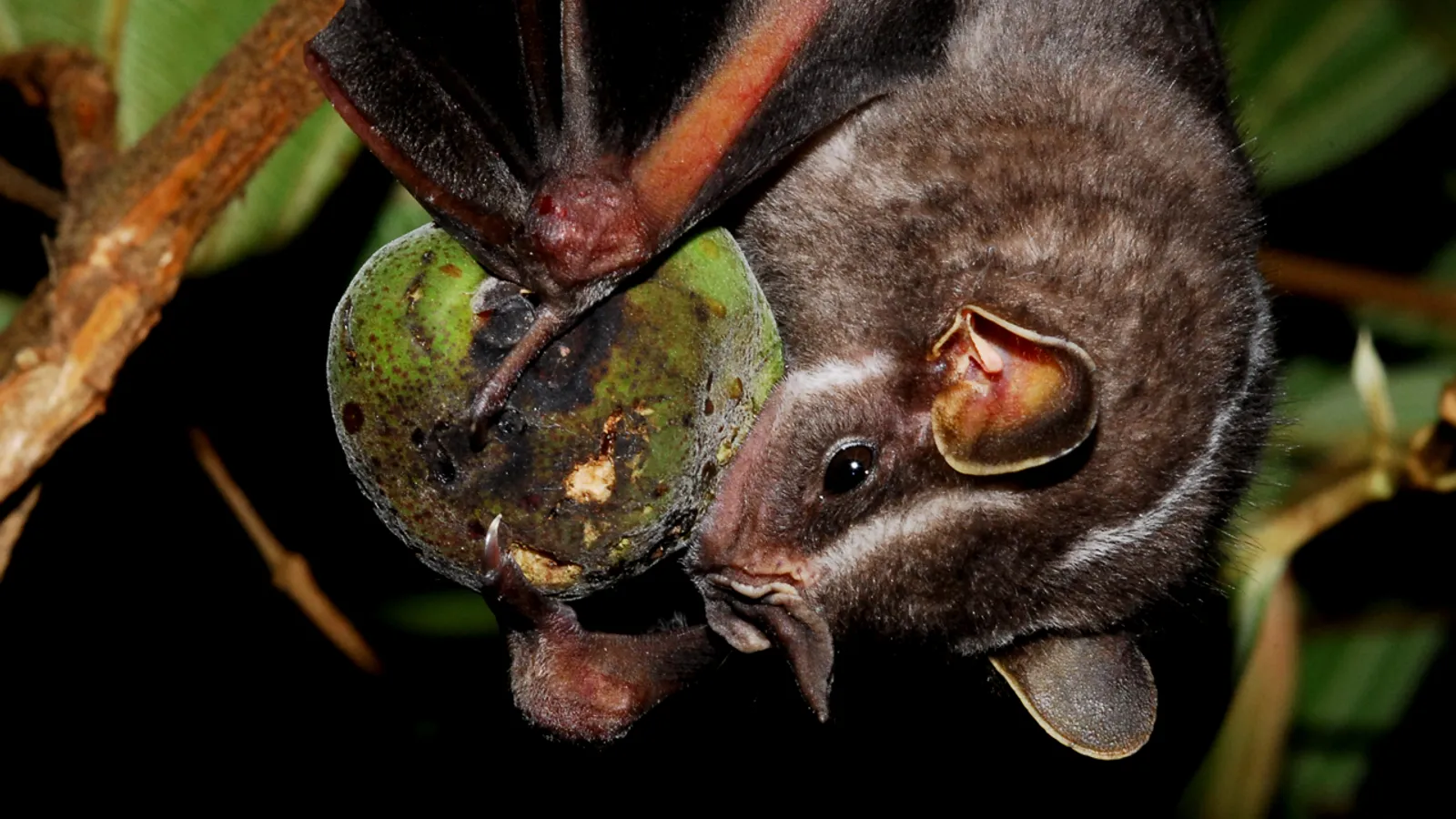
— Where the name comes from
Platyrrhinus is “broad nose”, from the Greek platýs and rhís: the same word that in anthropology names the New World monkeys, the platyrrhines, so called for their splayed nostrils. Lineatus is the Latin “striped”, for the four white lines on the face and for the sharper one running along the back from nape to rump.
— Facts
- Group
- Mammals · Mammalia
- Order
- Bats
- Habitat
- Rainforest and dry forest, cerrado, urban gardens and orchards
- Range
- From Colombia to northern Argentina and Uruguay
- Size
- 6.5–8.5 cm of body, 35 cm wingspan, 20–30 g
- Diet
- Frugivore — figs, cecropia, guava, plus nectar and insects
- Lifespan
- Little known
— Characteristics
- 01
The five white stripes break up its outline among foliage.
- 02
It is one of the commonest bats in the parks of Brazilian cities.
- 03
A single animal can disperse thousands of seeds in one night.
— What sets it apart
The stripes on face and back are not for being recognised but for not being seen. Hanging among leaves during the day, a dark body crossed by pale lines breaks into fragments the eye cannot reassemble into an animal: it is the same disruptive camouflage as the tapir’s and the zebra’s, applied at the scale of a bat weighing twenty-five grams. Among the phyllostomids facial stripes have appeared several times independently, always in the species that roost in the open.
