
White-throated round-eared bat
Lophostoma silvicolum
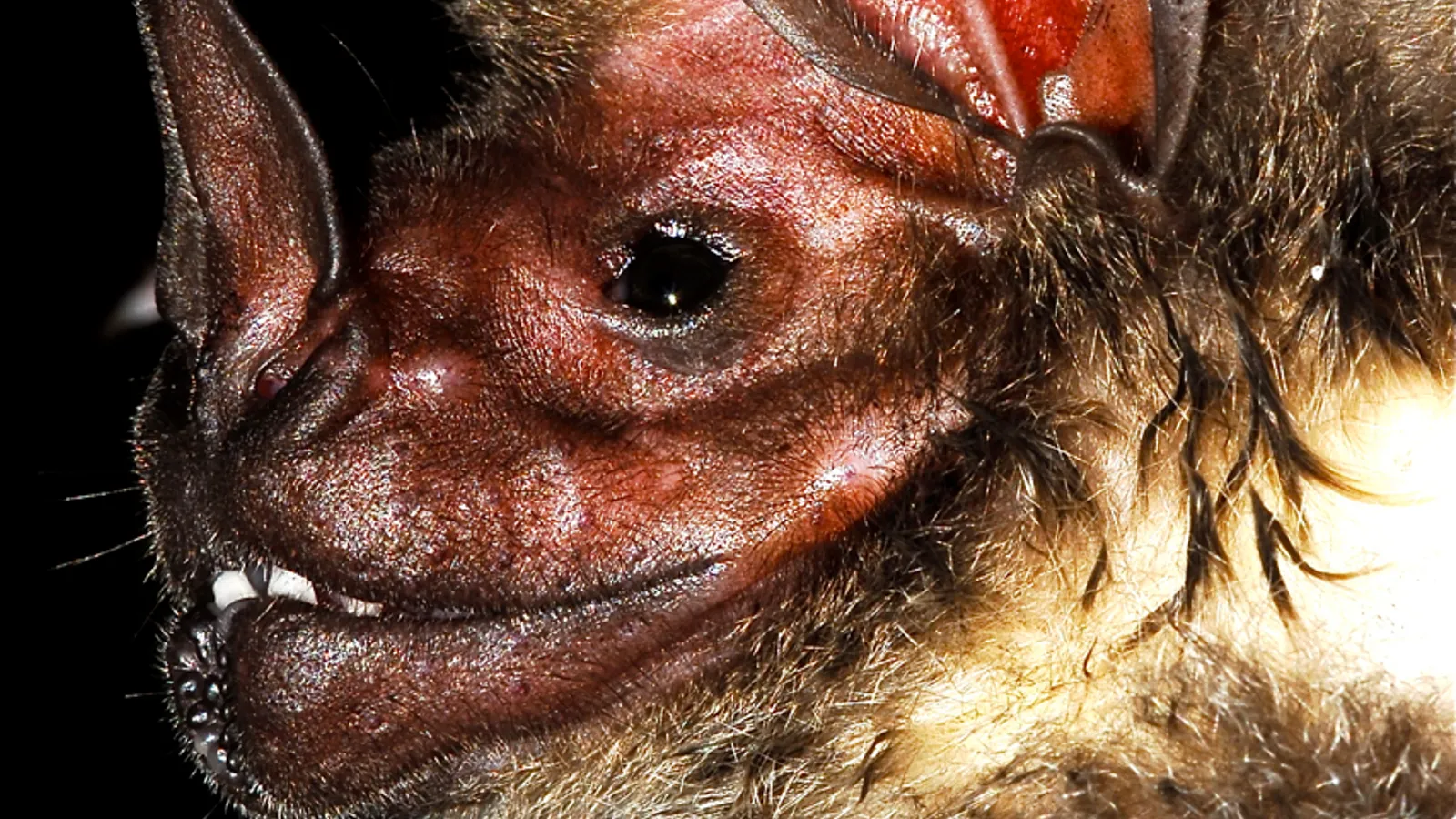
— Where the name comes from
Lophostoma is “crested mouth”, from the Greek lóphos and stóma, for the upright nose leaf and for the ridge of warts on the lower lip. Silvicolum is the Latin “forest dweller”, from silva and colere. Neither says the remarkable thing, which concerns not appearance but address: this animal digs its house inside a living termite nest.
— Facts
- Group
- Mammals · Mammalia
- Order
- Bats
- Habitat
- Lowland rainforest, inside active arboreal termite nests
- Range
- From Honduras to Brazil and Bolivia
- Size
- 6–8 cm of body, 35 cm wingspan, 25–45 g
- Diet
- Insectivore — large insects picked off foliage, plus fruit
- Lifespan
- Little known
— Characteristics
- 01
It is the only bat in the world that excavates its own roost.
- 02
The male digs into arboreal termite nests still inhabited by the termites.
- 03
A male who owns a cavity gathers a group of females.
— What sets it apart
It is the only bat known to build its own roost by digging. The males attack the ball-shaped termite nests that hang from forest branches — active nests, full of living termites — and bite out a cavity large enough for a group, taking weeks and enduring the occupants’ countermeasures. The advantage is enormous: a chamber with thick walls, at a stable temperature, that no snake can reach. And whoever digs it earns a harem, because the females choose the cavity before the owner.
