
Little yellow-shouldered bat
Sturnira lilium
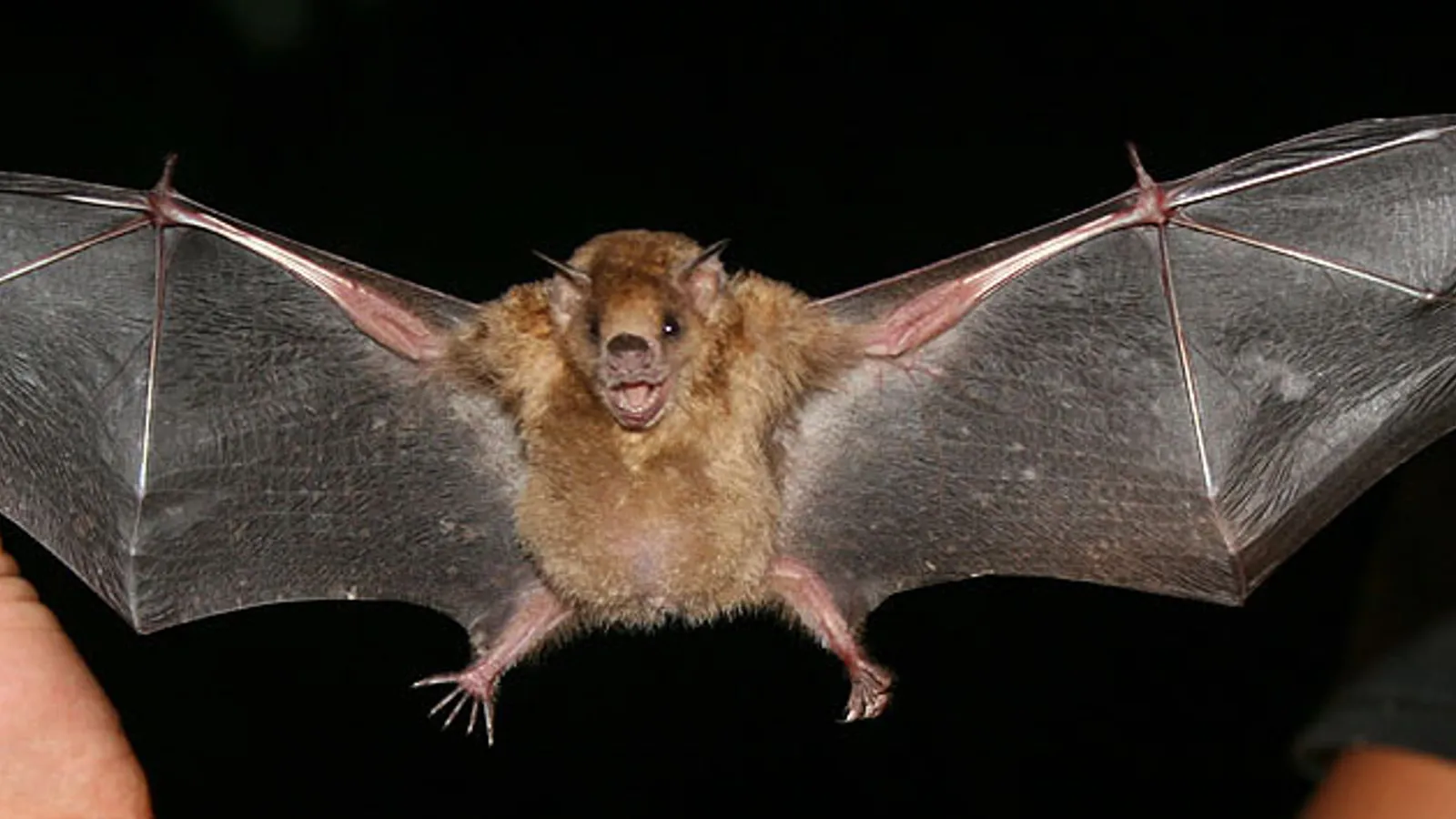
— Where the name comes from
Sturnira is built on the Latin sturnus, “starling”, perhaps for the flight or for the habit of moving in groups. Lilium is the lily, and probably alludes to the pale colour of the epaulettes. The male has at the base of the neck two patches of yellow-orange hair soaked in glandular secretion, which grow brighter and stronger-smelling in the mating season.
— Facts
- Group
- Mammals · Mammalia
- Order
- Bats
- Habitat
- Rainforest and montane forest, clearings, cropland, gardens up to 3,000 m
- Range
- From Mexico to northern Argentina, and the Lesser Antilles
- Size
- 5.5–6.5 cm of body, 30 cm wingspan, 15–25 g
- Diet
- Frugivore — chiefly the fruit of Solanum, the potato family
- Lifespan
- Little known
— Characteristics
- 01
The male has glands on the shoulders that stain the fur yellow or orange.
- 02
It lacks the membrane between the hind legs entirely.
- 03
It is one of the commonest mammals of South American montane forest.
— What sets it apart
It is the reforester of the Andes. It has specialised on the fruits of Solanum — the same genus as the potato and the aubergine — which are pioneer plants of clearings and landslip slopes, and it disperses their seeds along the whole mountain belt up to three thousand metres. On deforested Andean slopes the first vegetation to reappear is nearly always what this bat has sown in flight, and without it the return of the forest would be measured in centuries rather than decades.
