
Greater mouse-tailed bat
Rhinopoma microphyllum
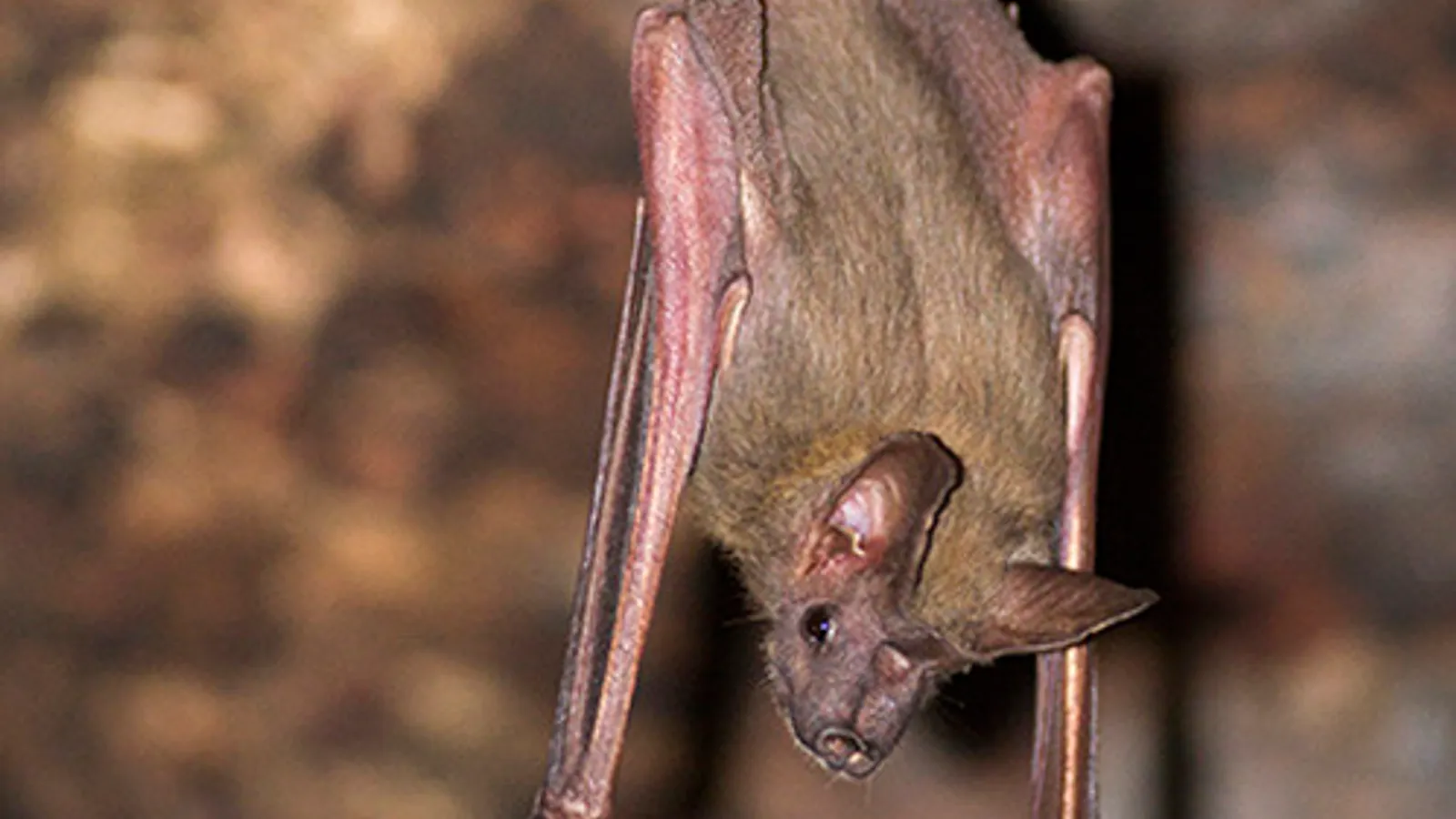
— Where the name comes from
Rhinopoma is “nose lid”, from the Greek rhís and pōma: over the nostrils it has two flaps of skin it can close, a plug against desert sand. Microphyllum, “small leaf”, refers to the reduced nose leaf. The common name looks to the tail, as long as the body and free of the membrane for nearly all its length — a rodent’s tail on a bat.
— Facts
- Group
- Mammals · Mammalia
- Order
- Bats
- Habitat
- Caves, pyramids, wells, ruins in arid and desert country
- Range
- North Africa, the Middle East, southern Asia as far as Thailand
- Size
- 6–8 cm of body, 30 cm wingspan, 20–40 g
- Diet
- Insectivore — chiefly winged termites and beetles
- Lifespan
- Little known
— Characteristics
- 01
The tail, as long as the body, stays almost entirely outside the membrane.
- 02
It can close its nostrils with two flaps of skin against sand and dust.
- 03
It lays down fat until it has doubled its weight before the dry season.
— What sets it apart
It fasts for months while staying awake. Before the season when insects disappear it lays down abdominal fat reserves that can reach half its body weight, then enters a phase of intermittent torpor inside caves and lives off them, in some populations for over three months. It is not true hibernation — the body temperature stays higher — and it is a rare compromise between the two strategies mammals use against famine: to fatten like a bear and slow down like a dormouse, at the same time.
