
Greater sac-winged bat
Saccopteryx bilineata
— Where the name comes from
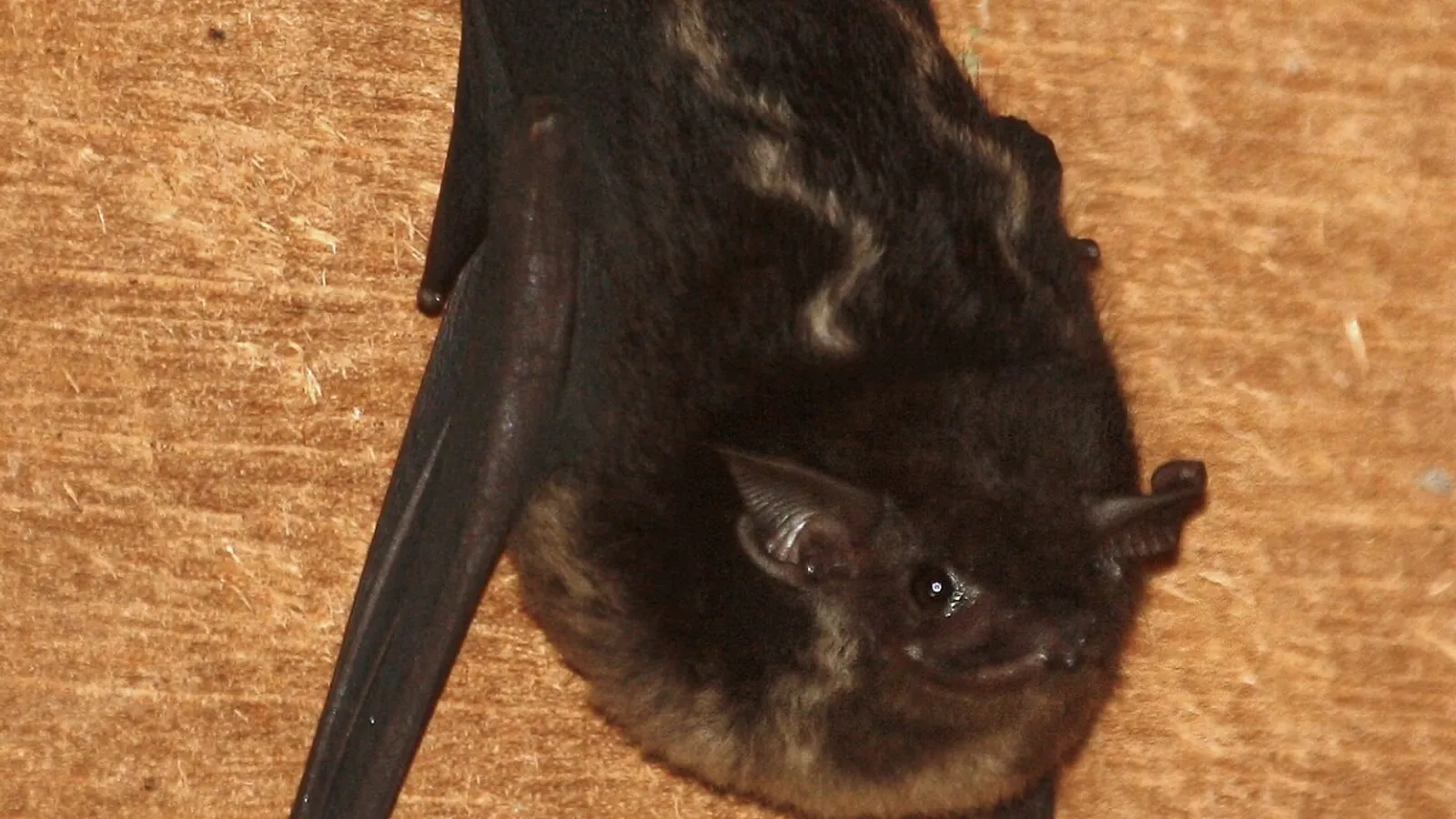
Saccopteryx is “sac in the wing”, from the Greek sákkos and ptéryx: the males have two skin pockets on the forearm, inside the wing. Bilineata is the Latin “two-lined”, for the two wavy white stripes that run along the dark back. The pockets are not glands: they are containers, and what goes into them the male mixes fresh every day.
— Facts
- Group
- Mammals · Mammalia
- Order
- Bats
- Habitat
- The buttress roots of great trees, outer walls of buildings, always in shade
- Range
- From southern Mexico to Brazil and Bolivia
- Size
- 4.5–5.5 cm of body, 30 cm wingspan, 6–9 g
- Diet
- Insectivore — small insects taken in flight
- Lifespan
- 6–7 years
— Characteristics
- 01
The males defend harems of a few females on a wall or a buttress root.
- 02
The male fills his wing pockets with a mixture of secretions and fans it in flight.
- 03
The young go through a babbling phase like that of human infants.
— What sets it apart
Its pups babble. Before they can sing, the young spend weeks producing long sequences of repeated, mixed, functionless syllables, which researchers have compared one by one with the babbling of human infants: the same repetition, the same universality across individuals, the same order of appearance for the elements that will later enter the adult repertoire. It is the most convincing case of vocal learning in a non-human mammal outside the cetaceans and pinnipeds, and it involves an animal weighing seven grams.
