
Proboscis bat
Rhynchonycteris naso
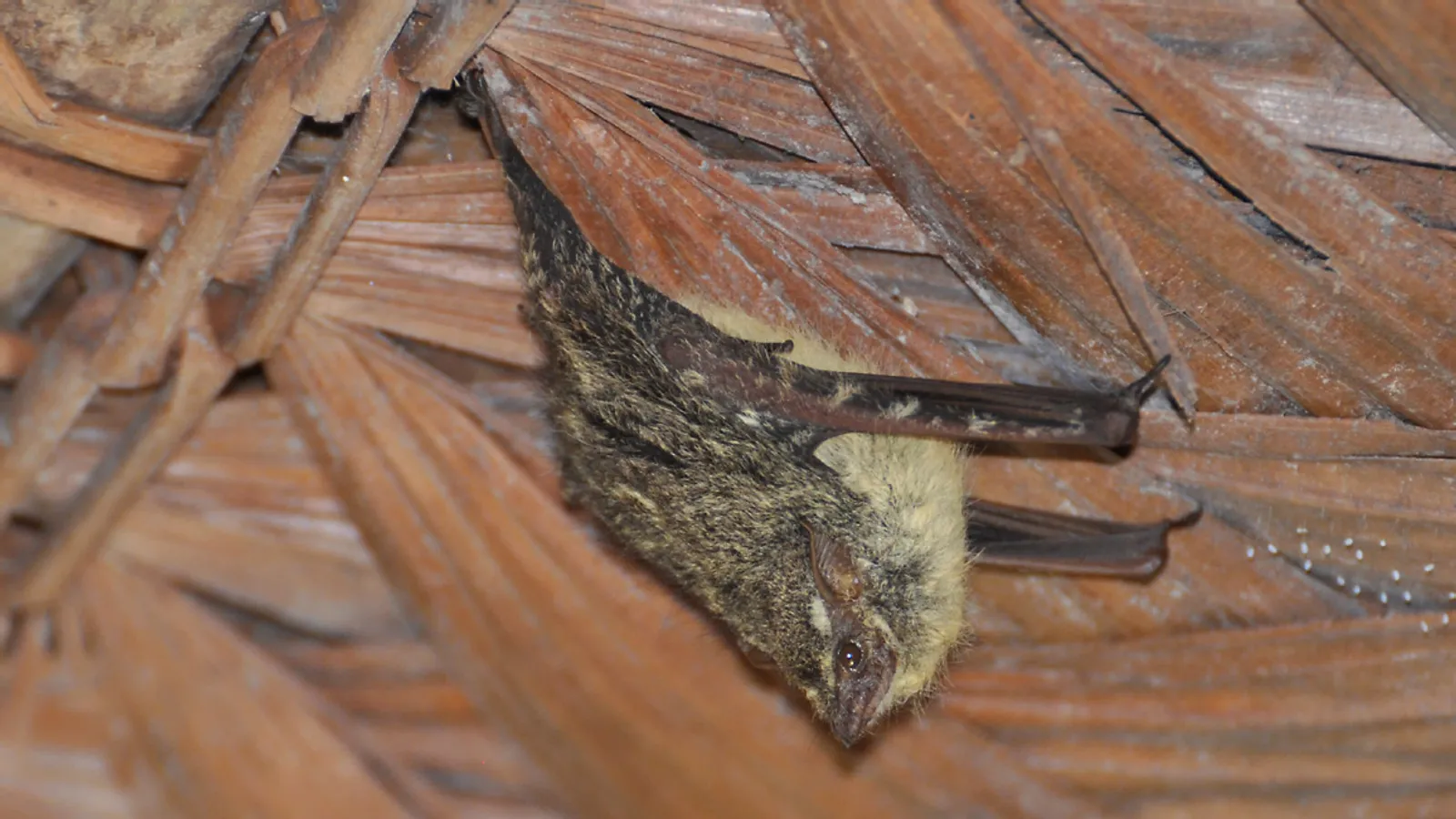
— Where the name comes from
Rhynchonycteris is “snouted bat”, from the Greek rhýnchos, which names a muzzle or beak, and nykterís; naso says it again in Latin. The muzzle is indeed pointed and protruding, unusual in an insect eater, but it is the least remarkable thing about this animal — which is worth looking at instead from a distance, in a row.
— Facts
- Group
- Mammals · Mammalia
- Order
- Bats
- Habitat
- Trunks and leaning branches over water, in flooded forest and along rivers
- Range
- From southern Mexico to Brazil and Bolivia
- Size
- 3.5–4.5 cm of body, 25 cm wingspan, 3–5 g
- Diet
- Insectivore — very small insects taken just above the water
- Lifespan
- Little known
— Characteristics
- 01
It roosts in a vertical line, evenly spaced, on the underside of trunks.
- 02
It has tufts of grey hair on the forearms that break up its outline.
- 03
It weighs four grams: one of the smallest bats in the Americas.
— What sets it apart
It lines up single file and disappears. On the underside of a trunk leaning over water, ten or so individuals align along the same line at almost identical intervals, head down and motionless: the result does not read as a row of animals but as a run of lichen or a strip of flaking bark. The grey tufts on the forearms complete the effect by breaking the outline of the body. It is group camouflage — none of them would work alone.
