
Diadem leaf-nosed bat
Hipposideros diadema
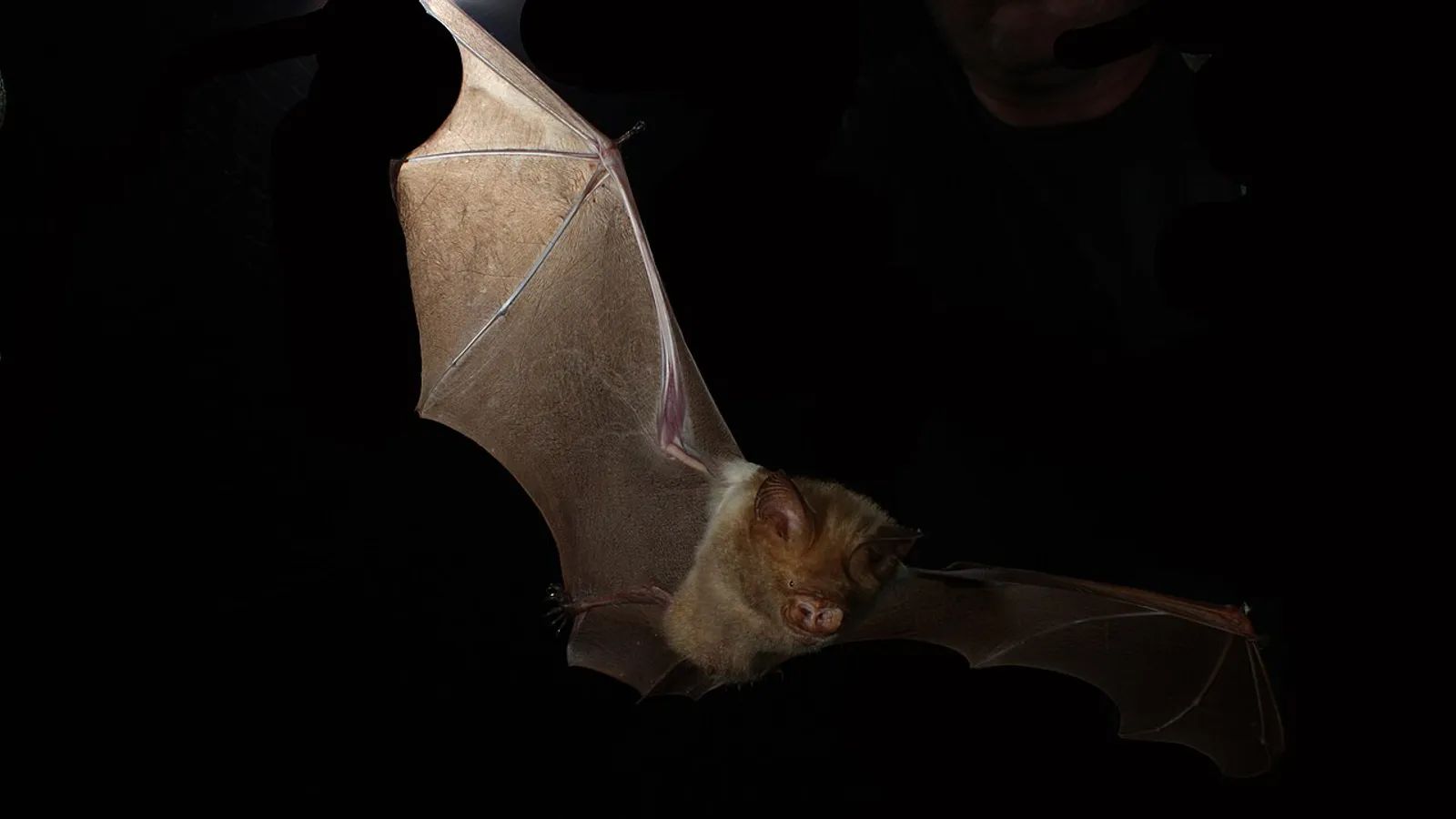
— Where the name comes from
Diadema is the Greek diádēma, the band that circled the heads of Persian kings and later the Hellenistic crown: seen from the front, the nose leaf has an upper portion that widens and serrates, recalling a crown set on the face. It is one of the rare zoological epithets chosen for beauty rather than for ease of recognition.
— Facts
- Group
- Mammals · Mammalia
- Order
- Bats
- Habitat
- Caves, tree hollows, buildings; hunting in forest and along its edges
- Range
- From Myanmar to the Philippines, Indonesia, New Guinea, northern Australia
- Size
- 7.5–11 cm of body, 45 cm wingspan, 34–50 g
- Diet
- Insectivore — large beetles and moths, occasionally small vertebrates
- Lifespan
- About 12 years
— Characteristics
- 01
It has white or yellowish patches on the shoulders and along the sides of the body.
- 02
It hunts from a perch, leaving the branch only when the echo signals prey.
- 03
It is one of the few species in the genus that also takes small vertebrates.
— What sets it apart
It hunts while sitting still, which for a bat is almost heresy. Instead of quartering the sky and burning energy, it hangs from a jutting branch, aims its sonar at the open air and waits: when a large insect crosses the cone, it launches, takes it and returns to the same perch to eat. It is the flycatcher’s strategy, and beneath its perches accumulate piles of discarded wings and wing cases that researchers gather to reconstruct its diet without ever catching the animal.
