
Sundevall's roundleaf bat
Hipposideros caffer
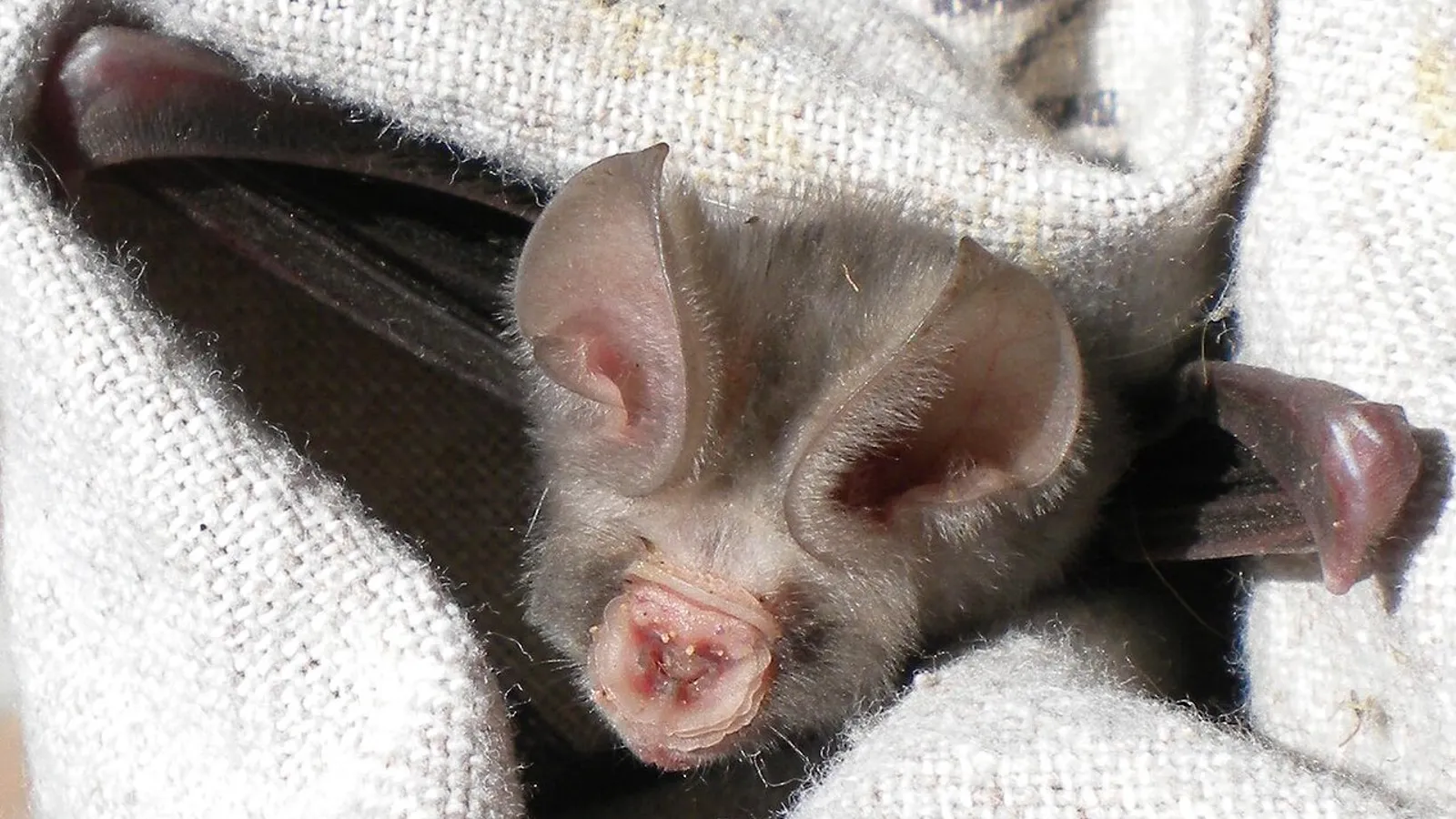
— Where the name comes from
Caffer is a 19th-century geographical epithet built on an old colonial place name for southern Africa: it appears in dozens of scientific names for species described from there — the African buffalo is Syncerus caffer — and survives only because the rules of nomenclature do not allow published names to be changed. The common name instead recalls Carl Jakob Sundevall, the Swedish zoologist who described the species in 1846.
— Facts
- Group
- Mammals · Mammalia
- Order
- Bats
- Habitat
- Caves, mines, baobab hollows; hunting in savannah and gallery forest
- Range
- Sub-Saharan Africa, from Senegal to Ethiopia and down to South Africa
- Size
- 4–6 cm of body, 24 cm wingspan, 8–12 g
- Diet
- Insectivore — moths and small beetles
- Lifespan
- About 7 years
— Characteristics
- 01
Cave colonies can pass a hundred thousand animals.
- 02
Two colour forms exist, brown and bright orange, within the same population.
- 03
It calls at a constant frequency around 140 kHz, well above the bat average.
— What sets it apart
What we call by a single name is probably half a dozen different species. The populations scattered across Africa look so alike as to be indistinguishable in the field, but they call at markedly different frequencies — and frequency, in this group, works like a radio channel: whoever transmits at 140 kHz does not recognise whoever transmits at 120. DNA confirms lineages separated by millions of years. It is one of the most cited cases of cryptic species, animals identical to look at that ignore one another because they speak on different frequencies.
