
Egyptian slit-faced bat
Nycteris thebaica
— Where the name comes from
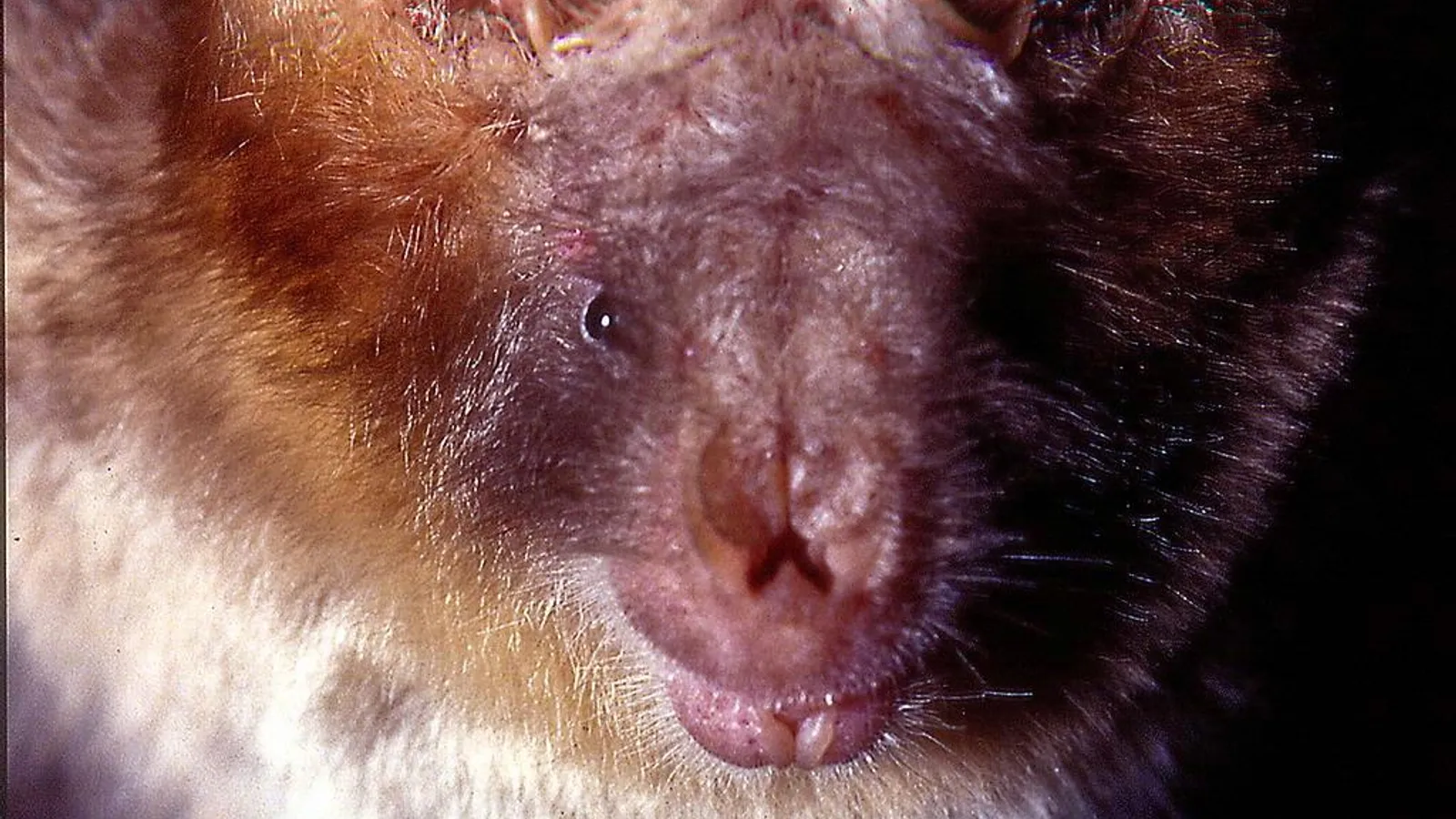
Nycteris is simply the Greek nykterís, “bat”, used as a genus name; thebaica names the Thebaid, the region of Upper Egypt around ancient Thebes, where the first specimen was collected. The common name describes the family trait: a deep groove running down the middle of the face from the nostrils to the forehead, as though the muzzle had been split in two.
— Facts
- Group
- Mammals · Mammalia
- Order
- Bats
- Habitat
- Caves, wells, tombs, porcupine burrows, buildings; hunting in savannah and bush
- Range
- Sub-Saharan Africa, Egypt, the Levant, the Arabian peninsula
- Size
- 4.5–6 cm of body, 24 cm wingspan, 6–12 g
- Diet
- Insectivore — moths, grasshoppers, scorpions picked off the ground
- Lifespan
- Little known
— Characteristics
- 01
The facial groove is lined with glands and is unique among mammals.
- 02
It has very broad short wings: it flies extremely slowly and manoeuvres in tight spaces.
- 03
It takes prey directly off the ground and off vegetation, not in flight.
— What sets it apart
It eats scorpions, sting and all. It has been recorded catching species whose venom is dangerous to humans, and appears to tolerate the stings without consequence — an immunity not yet explained biochemically. The extremely slow, almost butterfly-like flight that lets it rummage among bushes and land on the ground is the same feature that makes it unfit for open country: outside dense bush it is a clumsy and vulnerable animal.
