
Bare-backed fruit bat
Dobsonia moluccensis
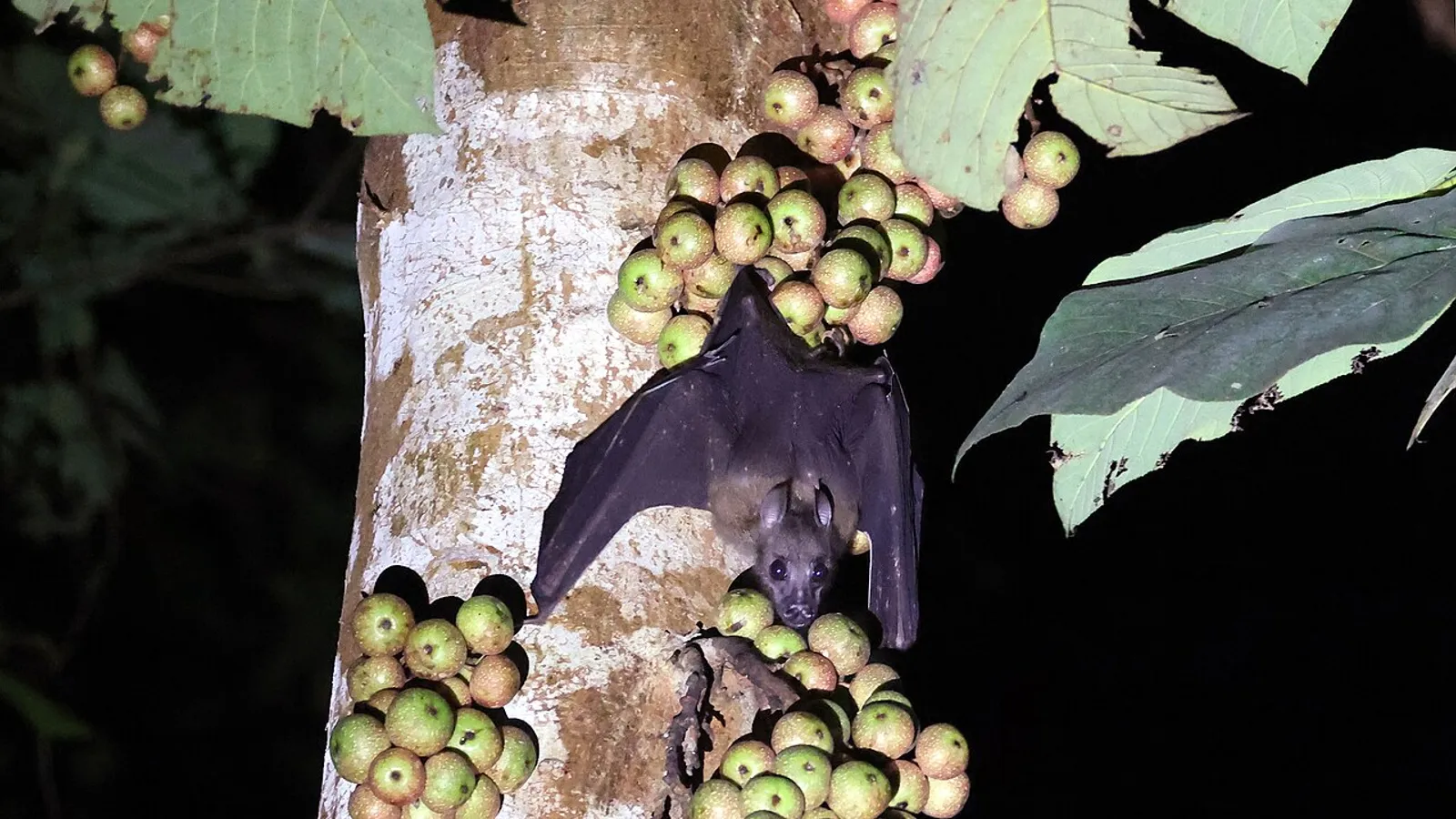
— Where the name comes from
Dobsonia recalls George Edward Dobson, an Irish army surgeon who in the 19th century wrote the first world catalogue of bats and brought order to a class that until then was a muddle. Moluccensis names the Moluccas. The common name describes the feature that leaps out: the wing membranes meet along the midline of the back, and the skin beneath them is bare.
— Facts
- Group
- Mammals · Mammalia
- Order
- Bats
- Habitat
- Rainforest, caves, old mines, abandoned bunkers
- Range
- New Guinea, the Moluccas, northern Queensland
- Size
- 16–22 cm of body, 90 cm wingspan, 300–500 g
- Diet
- Frugivore — figs and other forest fruit
- Lifespan
- Little known
— Characteristics
- 01
The wings attach at the centre of the back instead of at the flanks.
- 02
It is among the few large fruit bats able to navigate in the dark by tongue clicks.
- 03
It flies among close-set trunks better than flying foxes, which keep to open air.
— What sets it apart
The wings attaching on the back rather than the flanks give it a manoeuvrability flying foxes do not have: it can nearly hover, turn tightly and fly inside the understorey. It is why it occupies a different niche from its relatives while eating the same things — they gather at the edges and above the canopy, it works inside the forest. The same food, two opposite ways of reaching it, and one detail of anatomy dividing them.
