
Kuhl's pipistrelle
Pipistrellus kuhlii
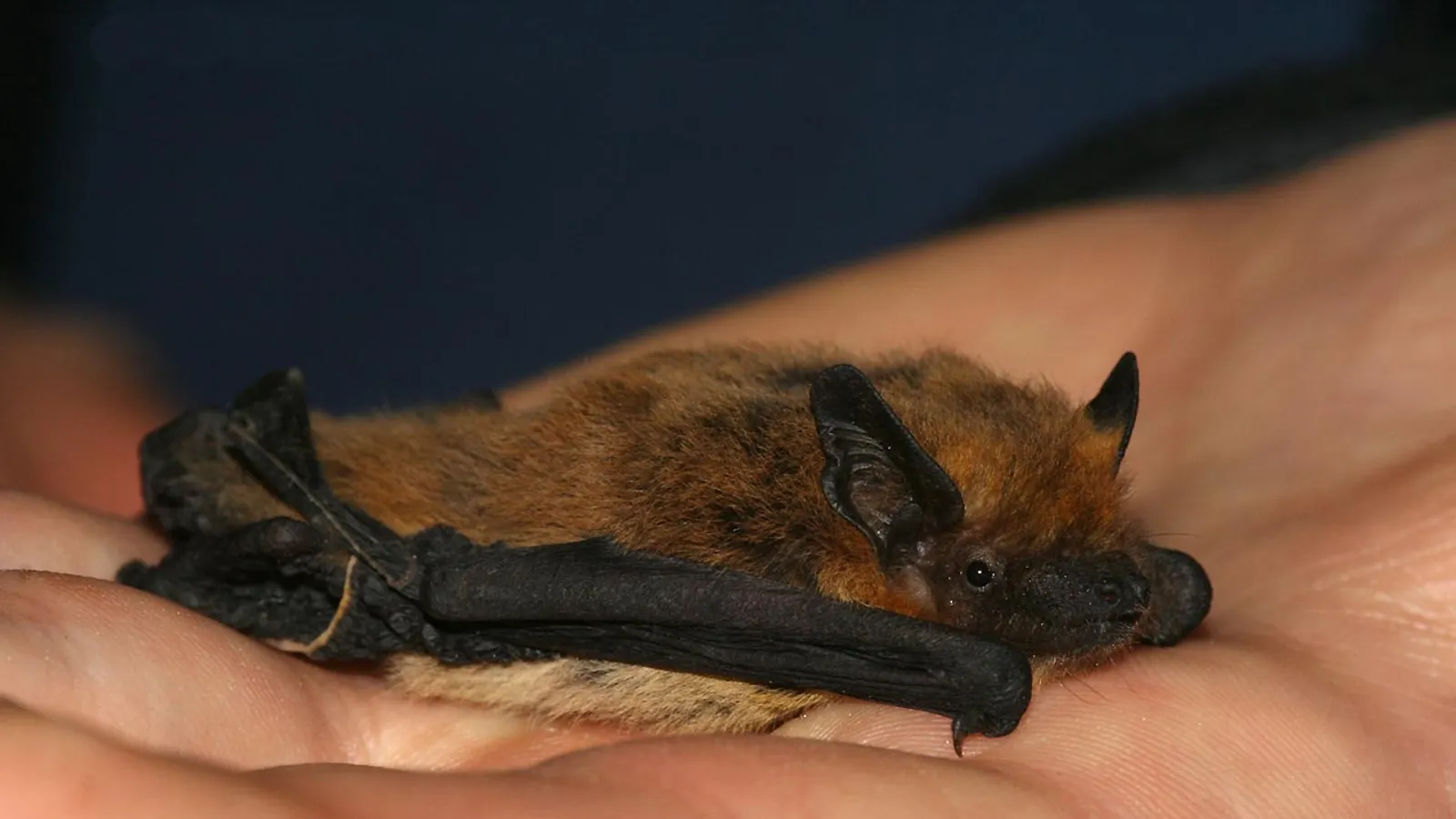
— Where the name comes from
The Italian name describes the diagnostic feature: a sharp white border along the trailing edge of the wing, clearly visible even in flight if the animal passes under a streetlight. Kuhlii recalls Heinrich Kuhl, a German naturalist who died of fever in Java at twenty-three, after describing an extraordinary number of species in very little time.
— Facts
- Group
- Mammals · Mammalia
- Order
- Bats
- Habitat
- Crevices in buildings, roller-shutter boxes; hunting under streetlights
- Range
- The Mediterranean basin, the Middle East, Central Asia; spreading northwards
- Size
- 4–4.7 cm of body, 22 cm wingspan, 5–10 g
- Diet
- Insectivore — small flies and moths drawn in by street lighting
- Lifespan
- Up to 8 years
— Characteristics
- 01
It lives almost exclusively in buildings, often inside roller-shutter boxes.
- 02
It is the bat most often seen around the streetlights of Italian cities.
- 03
In recent decades it has extended its range hundreds of kilometres northwards.
— What sets it apart
It is one of the few European animals that has gained from global warming, and the gain can be measured. A Mediterranean species until the 1980s, it has climbed the continent as far as Hungary, Austria, Germany and Ukraine, and the dates of first records draw a front advancing north year by year. In parallel it has learnt to exploit street lighting, which concentrates insects into predictable columns: a milder climate and streetlamps together have opened half a continent to it.
