
King penguin
Aptenodytes patagonicus
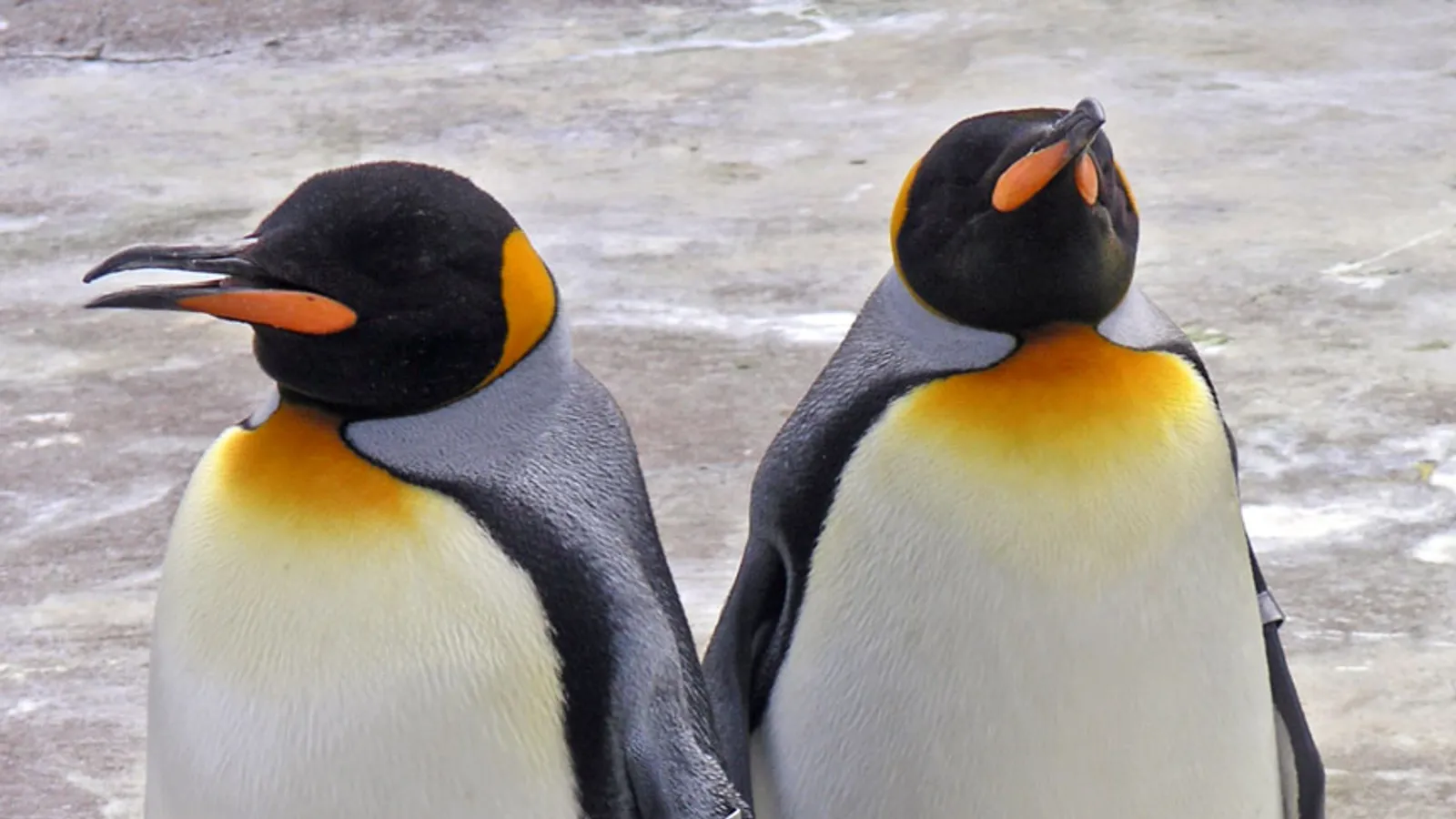
— Where the name comes from
Aptenodytes is Greek for “wingless diver”, from a-ptenós, unable to fly, and dýtēs, diver: wings that do not fly but swim. Patagonicus points to Patagonia, where it was encountered. It is the second penguin by size, after the emperor, of which it is almost the smaller twin.
— Facts
- Group
- Birds · Aves
- Order
- Penguins
- Habitat
- Sub-Antarctic islands and the cold seas around them
- Range
- Islands of the Southern Ocean, around Antarctica
- Size
- 85–95 cm, 9.3–18 kg
- Diet
- Fish eater — small lanternfish and squid
- Lifespan
- 20–26 years
— Characteristics
- 01
It builds no nest: it incubates the single egg on one foot, under a fold of belly skin.
- 02
It breeds in vast colonies, among the most crowded on the planet, of hundreds of thousands of birds.
- 03
The chick, covered in brown down, was long taken for a species of its own.
— What sets it apart
The king penguin has the longest and strangest breeding cycle of any bird: raising a chick takes over a year, so a pair manages only two in three years. The chick goes through the Antarctic winter fasting for months, fed at ever longer intervals, and survives by burning its fat reserves. The first naturalists, seeing those brown balls of fluff so unlike the adults, classed them as another species: the “woolly penguin”.
